The Sports Archives – Where are the Best Golfers in the World From?

World of GolfThe Best Golfers in the World are From . . .?

Which country produces the best golfers? In order to get to the bottom of this question let’s take a look at the world rankings over the last 6 years.

World Golf Rankings 2007

  1. Tiger Woods – United States
  2. Phil Mickelson – United States
  3. Jim Furyk – United States
  4. Ernie Els – South Africa
  5. Steve Stricker – United States
  6. Justin Rose – England
  7. Adam Scott – Australia
  8. Padraig Harrington – Ireland
  9. K.J. Choi – Korea
  10. Vijay Singh – Fiji
  11. Rory Sabbatini – South Africa
  12. Sergio Garcia – Spain
  13. Geoff Ogilvy – Australia
  14. Angel Cabrera – Argentina
  15. Zach Johnson – United States

World Golf Rankings 2008

  1. Tiger Woods -United States
  2. Sergio Garcia – Spain
  3. Phil Mickelson – United States
  4. Padraig Harrington – Ireland
  5. Vijay Singh – Fiji
  6. Robert Karlsson – Sweden
  7. Camilo Villegas – Colombia
  8. Henrik Stenson – Sweden
  9. Ernie Els – South Africa
  10. Lee Westwood – England
  11. Anthony Kim – United States
  12. Geoff Ogilvy – Australia
  13. Jim Furyk – United States
  14. Kenny Perry – United States
  15. Steve Stricker – United States

World Golf Rankings 2009

  1. Tiger Woods – United States
  2. Phil Mickelson – United States
  3. Steve Stricker – United States
  4. Lee Westwood – England
  5. Padraig Harrington – Ireland
  6. Jim Furyk – United States
  7. Paul Casey – England
  8. Henrik Stenson – Sweden
  9. Rory Mcilroy – N. Ireland
  10. Kenny Perry – United States
  11. Sergio Garcia – Spain
  12. Ian Poulter – England
  13. Martin Kaymer – Germany
  14. Geoff Ogilvy – Australia
  15. Sean O’Hair – United States

World Golf Rankings 2010

  1. Lee Westwood – England
  2. Tiger Woods – United States
  3. Martin Kaymer – Germany
  4. Phil Mickelson – United States
  5. Jim Furyk – United States
  6. Graeme McDowell – N Ireland
  7. Steve Stricker – United States
  8. Paul Casey – England
  9. Luke Donald – England
  10. Rory Mcillroy – N Ireland
  11. Ian Poulter – England
  12. Ernie Els – South Africa
  13. Matt Kuchar – United States
  14. Dustin Johnson – United States
  15. Francesco Molinari – Italy

World Golf Rankings 2011

  1. Luke Donald – England
  2. Lee Westwood – England
  3. Rory Mcilroy – N Ireland
  4. Martin Kaymer – Germany
  5. Adam Scott – Australia
  6. Steve Stricker – United States
  7. Dustin Johnson – United States
  8. Jason Day – Australia
  9. Charl Schwartzel – South Africa
  10. Webb Simpson – United States
  11. Matt Kuchar – United States
  12. Nick Watney – United States
  13. Graeme McDowell – N Ireland
  14. Phil Mickelson – United States
  15. K.J. Choi – Korea

World Golf Rankings 2012

  1. Rory Mcilroy – N Ireland
  2. Luke Donald – England
  3. Tiger Woods – United States
  4. Justin Rose – England
  5. Adam Scott – Australia
  6. Lee Westwood – England
  7. Louis Oosthuizen – South Africa
  8. Jason Dufner – United States
  9. Webb Simpson – United States
  10. Brandt Snedeker – United States
  11. Bubba Watson – United States
  12. Ian Poulter – England
  13. Phil Mickelson – United States
  14. Steve Stricker – United States
  15. Keegan Bradley – United States

By sheer number the Americans have the advantage. Over the last 6 years America averages about 6 players ranked in the top 15 each year. The next closest country is Great Britain and Ireland with about 4 players each year. Australia comes third averaging a little over 1. No other country consistently placed a player in the top 15.

There is a big difference, however, between a player ranked 1st and a player ranked 15th on the list. For example you wouldn’t consider a country that has 3 or 4 players somewhere in the 10th – 15th range in the rankings to be more dominant than a country with 2 to 3 players in the 1st – 5th range. By creating a simple reverse-order point system (15 points for 1st place, 1 point for 15th place) we can see which country has not only the most good players but which has the very best. According to this adjusted point system the U.S. still comes out ahead. The average score for the United States is 47.3 each year, which puts it ahead of the United Kingdom and Ireland’s average of 38.3. But if you take into account the average ranking per player in the rankings than the United Kingdom actually scores better with an average ranking of about 7 to America’s 8.

Even with the help of these rankings the answer to our question remains a bit hazy. America consistently has more players in the top 15 each year and together their rankings are higher than any other country but when you take into account the averages the United Kingdom seems to have fewer but, nevertheless, slightly more talented golfers. This is hardly the concrete, definitive answer I was looking for, but it certainly helped me eliminate a lot of possible countries from the argument. For now, at least, because of the current rankings the United Kingdom seems to hold a slight edge over the United States.

Phil Oscarson is an avid golfer/golf enthusiast. A self-proclaimed semi-pro golfer, Phil has been around the world visiting some of the best major tournaments. He is currently in the green technology industry, and a freelance writer for AmericanGolf.com.

Related Blogs:
Five Biggest Chokes in PGA Tour History!
A few Interesting Facts That you Never Knew About Golf!

Posted in Golf | Tagged , , , , , , , , , , , , , , , , , , , , , , , , , , , , , , , , , , , , , , , , , , , , , , , , , , , , , , , | 7 Comments

The Sports Archives – The Popularity of Cycling!

Cycling has become more popular over the last few years a small part of this increase in popularity can be attributed to the 2012 London Olympics and Bradley Wiggins Tour De France win.

However cycling has a rich history that most people do not know anything about.

popularity of cycling

The first bicycle race took place on the 31 May 1868 in Paris.  The race was held of 1,200 metres the race was won by James Moore who rode a wooden bicycle with iron tyres.

This article will look at the different cycling events that have become popular since this first race.

Road Races

Road racing can be done as part of a team or as an individual competition, there are various types of road races from one day events to multi stage events.

Let’s take a look at some of the different Road Races.

  • Criterium – This one day event is held on a short course generally less than a mile and are often run on closed of city centre streets.
  • Time-trial – This one day event can be held on roads or in Velodromes.
  • Multi-Stage Events such as the Tour de France and sister events are held over several weeks and cover different stages across Europe.

Cyclo-cross

Cyclo-cross racing takes place in the autumn and winter months.  The Cyclo-cross world cup season is normally held between October and February.

Cyclo-Cross consists of many laps between 2.5 – 3.5 km, some courses feature different surfaces such as pavement, wooded trails, grass, steep hills and obstacles that require the rider to quickly dismount and carry their bike whilst navigating the obstacle before they can remount.

Races for senior categories are normally between 30 minutes to 1 hour.

Mountain Bike Racing

Mountain bike racing is held on various terrains and has several different events.  Let’s take a look at some of these events.

  • Cross-Country is held on varied terrain circuit between 6 and 8 km and is a massed-start race.
  • Short Track cross-country is held on a track of 800m in length
  • Downhill racing is a time trial event, participants start at 30 second to 3 minute intervals depending on the stage of the competition the rider with the lowest time wins.
  • Super D is a race that combines cross-country and downhill stages

Track Cycling

This type of event has been going since at least 1870 when cycling was in its infancy. Track cycling is held on wooden indoor tracks which consist of 2 straights and 2 banked turns.

One appeal of indoor track racing when it was introduced was that organisers could control the spectators and charge an entrance fee which made track cycling a lucrative sport some early races of this type attracted up to 2000 spectators.

Another advantage of indoor tracks meant that events could be held all year round.

BMX

For those of you who are old enough will remember that the BMX craze started in the 1970’s when kids started riding their bikes on dirt tracks and was considered to be one of the must have bikes of the 80’s.

In 2003 the International Olympic Committee made BMX a full medal Olympic sport and made its debut Olympic appearance in the 2008 Beijing Olympic Games.

The first Olympic champions for BMX racing were Māris Štrombergs (Male for Latvia) and Anne-Caroline Chausson (Female for France).

Mountain Bike Trials

Also known as an observed trial it is carried out on Mountain Bikes and consists of the participants attempting to pass through an obstacle course without setting a foot on the ground.

This form of event is a true test of handling skills for mountain bikers.

Cycle Speedway

Although the origins of this event are obscure there is evidence that shows that cycle speedway existed in the 1920’s. This event is held on short oval dirt tracks which are usually outdoors however some events are held on indoor tracks.

Tracks are typically between 70 and 90 metres.

Featured images:
  •  License: Image author owned

James Olsen is an amateur bike racer and takes part in several different events throughout the year one of his favourite events is the Super D which he uses his Hybrid Bike for.

Related Blogs:
Top 5 Cycling Legends in History!
Did Lance Armstrong Deserve to be Stripped of his Titles?

Posted in Olympics, Other | Tagged , , , , , , , , , , , , , , , , , , , , , , , , , , , , , , | 7 Comments

The Sports Archives – The Top 5 Football Movies in the Past 20 Years!

The Top 5 Football Movies in the Past 20 Years

Baseball might be America’s pastime, but football is its passion.  There’s just something about those crisp fall Sundays paired some chicken wings, cold beers, buddies, and the game that make life seem a little sweeter.  Luckily, for those dark months when football is taking its seasonal hiatus, there are plenty of football-themed movies to get your pigskin fix. Here are the five greatest football flicks from the past two decades that have something for everyone—from the underdog to the hardcore fan (and even something for the kids!)

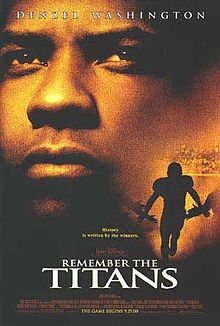
#1 “Remember the Titans”, 2000

Remember The TitansDirected by Boaz Yakin, “Remember the Titans” not only tackles the hardships of winning a football championship but also the perils of overcoming racism and the desegregation of schools in the early 1970s.  Denzel Washington stars as Coach Herman Boone whose personal goal is to win the championship while ridding the team of racial discrimination. Through tough technical drills, strong leadership, and powerful lectures he succeeds in his goal with the help of his defensive coordinator and previous head coach, Bill Yoast (played by Will Patton).The film is a perfect mix of tactical football, humor, and heart-wrenching scenes thanks to a dynamite cast; especially the intense team captains played by Wood Harris and Gerry Bertier and the lovable and large defensive lineman turned peacemaker played by Ethan Suplee.   A young Hayden Panettiere, who plays Coach Yoast’s daughter, rounds out the cast as the team’s unofficial mascot and lead heckler.

#2 “Rudy”,  1993

Rudy“Rudy” is the classic underdog comeback story based on the real life accounts of Daniel “Rudy” Ruettiger. Directed by David Anspaugh and starring Sean Austin as the title role. The film follows the character as he overcomes physical limitations, a learning disability and relentless taunts and teasing from his family to fulfill his dream of playing for the Notre Dame Football program. The sound of the crowd chanting Rudy’s name before he finally gets put into his first and only Notre Dame Football game is one of the most motivating scenes in sports movie history.

#3 “The Blind Side”, 2009

The Blind SideBreaking football movie tradition with a female star, “The Blind Side”, directed by John Lee Hancock, is based on the true story of football star Michael Oher and his adoptive mother Leigh Anne Tuohy, who along with her family, takes in the homeless Michael ”Big Mike” Oher. Throughout the film, Oher eventually overcomes the obstacles he faces as a foster child from the projects to become a NFL star for the Baltimore Ravens. Tuohy, played by Sandra Bullock (who won an Academy Award a Golden Globe and a Screen Actors Guild award for her performance), not only helps Mike understand his role to protect the quarterback’s blind side on the field but she also gives him something else he’s never experienced before—a bed to sleep in and a family unit that loves and supports him. Young Jae Head plays Tuohy’s son, SJ, who instantly befriends Oher and brings warmth and comic relief to the film.

#4 “Little Giants”, 1994

Little GiantsThis family friendly football comedy follows two battling brothers: Kevin a well-known retired football star and Heisman trophy recipient and his nerdy younger brother, Danny, who settle their sibling rivalry by coaching opposing Pee-Wee football teams. Ed O’ Neill plays Kevin, who despite her undeniable athletic ability, cuts Danny’s daughter from his team. As revenge, Danny, played by Rick Moranis, allows his daughter to convince him to form and coach his own competing team of misfits who didn’t make Kevin’s elite squad. The two teams face off in a hilarious football battle, which ends up with an underdog victory by the misfit team known as the Little Giants.  Director Duwayne Dunham ensures the film has a great mix of romance, comedy, heart-warming plot and even a few cameos by real life NFL stars to keep the adults interested.

#5 “The Program”, 1993

The Program“The Program”, directed by David S. Ward, follows the fictional ESU Timberwolves as the players and coaches attempts to deal with the pressures that come with participating in a college-level program; including performance enhancing drugs, partying, family pressure, media scrutiny, scholastic expectations and performance anxiety. James Caan stars as head coach Sam Winters who, along with his staff, struggle to bring the football team a championship by overlooking some out-of- control behavior from the players. The movie does an excellent job at showing the intensity of the hits and tactical movements on the field but also reveals the complexity of the athletes’ lives off the field. One of the most famous scenes features defensive-end Steve Lattimer, played by Andrew Bryniarki, who during a bat of “roid rage” smashes his head through several car windows while celebrating his newly elevated position on the team by screaming, “Starting defense! Place at the table!”

With all of the negative attention football has received this off-season, (http://philadelphia.cbslocal.com/2012/06/22/jerry-sandusky-trial-verdict/) and the anticipation of NFL season just around the corner; it’s sometimes comforting to take a football escape with a few good flicks from this list.

Author Bio: Dwayne Thomas is a huge DC sports fan (Redskins, Nationals, and Wizards).  He is also a staff writer for cabletv.com.

Related Blogs:

The 5th Quarter of the 2006 Wake Forest Football Season

Posted in College Football, Football | Tagged , , , , , , , , , , , , , , , , , , , , | Leave a comment

The Sports Archives – Rookie Runners: Opportunity for Giants’ David Wilson!

Rookie Runners HamsterDanceThere were three running backs picked in the first round of the 2012 draft. Tampa Bay’s Doug Martin (drafted 31st out of Boise State) is already a star (though he still has to deal with being nicknamed Muscle Hamster). Martin was fourth overall in rushing yards after Week 12. Cleveland’s Trent Richardson; (drafted 3rd out of Alabama) was on pace to have a 1,000-yard season.  The GiantsDavid Wilson, selected out of Virginia Tech with the 31st pick, one pick after Martin, had failed to make any impact. But that could be about to change, thanks to an injury to Giants running back Andre Brown.

Andre Brown is suffering from a leg injury

Before Brown broke his leg in Week 12, he had scored a touchdown in five straight games, giving him eight touchdowns on the year compared to five for Giants lead back Ahmad Bradshaw. Brown outgained Bradshaw in both Week 11 and Week 12 and had more carries than Bradshaw, 13 to 10, in Week 12. With Bradshaw battling an injured foot, the Giants wanted to lessen his load.

Now Brown out for at least the rest of the regular season, so Wilson will see increased playing time. If the Giants wrap up a playoff spot early, Bradshaw could get more rest, which could increase Wilson’s playing time even more.

Bryce Brown gets his chance

In Week 12, Eagles rookie running back Bryce Brown showed that sometimes all a player needs is a chance to play. Brown, a seventh-round pick out of Kansas State, went into the game against the Panthers with just 141 rushing yards and no touchdowns.  But with LeSean McCoy out due to a concussion, Brown exploded for 178 yards and two touchdowns, equaling McCoy’s touchdown total for the season.  Brown also fumbled twice, though.

As Week 13 approached, McCoy appeared unlikely to play. With the Eagles going nowhere, there is no reason to rush McCoy back, so Brown could continue to start into the fantasy football playoffs.

But it can be risky to count on an untested rookie running back, as Week 12 also showed. With Denver’s Willis McGahee out, Ronnie Hillman, drafted in the third round out of San Diego State, appeared to be the front-runner to take his place in the game against Kansas City. Instead, Denver started Knowshon Moreno, who had not seen action since Week 2, and Moreno responded with 85 yards on 20 carries along with four catches for 26 yards.  Hillman, meanwhile, had just nine yards on three carries, leaving Moreno now the likelier Broncos starter the rest of the regular season.

Featured images:
  •  License: Image author owned

Ben Hargrove writes on fantasy football for DraftStreet.

Related Blogs:
NFL Champions’ Secret to Success!
When a Father Makes an Impact!

Posted in College Football, Football | Tagged , , , , , , , , , , , , , , , , , , , , , , , , , , , | Leave a comment

The Sports Archives – Who’s Tough Enough For Tough Mudder?

Tough MudderThere are many arduous sporting challenges and activities out there but Tough Mudder certainly provides a unique battle to complete.  When the winter time is getting into full flow in the UK one of the toughest assault courses around comes to the North West of England in November. Tough Mudder is not for the faint hearted though as this 1-12 mile assault course has been designed to be both mentally and physically challenging by the British Special Forces. The challenge is one that will give participants the ultimate sense of pride at the finish line and you will also experience great camaraderie with fellow participants that will help you through the battle.

Tough Mudder is all about having fun and enjoying yourself, as well as putting yourself through a huge physical test. Along the way you will encounter interesting obstacles and you will certainly see enough mud to last you a lifetime. The 5000 participants will line up at the start and set off with a traditional war cry and head straight into the Swamp Stomp, which involves wading through waist-deep mud before you hit Bale Bonds. At this stage you will be throwing yourself over huge hay bales. These are just the first 2 of 30 obstacles dotted along the course and it is fair to say that they get a lot worse.

You will have to navigate your way through the Black Forest, climb the Berlin Walls, encounter the Kiss of Mud as you crawl under barbed wire, face the Fire Walker with four-foot flames and finish off with a bit of Electroshock Therapy. After all of this you will be greeted by cheering supporters, and a live band to go with a well-deserved beer.

As the event is in November it is sure to be cold and there is the potential of ice in the water. In the Canadian Tough Mudder some people got hypothermia and some also had cardiac troubles at the obstacle Arctic Enema. You can take precautions by wearing under armour heat gear which is designed to hold moisture away from the skin, keeping you drier and more comfortable.

Tough Mudder is a great event if you want to test yourself and it is all for a good cause. The Tough Mudder raises money for the charity Wounded Warrior Project who serve wounded service men and women who have had an injury, wounds or illness since September 11th 2001. The charity will contribute towards improving battlefield medicine and body armour amongst other things, so get involved and do something great for yourself and for others.

Article written by Warren Thomas representing http://www.performancesportsstuff.com/ who offer all kinds of activity wear and sports protection clothing.

Posted in Other | Tagged , , , , , , , , , , , , , , , , , , | Leave a comment

The Sports Archives – The History And Basics Of Wheelchair Basketball

Wheelchair BasketballThe History And Basics Of Wheelchair Basketball

With the popularity of this year’s Paralympic Games, we think it’s time to take a closer look at one of the most watchable sports: wheelchair basketball. Developed by American World War II veterans, this activity became much-loved, not just as a rehabilitation program, but as a competitive sport across the world. Tellingly, more than 80 countries now have a wheelchair basketball teams.

Wheelchair basketball first appeared at the Rome Games in 1960 and was followed by women’s wheelchair basketball in 1968, two Paralympics later.

In the Paralympic Games, 12 teams competed in the men’s and 10 in the women’s groups. Each team has 12 athletes – 5 players and 7 subs. Every participating country is only allowed one men’s and one women’s team.

Classification

Of course, every person in a wheelchair has varying levels of disability, and this is reflected in the classification of athletes. The points range between 1 and 4.5 – 1 for the lowest physical function and 4.5 for the highest. In total, a team can’t exceed 14 points for their players.

The Court

The field of play is 28 metres long and 15 metres wide. The baskets are 3.05 metres above ground. The court is split down the middle, with the three-point line 6.75 metres away from each basket and the free-throw line a little closer at 5.8 metres.

The Basics

Generally, wheelchair basketball is no different to basketball: the court size, the basket height, and the scoring are all identical. You get 2 points for a regular shot, 1 point for every successful free throw, and three points when you score from a distance. Athletes also pass and dribble the ball – wheelchair players have to throw or bounce the ball every 2 turns of their wheels or they will be accused of traveling. The game lasts a total of 40 minutes, which is split into 10 minute quarters and players can call for time-out for one minute, if they like.

How to Win

Every wheelchair basketball player needs to be strong, fast, and high in endurance. Not only that, but they need to have fantastic skills with a basketball and a tactical mind. It also helps to have a fantastic chair like the products available at disability specialists, Allabilitycycling.

Officials

Like most sports, a referee presides over the game, as well as two umpires. There will be timers and scorers on hand to take care of the play’s statistics.

Rule Breaking

Some violations that aren’t tolerated on a wheelchair basketball court are traveling, going out-of-bounds, or rising out of the seat to achieve an advantage over other players. Usually, this results in the ball going to the opposition.

For fouls against other athletes like blocking, pushing, or charging, the opposition team gets a throw-in, but if the victim was close to scoring, then more than one throw-in may be awarded.


The Lingo

An ‘assist’ is when a pass goes directly to a teammate and they score. ‘Downtown’ is the area outside the three-point boundary. Finally, ‘shot clock’ is the 24 seconds awarded after a shot to get another rim-touch, or the ball turns over to the other team.

Article written by Jamie Knop on behalf of Allabilitycycling.

Related Blogs:
History of the Paralympics!
An Introduction to Goalball: How Touch & Sound Trump Sight!

Posted in Basketball, Olympics | Tagged , , , , , , , , , , , | 1 Comment

The Sports Archives – The Benefits of Belly Dancing!

Belly DancingBelly dancing might not be the first thing that comes to mind when you consider taking up exercise, but it is certainly worth consideration. Belly dancing is a dance that originated in the Middle East, and generally conjures up images of scantily clad women gyrating to some exotic music. Yet belly dancing is much more than just a spectacle to view, it has a number of unexpected health benefits for those that perform this ancient form of dance.

Physical Benefits

Belly dancing is a great fat burning activity, you can move all of your body and burn the fat without ever having to step foot inside a gym. Because belly dancing incorporates such a lot of physical activity those looking to lose the fat and improve their body shape can see results in next to no time. But the best part of choosing belly dancing for exercise is that it is fun, it doesn’t feel like exercising at all. Alongside the fat busting belly dance also works to improve other areas of the body. Many of the movements involved in the dance involve arm movements and shaping of the upper body. Because a lot of the movements are of a shaking, wiggling and twisting kind it also helps with flexibility and can help to strengthen bone.

Confidence Building

Not only is belly dancing good for the physical body, it is also good for the inner self. Learning to belly dance makes you very aware of your body, and as you continue to practice and develop your dancing skills, you will notice your body changing. Muscle tone will improve, as will posture and stamina. You will develop a new sense of confidence within yourself. Your coordination will have improved as will your balance and core body strength. All of this does wonders for your self-image and sense of self.

Stress Busting

Belly dancing is also a great way to burn off any unnecessary stress. While lost in the rhythm and motion of the dance your mind and body are transported away from your worries and cares for a while. It is also useful for working out all of the toxins in your body. It’s a kind of escapism that frees your mind and body from the restrictions of daily life. Not only is belly dancing good for you it can be enjoyed by the whole family. There are no age restrictions or stringent physical requirements and there is no expensive equipment to buy. It is a form of enjoyable exercise that can be done in the privacy of your own home or in a social setting with others. There are a number of different places that run belly dancing classes, such as social and community centres and local leisure centres. It would be worthwhile checking online to see where your nearest class is. If you don’t feel up to joining a class there are a number of learn at home DVD’s available so you can practice your belly dancing moves in the living room while the kids are at school.

Are you looking to teach your kids how to dance? Visit Imovesdance.com now.

Posted in Other | Tagged , , , , , , , , , , | Leave a comment

The Sports Archives History Lesson – The Business of Sport – Fred Perry

Fred Perry StatueIt is strange to look back at the life of a tennis legend and consider that his greatest achievement may actually have come in the business arena not on the Tennis Court. Fred Perry won an incredible 10 tennis grand slam tournaments including three consecutive victories at Wimbledon and was the first player to win all four Grand Slams, but perhaps his greatest legacy is the iconic sportswear brand that bears his name.

Early Years

Fred Perry was born in Stockport in 1909. He was from a working class background and this proved troublesome during his tennis career. At that time the sport was the domain of the privileged classes who jealously guarded the principles of amateur sport and the traditional etiquette of the game. Perry was a feisty competitor whose antics on and off the court met with disapproval and he was not a popular figure with the British tennis authorities. He eventually turned professional to complete his alienation and spent much of his time out of the country playing on the professional circuit in the United States.

Business Idea

As a player Fred Perry was given to wrapping a piece of gauze around his wrist to wipe away sweat and keep moisture away from his racquet handle. In the 1940’s he was approached by Austrian footballer Tibby Wegner with an idea for a sweatband fashioned in towelling. Perry liked the idea and together they evolved a prototype which was too heavy but showed great promise. They developed a lighter, more practical model and went in to production. Perry showed himself to be an astute marketeer by giving free samples of his fledgling product to the players, asking them to wear them at tournaments. The sweatbands were a great hit and Fred Perry Sportswear was born.

Signature Shirt

The second product for the new brand was a slim fitting white cotton pique shirt. The shirts were as skilfully merchandised as the sweatbands. Perry offered them to the players and the BBC cameramen at Wimbledon. He even wore one himself whilst commentating. The players loved the new slimmer fit and Perry had a huge success on his hands. This shirt became the signature garment of the brand and remains so today. The iconic laurel wreath emblem that adorned the shirts was the suggestion of Wegner who thought it perfect because it signified victory in ancient Greece. Perry had wanted a cigar!

Fashion

The shirts had been popular with sportsmen but met with even greater success as fashion statements. The arrival of the Mod movement was the defining moment for the brand. The Mods were big on their image and sought a sharp suited look with a modern twist. The Fred Perry shirt with its quality,comfort, collar and slim fit was the perfect partner for the single breasted suits they favoured. Eventually Mods wanted to put a stamp of individuality into their outfits with the addition of colour and Fred Perry Sportswear responded with an expanded colour palette for the shirts.

Moving Forward

Over the years the Fred Perry brand expanded to include jackets, knitwear, bags and even ladies wear. It has evolved and been enhanced by collaborations with designers and the input of fans like Amy Winehouse, but has always retained a retro style representing British cool. The brand has been kept in the spotlight by celebrity followers whose images fit perfectly with the retro cool brand. Damon Albarn, Paul Weller and Amy Winehouse have all been enthusiastic wearers of the clothes but the company have always refused to pay for celebrity endorsement. It does now have a signature range of Bradley Wiggins cycling apparel. The brand that started with a simple sweatband became an empire founded on quality, style and sticking to its principles.

Moving On

Fred Perry died in 1995 and in that year Fred Perry Sportswear was sold to the Japanese company Hit Union. Perry left an amazing legacy of sporting success, his career in the spotlight more than ever in 2012 because of the achievements of Andy Murray as he became the first British player to win a tennis grand slam since Perry. It is possible, however, that many will think fashion before sport when you mention the name Fred Perry.

Featured images:

Sally S writes on a wide range of subjects including fashion and sports. A tennis fan, Sally enjoyed researching this article about one of the all-time greats of the sport.

Related Blogs:
Tennis Great René “Le Crocodile” Lacoste
Venus Williams Wins In Style

Posted in Tennis | Tagged , , , , , , , , , , , , , , , , , , , , | Leave a comment

The Sports Archives – How Much Does It Cost To Train An Olympic Athlete?

Team CanadaFor a select few world-class athletes, 2012 was the year when they realized their full potential, and stood on the podium with an Olympic gold medal around the neck.

At that specific moment, they may well have contemplated how the help they have received from outside funding sources had ensured that they could have their moment of glory.

The games of summer 2012 represented the culmination of 15 years of funding programs provided by the UK’s National Lottery, so every time you play the lottery you are indirectly helping our athletes take steps towards fulfilling their potential.

The Lottery funding is only part of the story though, as in the six years leading up to the 2012 Games, the coordinating and governing body of British official athletics, UK Sport, received £300million of funding, a large proportion of which, of course, came from the pockets of us, the taxpayers.

In a change from past policy, UK Sport devised a program called Mission 2012 in the years leading up to the Games, which encouraged individual sports to assess how their training and development programs were performing, and to find creative solutions to problems in securing such funding.

Under these programs, 900 athletes, participating in 46 sports, were given support to compete in the Olympics and Paralympics.

Official figures show that the amount spent on funding Team GB participants has risen sharply over the last two Olympic Games. At the Sydney games in 2000, the athletes were funded to the tune of £60million, and were rewarded with 28 medals. Four years later, in Athens, the medal tally rose slightly, to 30, achieved with the help of £70million in funding.

But it was ahead of the 2008 Beijing games that funding took a quantum leap forward. At those games, Team GB earned 47 medals – 19 of them gold – but funding had increased more than three-fold, to £235million.

Of course, as soon as it was announced that the Olympics would be staged in London, seven years before the actual dates, it was clear that funding would have to be looked at afresh, with the hope that the country could be among the leaders in the medals table – the customary position which the hosts have come to enjoy.

However, there was an extra factor to consider in the run-up to the 2012 Games – namely, the state of the British government’s finances. As it was forced to cut spending deeply as part of a medium-term plan to put the country back on an even keel, some promised support had to be cut, leaving outside sources, such as the National Lottery, to pick up the baton, to use an athletics-related phrase.

Early suggestions are, however, that total funding for athletes sporting Team GB colours who competed in the Olympic Games reached a new high, of £264milliion. That helped produce a net result of 65 medals, while the total number of Team GB competitors was 542.

From a few basic calculations, we can see that this meant that each medal cost £4.6million, but if this calculation is extended to all athletes, it shows that the cost of training each of our competitors was just under £500,000. Of course, there will be some whose sports necessitate much higher funding than others because of the equipment and infrastructure required. But one thing that is for sure is that, at the moment when our medal-winning athletes stood on their podia, the amount it cost for each of them to reach that stage was immeasurable in terms of the pride which it brought to the nation.

Attached Images:

Sheena Williams is a freelance writer specialising in sports related topics such as football insurance and personal trainer insurance.

Related Blogs:
Did You See That? Top London 2012 Moments!
The Olympics: The Greatest Show on Earth?

Posted in Olympics | Tagged , , , , , , , , , , , , , , , , | 2 Comments

The Sports Archives – UEFA Champions League Matchday 5 best-playing teams!

The fifth round of Champions League matches in 2012 was not full of good news as far as English and Scottish teams were concerned.

Juventus LogoOne of the biggest pieces of news was surely the 3-0 defeat of defending champions Chelsea by Italian giants Juventas. The Londoners were soundly beaten 3-0 in Turin and now must rely on other results to clinch a place in the last-16 of the competition. Blues manager Roberto Di Matteo was sacked in the wake of the game, perhaps indicating how the hierarchy at Stamford Bridge feel about their fading chances of reaching the knock-out stages.

The biggest disappointment for English teams was probably the performance of Manchester City. The Sky Blues were held to a 1-1 draw at home by Spanish giants Real Madrid, despite the Spaniards being reduced to 10 men when Alvaro Arbeloa sent off in the 73rd minutes for a second bookable offence. This incident had resulted in a penalty, from which Sergio Aguero scored. But that effort only cancelled out Karim Benzema‘s 10th minute strike for the visitors. Now Roberto Mancini‘s City must look to the Europa League to extend their stay in European competition.

The third English representative to lose was Manchester United, who had already clinched a spot in the knock-out phase thanks to a 3-1 win over Braga in the fourth round of matches. As it turned out, it was a good job they had result in the bag, as they lost 1-0 in Turkey at Galatasary on Match Day Five. A 54th minute header from Burak Yilmaz proved enough to send the Red Devils home disappointed.

Arsenal sealed their place in the next phase of the competition with a 2-0 over Arsenal LogoFrench outfit Montpellier. England international midfielder Jack Wilshere, returning from a very long period out with injury, netted his first goal since his comeback. German international Lukas Podolski also netted, to ensure that the north London outfit would be in the knock-out phase of the competition yet again, despite recent criticism of manager Arsene Wenger among some sections of the club’s support.

Scottish champions Celtic could also have clinched a place in the last 16 with a 1-1 draw at Benfica of Portugal. After Giorgios Samaras had cancelled out Ola John‘s seventh minute strike it looked as though they might be on their way. Ezequiel Garay‘s 71st minute winner meant that the Hoops could not try tailgating on the heroism of their home win over Barcelona on Match Day Four.

The Glaswegians can still qualify though, if results go their way in the concluding round of games. That would be a massive achievement not just for the Bhoys, but for Scottish football, so often derided in the recent past, as a whole.

Guest post submitted by Brian Sullivan

Related Blogs:
Who was the biggest loser of Euro 2012?
2012 European Championship Infographic!

Posted in Soccer | Tagged , , , , , , , , , , , , , , , , , , , , , , , , , , , , , , | 2 Comments