The Sports Archives – Pros and Amateurs on Ice: NHL Players vs. Collegiate Hockey in Olympic History

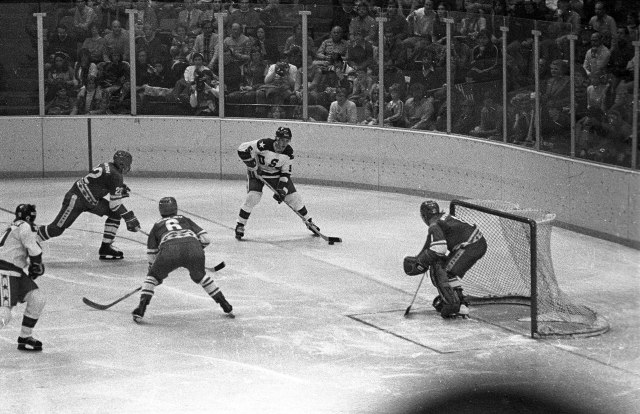
USA vs USSR Olympic hockey
By Henry Zbyszynski, CC BY 2.0, https://commons.wikimedia.org/w/index.php?curid=36046970

Few debates in Olympic sports history are as enduring as the contrast between professional and amateur athletes. Nowhere has that contrast been more dramatic than in men’s ice hockey, where the presence, or absence, of National Hockey League players reshaped the meaning of Olympic competition. From the first Winter Olympics onward, hockey reflected the Olympic ideal of amateurism long before professionals entered the picture.

For decades, Olympic rules barred professional athletes from competing. This restriction had a profound effect on hockey, particularly for countries like the United States and Canada, whose best players earned their living in the NHL. As the early history of the NHL shows, professional hockey quickly became a full-time career, placing its stars outside Olympic eligibility.

The competitive imbalance became increasingly obvious as European nations, most notably the Soviet Union, developed state-supported systems that allowed athletes to train full time while maintaining their “amateur” status. These systems flourished as Olympic hockey evolved beyond the experimental spirit of the 1924 Winter Games in Chamonix, giving some nations a structural advantage during the Cold War era.

The defining moment of the amateur era came at the 1980 Winter Olympics in Lake Placid. The United States team, made up almost entirely of collegiate players and led by coach Herb Brooks, defeated the heavily favored Soviet squad in what became known as the “Miracle on Ice.” The victory symbolized the ability of college athletes to compete against the world’s best under Olympic amateur rules.

That model, however, was nearing its end. By the late 1980s and early 1990s, the International Olympic Committee began dismantling amateur restrictions across multiple sports. Ice hockey followed. Beginning with the 1998 Winter Olympics in Nagano, NHL players were officially allowed to participate, a shift that fundamentally changed Olympic hockey history.

The inclusion of professionals transformed the tournament. National teams became all-star lineups filled with elite NHL talent. Games grew faster, more physical, and more tactically advanced. Olympic hockey increasingly resembled an extension of the NHL season, reflecting the league’s global influence rather than the developmental roots described in early professional hockey history.

Yet something was lost alongside those gains. The collegiate-era Olympics carried a distinct identity built on development, opportunity, and unpredictability. College players represented future potential rather than established dominance, creating moments that resonated far beyond medals and standings.

The contrast between NHL professionals and collegiate players in the Winter Olympics ultimately reflects two philosophies of sport. One prioritizes peak performance and star power. The other values growth, teamwork, and the improbable. Together, they illustrate how Olympic hockey has evolved from its amateur roots into a modern global spectacle.

Posted in Hockey, Olympics | Tagged , , , , , , , , , | Leave a comment

The Sports Archives – Before the Rings: The Story of the First Winter Olympics

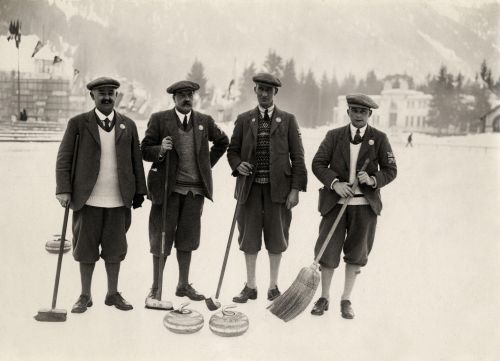
Curling Players during Winter Olympics, Chamonix

Nationaal Archief, No restrictions, via Wikimedia Commons

The Winter Olympics did not begin with the same certainty or grandeur as their summer counterpart. In fact, the first Winter Games were not even officially called the “Winter Olympics” when they took place. What began as an experiment in cold-weather sport would eventually become one of the most enduring and globally celebrated athletic traditions of the modern era.

The origins of the Winter Olympics are closely tied to the growth of organized winter sports in Europe during the late nineteenth and early twentieth centuries. Events such as figure skating, ice hockey, skiing, and speed skating had long histories in northern climates, but they struggled to find a consistent place within the Summer Olympic Games. Figure skating had appeared as early as 1908, and ice hockey debuted in 1920, but both felt out of place alongside track, field, and swimming.

To address this, the International Olympic Committee approved a separate winter competition to be held in conjunction with the 1924 Summer Olympics in Paris. Officially titled the “International Winter Sports Week,” the event was awarded to Chamonix, France, a resort town nestled in the Alps and already known for its winter tourism. The competition ran from January 25 to February 5, 1924, drawing athletes and spectators to a landscape far removed from traditional Olympic stadiums.

Sixteen nations participated, sending a total of 258 athletes, the vast majority of them men. The program featured nine sports across 16 events, including bobsleigh, curling, ice hockey, Nordic skiing disciplines, speed skating, and figure skating. While modest by modern standards, the range of competitions reflected a deliberate effort to showcase winter athletics as a serious and organized international endeavor.

Norway emerged as the dominant force of the Games, particularly in skiing and speed skating, disciplines deeply embedded in its national sporting culture. Norwegian athletes claimed the most medals overall, setting an early benchmark for excellence in winter competition. The success of countries with strong winter traditions reinforced the idea that cold-weather sports deserved their own global stage.

One of the most significant outcomes of the Chamonix Games occurred after the final medals were awarded. In 1925, the International Olympic Committee voted to retroactively designate the International Winter Sports Week as the first official Olympic Winter Games. With that decision, Chamonix was permanently written into Olympic history, and the Winter Olympics became a distinct and recurring event.

The early Winter Games differed sharply from the spectacle audiences recognize today. Venues were largely natural settings rather than purpose-built arenas. Weather conditions played a major role in scheduling and performance. Media coverage was limited, with newspapers and newsreels serving as the primary means of sharing results beyond the host nation. Yet these limitations gave the event an authenticity that resonated with athletes and spectators alike.

From that modest beginning in 1924, the Winter Olympics steadily expanded in size, scope, and popularity. New sports were added, technology transformed competition, and global participation grew well beyond Europe and North America. Still, the spirit of Chamonix remains central to the Winter Games’ identity, a celebration of athleticism shaped by ice, snow, and endurance rather than stadium lights.

The first Winter Olympics were not merely a companion to the Summer Games. They were a declaration that winter sport mattered on its own terms, and that declaration continues to echo every time the Olympic flame is lit against a backdrop of snow-covered mountains.

Posted in Olympics | Tagged , , , , , , | 1 Comment

The Sports Archives – From Empty Arenas to a New Major League: How the NBA Began

George Mikan photographed in 1945
George Mikan (1945). Public domain (U.S.) via Wikimedia Commons:
File page and license.

The NBA did not start as a sure thing, or even as the “NBA.” Its roots trace to a practical problem in the mid-1940s: big-city arena owners had buildings designed for hockey that sat dark for too many nights. Basketball, booming in colleges and growing in regional pro circuits, looked like the ideal tenant. What followed was a fast-moving experiment in major-market professional hoops that, through rivalry and reinvention, became the National Basketball Association.

In 1946, a group of owners launched the Basketball Association of America (BAA). Their advantage was infrastructure: large venues in major metropolitan areas and the ability to sell an event, not merely a game. The BAA positioned itself as “big league” basketball, more polished, more centrally organized, and more ambitious about geography than many earlier pro efforts.

At the same time, the National Basketball League (NBL) had been operating for years, primarily in smaller Midwestern markets. The NBL produced high-quality teams and serious talent, but it lacked the BAA’s arena footprint and big-city visibility. With two leagues competing for players, dates, and headlines, the late 1940s became a tug-of-war for legitimacy.

That tug-of-war ended in 1949, when the BAA and NBL combined to form what we now know as the NBA. The new league initially included a wide mix of franchises, some in marquee cities, others in smaller industrial towns. The map looked expansive on paper, but economics quickly applied pressure. Attendance varied wildly. Travel costs piled up. Several teams folded or relocated within a few seasons as ownership groups searched for stable markets and sustainable schedules.

The early on-court product also needed help. Without today’s emphasis on pace and spacing, games could bog down into deliberate, physical possessions, especially late, when teams with a lead would simply hold the ball to reduce opportunities for the opponent. Fans and owners noticed. If the league wanted repeat customers, it needed action.

In 1954, the NBA introduced the 24-second shot clock, an elegant rule designed to eliminate stalling and force continuous offense. The idea is widely credited to Syracuse Nationals owner Danny Biasone, who tested how long it typically took teams to produce a reasonable shot and concluded that a 24-second limit would keep play moving. The impact was immediate: scoring increased, tempo rose, and the sport’s entertainment value improved in a way that made professional basketball easier to market.

Every emerging league also needs recognizable stars, and the NBA’s first true national attraction arrived right on time. George Mikan, the dominant big man of the era, became a centerpiece for the Minneapolis Lakers and a symbol of the league’s competitive credibility. His size and skill were so influential that rules and strategies evolved around the challenge of defending him, an early example of how a single player could shape the sport’s direction.

By the late 1950s and into the 1960s, the NBA had begun to stabilize: franchises concentrated in stronger markets, iconic teams started to develop enduring identities, and the league gradually expanded its reach through television and improved promotion. The start of the NBA, then, is best understood not as one moment but as a sequence, BAA ambition in 1946, a decisive merger in 1949, and the shot-clock revolution in 1954 that helped the sport finally match its major-league aspirations.

What began as a solution to empty arenas became a durable institution. The NBA’s origin story is a reminder that leagues are built as much by business decisions and rule innovations as by box scores, and that the path from experiment to tradition is rarely straight.

Posted in Basketball | Tagged , , , , , , , | Leave a comment

The Sports Archives – How to Choose the Right Gear for a Better Game

golf ball

Image by Pexels from Pixabay

If you are new to golfing or just simply trying to improve your performance, you need to have the right gear to make a noticeable difference in your game. When you have good equipment, it won’t necessarily guarantee that you will have a perfect swing, but it does give you support, consistency and comfort. 

These are all the things you need to play with confidence. When you choose the right gear, it’s not about having the most expensive items out there. It’s about understanding what is going to work best for your goals, needs and style.

Start With Essentials That Support Your Swing

You need to get a few core pieces of equipment in order to play very comfortably and effectively. For example, gloves that have the right shaft legs can help you to generate a lot more power, while well fitted gloves are going to improve your grip and also prevent slipping. Shoes that have the proper traction will keep your stance very stable, especially when you find yourself on uneven terrain.

Something as simple as the type of golf balls that you use can make a huge difference. Some balls have been designed for distance and others will help you to maintain control. As you start to experiment with your gear, you need to pay attention to exactly how each piece feels while you are practicing. The more comfortable and natural your equipment feels, the easier it will be for you to focus on your form while playing.

Choose a Golf Bag and Accessories That Fit Your Routine

You can find yourself out there on the course for many hours at a time. This is when you will find out that comfort and convenience truly matter just as much as performance. A golf bag that fits all of your playing habits will help you to stay organized. 

This will result in less fatigue. If you prefer to walk the course then you should choose a lightweight carry or even a stand bag that has some comfortable straps. If you use your cart frequently then a cart bag will give you more storage and stability. You should consider accessories that will support your routine

Consider things such as club cover, hydration holders, range finders and towels. They can help you to keep your game smooth and enjoyable at the same time. Good organization are going to help you to stay focused, reduce your frustration and it will also allow you to spend much more time actually playing the game.

Gear That Helps You Play Your Best

It’s easy to get tempted when you see professional level equipment , but your gear should always match your current level of experiences. Beginners will often benefit from clubs that have larger sweet spots and flexible shafts as well as forgiving designs. 

This makes it a lot easier to learn. Intermediate players often prefer equipment that offers them a lot more control so that they can refine their techniques. While advanced players usually know exactly what feels best for them. But even so, they can still benefit from trying new technology.

Posted in Golf | Tagged , , , , , , , | Leave a comment

The Sports Archives – How the Right Sports Training Tools Elevate Your Game

virtual boxing

CC0 Licensed Image Courtesy of Freepik

Sports training tools are nothing new, and almost every athlete, professional or amateur, beginner or experienced, can benefit from using the right ones. Depending on your chosen sport, there are some tools you can become reliant on and others you will never use. However, there is a wide range available from classic training to highly advanced and cutting-edge. From tools that enhance power to motivational methods, here are some game-changing examples.

Improved Form and Technique

Almost every sport requires specialized equipment for training at peak performance levels. Without the right scenario training, you can’t really hope to achieve a better level of performance within a chosen sport. Take baseball as an example. Well-made pitching machine baseballs are hurled at you between 20 mph and 100 mph. As you progress and train, upping the ante with professional-level speeds will help finesse your form and encourage improved technique.

Sports Training Tools Enhance Power

Most professional athletes spend between 5 and 6 hours per day training, including hitting the gym. Gym methods are vital for most sports, where power and strength can give you an advantage. There are many methods, but some of the best include a mixture of the following:

  • Traditional strength training tools such as kettlebells, free weights, and resistance bands.
  • Tech-based tools like velocity monitors, AI-enabled equipment, and force plates.
  • Power-focused regimens that include plyometrics, dynamic effort, and contrast training.

Boosted Speed and Agility

Footwork, speed, and balance are ideal for almost every sport. When you focus on these core aspects of top form and physique, your game is elevated to another level. Using equipment like ladders and even cones will help with coordination. Some other results include speed enhancements, an ability to quickly change direction, and top-level footwork. These kinds of skills are vital for sports such as football, soccer, boxing, and of course, mixed martial arts.

Helping to Prevent Injuries

A sports injury can be life-changing at its worst or a mild annoyance at best. However, you are prone to injury when playing any kind of sport. Even baseball, which is relatively stationary, can be hazardous due to the need for sudden bursts of speed. Not warming up would be a big mistake for this game! However, wearing the proper footwear, headgear, and protective padding for a range of sports is vital for helping prevent common injuries and keeping muscles warm.

Insights from Sports Training Tools

Tech is everywhere today, including AI. It is estimated that around 85% of professional athletes and teams use AI-powered analytics systems to enhance performance. With AI-driven sports training tools, you can set and achieve your personal growth goals from powerful insights.

Technique optimization

With computer models and motion analysis, you can gain powerful insights never before possible. You can identify flaws in technique using 3D motion tracking for targeted adjustment.

High personalized recovery

Using real-time physiological data, AI can create a personal recovery plan in real-time. This includes resting periods, nutrition and hydration, and even injury prevention suggestions.

Predictive analytics

AI systems can monitor you at all times. When you sleep, how you train, and even personal biomechanics can be monitored for models that can predict performance and injury likelihood.

AI tools and data management are revolutionizing sports and helping athletes become as powerful as they have ever been. Through precise data analysis, models, and prediction, AI and data insights will enhance performance with strategy suggestions and injury prevention.

Optimized Recovery Processes

Recovery is one of the most overlooked parts of enduring a sport, especially by beginners and amateurs. Top-level athletes spend a lot of time on their recovery processes in order to stay fit, healthy, and motivated. Modern tools for enhanced recovery include compression boots, massage devices, and even cryotherapy chambers. Of course, some of these are pretty expensive. However, it doesn’t hurt to take a hot or cold bath and rest as much as you need.

Increased Focus and Reaction Time

The power of mental fortitude shouldn’t be underestimated when it comes to sports. Many sports are more a test of mental power than physical strength. Talented boxers can win a match before it begins because they have already “psyched out” their opponent. Training tools such as VR  simulations are being used by top-flight athletes to train the brain for different scenarios and events that they can experience, allowing them to adapt and react to changes in real time.

Sports Training Tools Encourage Motivation

It is estimated that around 15% of athletes experience some level of burnout, whether mild or severe. Staying motivated to play your sport, train harder, and even socialize can be challenging for some people, especially after injury. However, the right tools can help you keep it up:

  • You can use apps and tools to track progress and measure your improvements.
  • AI tools can monitor real-time performance and provide feedback you can use.
  • Tools that help improve physicality can help you see results that motivate training.

Mimicking Sports-Specific Training

Practice makes perfect. But what about going beyond perfect? There are many variables when it comes to sports, and anything can happen. To develop the right skills and truly become more, you need to adapt to changing conditions. Targeted simulations that mimic a sport and conditions as much as possible are powerful tools in a kit bag. This means you can train for highly relevant scenarios that result in supreme skill development for in-game performance.

Summary

Improving your overall form and technique is a challenge in itself. So what can you really do? The right sports training tools, such as baseball pitchers, are a perfect way to improve your physical prowess for any sport. Of course, we live in an AI world now, and AI tools can be useful for sports training. They can use data to suggest technique changes, offer personal recovery plans, and even predict if your form will cause an injury. But to go beyond typical training, it also helps to place yourself in various scenarios that train your brain to adapt and react quickly.

 

Posted in Fitness/Wellness, Other | Tagged , , , , , , , , , | 1 Comment

The Sports Archives – Ways of Protecting Your Young Football Players

Football is more than just a game. It gives the kids opportunities to learn skills like teamwork, discipline and create lifelong friendships. Stepping onto the field for young football players can be an eye-opening experience in terms of personal growth and ambition. However with this opportunity comes great responsibility. One which coaches, parents and sports organizations all play a very important role in upholding in terms of ensuring their safety. Creating safe environments and using good  practices will make sure that young football players can do their thing without unnecessary risks holding them back.

american football

Photo by Dave Adamson on Unsplash

Prioritizing Physical Safety on the Field

Football’s physical demands come with some risks (obviously) that can still be managed in order to keep the sport fun for young athletes. Sprains, fractures and concussions are not uncommon for these players. But preventing these requires taking an aggressive stance.

Proper Equipment Is Important

Wearing the right gear is often what stands between minor slips and serious injuries. Helmets, shin guards and properly fitted cleats are non-negotiables. Coaches and parents must make sure that every player has high-quality, well-maintained equipment before taking to the field. Especially helmets, as these provide vital head injury protection, so no cutting corners here.

Training for Technique

One of the best ways to reduce injury risk is teaching the kids proper technique. Young athletes need guidance in how to tackle, block and move safely during games. This will not only improve their performance but can reduce the risks in high-intensity competition.

Stretching and Conditioning

An organized warm-up and cool-down routine can help players avoid muscle strains. Young athletes can also benefit from conditioning programs designed to build their strength and flexibility gradually over time. Stronger athletes tend to experience fewer injuries.

Building Mental Resilience 

While physical safety remains the biggest concern for young players, their emotional well-being should also be given the same weight. Pressure to perform, balance academics and compete at their peak can place a lot of strain on them.

Open Communication Channels

Coaches and parents must create an environment in which young players don’t feel scared to discuss any concerns that come up during games or training, whether it is nerves about an upcoming match or burnout issues. Players should feel supported mentally. 

Positive Reinforcement

Competition among young football players can be intense, but kids thrive on encouragement rather than criticism. Positive reinforcement builds their confidence. This then builds-up their passion for the game on a football field that’s free from stress or more pressure.

Teaching Stress Management Techniques 

Give the players the mental resilience tools they need like mindfulness exercises and breathing techniques. This can make a huge difference in how they manage stress in all aspects of their lives, from the sports fields to their everyday living situations.

Conclusion 

Creating the best possible environment for young football players involves more than simply reducing their injuries. It means making sure that you are helping them grow on and off the field. Coaches and parents can help young players succeed physically and mentally by prioritizing their physical health and building their mental strength. Doing so will create a sustainable legacy in which football remains not just a sport to be played but something to get excited about for the kids. Do your bit in protecting the future stars of the football field.

Posted in Football | Tagged , , , , , , , , , , , , , | Leave a comment

The Sports Archives – The 1970 AFL–NFL Merger: The Deal That Changed American Football Forever

AFL and NFL teams at the time of the 1970 merger.

AFL and NFL teams at the time of the 1970 merger.

Source: Wikimedia Commons (public domain).

By the end of the 1960s, professional football in America had outgrown its small-town roots and turned into a billion-dollar battleground. Two rival leagues, the established National Football League (NFL) and the upstart American Football League (AFL), were locked in a costly arms race for players, fans, and television contracts. Their rivalry would culminate in one of the most important agreements in sports history: the 1970 AFL–NFL merger, which unified the game, reshaped the business of sports, and paved the way for the modern Super Bowl era.

The Rival Leagues

When the AFL launched in 1960, most sportswriters dismissed it as a fad. But its young, aggressive owners, including Lamar Hunt of the Kansas City Chiefs and Bud Adams of the Houston Oilers , were determined to challenge the NFL’s dominance. They built teams in new markets like Dallas, Denver, and Oakland, and they weren’t afraid to spend big. The leagues began an all-out bidding war for college talent, driving player salaries to unsustainable heights.

The AFL’s innovations, colorful uniforms, televised games, and wide-open offensive play, began to win fans, especially among younger audiences. Meanwhile, the NFL’s traditional franchises still commanded national prestige. But by 1966, both sides realized they were bleeding money and needed peace.

The Merger Agreement

On June 8, 1966, NFL Commissioner Pete Rozelle and AFL founder Lamar Hunt announced a historic merger agreement. The two leagues would combine under the NFL name beginning with the 1970 season. Until then, they would maintain separate schedules but play a championship game each year, an event soon dubbed the Super Bowl.

The merger required approval from the U.S. Congress, which granted antitrust exemptions in exchange for the creation of two new franchises: the New Orleans Saints and the Cincinnati Bengals. It also established a single draft, shared television revenue, and a new league structure featuring two conferences, the AFC and the NFC, each with three divisions.

The First Unified Season

The 1970 season marked the first fully integrated NFL campaign, with 26 teams playing under one banner. The newly formed American Football Conference consisted mostly of former AFL teams, while the National Football Conference housed traditional NFL powers. That fall, fans saw the birth of modern football as we know it, unified schedules, standardized rules, and a national television presence that elevated Sunday football into a weekly ritual.

The Super Bowl quickly became the sport’s crown jewel. What began as an experimental championship game in 1967 now symbolized the success of the merger itself. By the mid-1970s, the NFL had become America’s most-watched sport, overtaking baseball in television ratings and cultural impact.

Lasting Legacy

The AFL–NFL merger was more than a business deal; it was the blueprint for modern professional sports. It unified schedules, created parity through the draft and revenue sharing, and proved that cooperation, not rivalry, could make the game stronger. Today’s 32-team NFL, with billion-dollar broadcast contracts and global reach, still stands on the foundation laid by that 1970 agreement.

Posted in Football | Tagged , , , , , , , | Leave a comment

The Sports Archives – The Birth of the National Football League: From Canton to a National Power

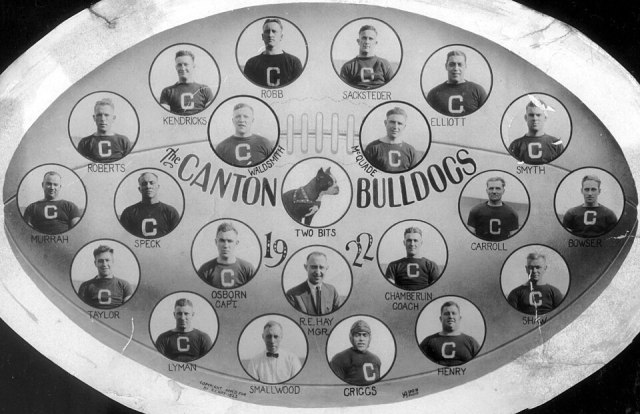
Canton bulldogs 1922 team

The 1922 Canton Bulldogs — early NFL champions and the pride of Canton, Ohio.

Source: Wikimedia Commons (public domain).

Today’s National Football League is a multibillion-dollar spectacle — but its roots trace back to a smoky car dealership in Canton, Ohio, in the summer of 1920. What began as a small alliance of regional football teams quickly evolved into the most influential professional sports league in North America. The NFL’s birth was not about glamour or television contracts; it was about survival, credibility, and a desperate need to bring order to chaos.

The Wild West of Early Pro Football

Before the NFL, professional football was a free-for-all. Dozens of independent teams across Ohio, Indiana, Illinois, and Pennsylvania barnstormed from town to town, negotiating pay on the fly and often poaching each other’s players. There were no standardized rules, no contracts, and no championship system. College football dominated the headlines, while pro teams struggled to be taken seriously.

By 1920, owners realized that if the sport was ever going to grow, it needed structure — and a united front against escalating player salaries. That need for order brought together a handful of pioneers in Canton, home of one of the strongest clubs in the region: the Canton Bulldogs.

The Canton Meeting: September 17, 1920

On September 17, 1920, representatives from four Ohio teams — the Canton Bulldogs, Akron Pros, Cleveland Indians, and Dayton Triangles — gathered at the Hupmobile auto showroom owned by Ralph Hay. There, they formed the American Professional Football Association (APFA). Jim Thorpe, the legendary athlete of Olympic and Carlisle fame, was elected its first president, lending instant credibility to the fledgling league.

Over the following weeks, other teams joined: the Rock Island Independents, Decatur Staleys (soon to become the Chicago Bears), and Racine Cardinals (later the Arizona Cardinals). The new league imposed a few simple rules — standardized contracts, salary limits, and exclusive player rights — enough to stop the financial bleeding and keep teams from cannibalizing each other.

From APFA to NFL

In 1922, the league officially changed its name to the National Football League. The Akron Pros won the first APFA championship, but franchises came and went rapidly as the league sought stability. Under the leadership of innovators like George Halas and Curly Lambeau, the NFL survived the turbulent 1920s and the Great Depression, slowly building a loyal fan base in working-class cities.

By the 1930s, innovations such as scheduled championships and radio broadcasts began turning football into a national pastime. The seeds planted in Canton had taken root, and the league’s growth accelerated after World War II — eventually merging with the rival AFL in 1970 to become the modern powerhouse we know today.

Legacy of the Canton Gathering

The NFL’s founding was humble — no grand arenas or television cameras, just a group of determined men around a wooden table trying to give their sport a future. A century later, the league’s headquarters may sit in New York, but its heart remains in Canton, where the Pro Football Hall of Fame honors those who transformed that 1920 meeting into a century of Sunday glory.


Posted in Football | Tagged , , , , , | 1 Comment

The Sports Archives – The Birth of the National Hockey League: How Chaos Created a Legacy

Montréal_-_Hôtel_Windsor_(Windsor_Hotel)
The Windsor Hotel in Montreal (postcard, c. 1919), where NHL founders met in November 1917.  Source: Wikimedia Commons.  Public domain.

The National Hockey League (NHL) didn’t begin as a grand vision for a modern sports empire. It was born from frustration, rivalry, and a mid-winter power struggle in Montreal. Yet, from that turmoil in 1917 grew the world’s premier professional hockey league — one that would eventually span two continents and shape the identity of the sport itself.

The Precursor: The National Hockey Association

Before the NHL, there was the National Hockey Association (NHA), founded in 1909. The NHA featured some of the earliest professional hockey clubs in Canada, including the Montreal Canadiens, the Ottawa Senators, and the Quebec Bulldogs. But internal politics turned poisonous, fueled by one man — Eddie Livingstone, owner of the Toronto Blueshirts. Livingstone’s relentless disputes over contracts and league operations pushed the other owners to revolt. By 1917, they decided to start fresh — without him.

The Breakaway: November 1917

On November 26, 1917, representatives from Montreal, Ottawa, and Quebec met at the Windsor Hotel in Montreal and founded the National Hockey League. Their workaround was simple and effective: suspend the NHA and immediately form a new organization, shutting Livingstone out.

The league’s first lineup included the Montreal Canadiens, Montreal Wanderers, Ottawa Senators, and a hastily assembled Toronto club operated by the Toronto Arena Company — a team that would later evolve into the Toronto Maple Leafs.

A Rough Beginning

The NHL’s first puck drop came on December 19, 1917. The league faced chaos from the start: the Montreal Wanderers’ arena burned down weeks into the season, forcing them to withdraw. Toronto went on to win the inaugural NHL championship and then defeated the Vancouver Millionaires for the Stanley Cup in 1918. The NHL had survived its turbulent debut — a crucial victory for a league built in haste and defiance.

Growth, Expansion, and the “Original Six”

In the 1920s and 1930s, the NHL absorbed rival leagues and crossed into U.S. markets, planting teams in Boston, New York, Chicago, and Detroit. By 1942, only six franchises remained — the storied Original Six era that would dominate for a quarter century and forge enduring rivalries and dynasties.

Legacy of a Rebellion

It’s fitting that the NHL — now a global, billion-dollar enterprise — began as an act of rebellion. In trying to escape one man’s stubbornness, a handful of Canadian owners unintentionally built one of the greatest sports leagues in history. Over a century later, the NHL’s first spark still burns: a league born not of peace, but of passion, competition, and the irresistible chaos of hockey itself.

Posted in Hockey | Tagged , , , , , | 1 Comment

The Sports Archives – From the Track to the Road: How Sports Cars Like Porsche and Audi Translate Racing DNA Into Everyday Vehicles

porsche race car

Image by Jiří Rotrekl from Pixabay

Why the Appeal of a Porsche Lease Goes Beyond Status

A Porsche lease isn’t just about getting behind the wheel of a shiny new car.
It’s about tapping into a legacy of engineering that blends track performance with everyday practicality.
When I first explored leasing a sports car, I wasn’t chasing a badge to impress neighbors—I wanted a taste of precision driving without the lifelong financial commitment of ownership.

The first time I slid into the driver’s seat of a German sports car, the cabin felt different—like every button and contour was built for a purpose.
This wasn’t a marketing gimmick.
It was a carryover from decades of racing DNA reimagined for daily roads.

Click here for a porsche lease if you’re curious about options that bring that same DNA into your garage.

Racing Heritage Built Into Everyday Driving

Sports cars weren’t born in traffic—they were born on tracks.
The engineers responsible for building endurance winners often work on the same suspension systems and gear ratios that end up in the models sitting in suburban garages.
I remember renting one for a weekend road trip up the California coast, and even on winding Highway 1, the car hugged corners like it was still racing at Le Mans.

Audi has done something similar, pulling lessons from rally racing into its Quattro all-wheel drive.
The way it grips wet roads on a regular commute makes you feel like you’re handling a championship course.
This cross-pollination of racing and road driving is what separates these machines from ordinary sedans.

Lease Terms That Open the Door to Performance

Buying outright can feel like signing away years of your savings.
Leasing, on the other hand, allows enthusiasts to experience that same engineering without a decade-long loan.
When I negotiated my first lease, the monthly payments were less than I expected, and the ability to switch models after a few years felt liberating.

What surprised me was how transparent the process could be if you knew what to ask.
Mileage caps, residual value, and wear-and-tear clauses sound intimidating, but once explained, they give clarity rather than confusion.
The flexibility of a lease means you don’t have to be married to one particular vehicle forever—you can upgrade as new innovations come out.

The Everyday Thrill of Driving Precision Machines

Imagine pulling out of your driveway and knowing your morning commute could feel like a lap around a circuit.
That’s the everyday magic of these cars.
Even at city speeds, the steering feedback is razor sharp, and the acceleration is instant.

One morning, stuck in LA traffic, I found myself smiling as the car’s adaptive suspension ironed out potholes.
It’s strange, but that mix of comfort and performance kept me energized for the day.
You don’t need an empty racetrack to appreciate the engineering—sometimes, you notice it most at 25 mph in rush-hour gridlock.

Comparing Porsche and Audi Experiences

While both brands deliver performance, they do it in different ways.
The Porsche approach is minimalist—pure steering, light weight, and a driver-first philosophy.
Audi, by contrast, focuses on tech-driven innovation, loading the cockpit with digital displays and advanced drive modes.

During a test drive in an Audi S-line coupe, I noticed how the cabin wrapped around me like a digital command center.
When I switched back into a Porsche later that week, it was the analog purity—the mechanical connection—that stood out.
Neither approach is wrong; it’s about personal preference and what you want to feel every time you press the start button.

Cost Versus Value in Leasing

A luxury vehicle lease will never be the cheapest option, but it can be the smartest for certain lifestyles.
If you prioritize driving experiences over long-term ownership, leasing makes sense.
You avoid depreciation headaches, trade in sooner, and often get warranty coverage included.

I once calculated the difference between leasing a sports coupe and buying a mid-range SUV.
The monthly outlay was similar, but the emotional payoff was worlds apart.
That’s when I realized value isn’t only measured in dollars—it’s measured in experiences per mile.

Story From the Road: A Weekend Drive That Sealed the Deal

A close friend of mine once invited me to join him on a desert drive after he leased his first Porsche.
We left before sunrise, the desert air crisp, the roads nearly empty.
For hours, we carved through mountain switchbacks, the sound of the engine echoing off canyon walls.

By the time we reached Palm Springs, I understood why he had chosen leasing over buying.
The flexibility allowed him to enjoy a car that would have otherwise been out of reach, and the memories of that weekend alone justified the decision.
Sometimes, it’s not about owning the car forever—it’s about owning the moment.

Looking Ahead: The Future of Sports Car Leasing

The next generation of performance cars is arriving with hybrid systems and electric drivetrains.
That means even sharper acceleration, quieter cabins, and new leasing opportunities.
Imagine stepping into a fully electric performance coupe with instant torque, yet returning it in three years for the next evolution.

Manufacturers are already experimenting with flexible subscription models that take leasing a step further.
You could rotate between different models in the same year, depending on your needs.
That’s not science fiction—it’s a shift already happening in premium markets.

Final Thoughts

Leasing a sports car blends the thrill of racing heritage with the practicality of everyday driving.
Whether you’re leaning toward Porsche’s driver-focused purity or Audi’s tech-loaded comfort, a lease can put that experience within reach.
The key is knowing your priorities: do you want the raw, connected feel of a classic driver’s car, or the futuristic vibe of a tech-infused cockpit?

At the end of the day, it’s less about ownership and more about the journey.
And sometimes, the smartest way to enjoy that journey is through a lease that lets you upgrade with every new wave of innovation.


Posted in Motorsports | Tagged , , , , , , , , , | Leave a comment