What’s standing in between you and getting fit? Nothing really, unless it’s just your motivation. That in itself can be a very hard thing to get around. But what if getting fit was really enjoyable? Surely that would eliminate all barriers between you and the very best physical condition you could be in. Well, how on earth could getting fit be enjoyable, let alone fun? That’s easy, indoor soccer, or futsal!
Indoor soccer is a variation of football (soccer) played inside on floors made of wood or some artificial material. Indoor soccer has been around for years and was played in the early 1900’s mostly in Brazil and Uruguay, where outdoor fields where not always available. Presently, there are many amateur, collegiate and professional leagues in the United States, Canada and Mexico. In Brazil, indoor football is known as showbol. Other variants of the sport, such as futsal and five-a-side football, are popular in South America, Australia and Portugal. The rules and penalties of indoor football vary across the different flavors of the sport, however, most variants do not enforce the off-sides rule.
Playing indoor soccer once or twice a week will increase your cardiovascular fitness a lot, it will also give you a muscular work out and burn calories. It’s a very physical game, so you won’t have any choice to jump around and move your body. It’s so much fun as well! It’s competitive, quick, and engaging. By the time you’re halfway through a game, you’ll suddenly realise that you’ve been doing a really strenuous work out without even noticing.
Join a league and play a full season, so that you play continuously. Futsal is indoors, so it can be played all year round and you don’t have to be dormant for part of the year. There are many indoor soccer and futsal venues around the place, like Aussie indoor sports for instance. Aerobic endurance is so important to your all-round fitness, and can so easily be neglected. Don’t let your physical condition slump from inattention, try to do something aerobic every day, no matter what it is. It will pay off in the long run.
The sport of motocross is an adrenaline rush for racers and spectators alike. Originating in the U.S. in the 1960s, motocross has come a long way from its humble beginnings. Now the sport is enjoyed around the world, as fans have fallen in love with the high speeds and amazing aerial maneuvers displayed by professional motocross riders. Though the U.S. is still the epicenter of the sport and draws the best riders from around the world, it is now a global sport with events held almost everywhere. Here is a rundown of the biggest motocross events of the 2013 season.
Supercross is the most popular of all motocross racing. Every year, the world’s best riders meet at stadiums across the U.S. to tackle the most challenging racing courses the world has to offer. Thousands of spectators fill baseball and football stadiums to watch their favorite riders fly through the air and compete in bar-to-bar motorcycle action.
The Monster Energy AMA Supercross Series starts out West in California each and every year. Though Anaheim hosts three Monster Energy Supercross Series races each year, the most famous Supercross race takes place at the famous Daytona Speedway. As the only Supercross race to not take place in a traditional stadium, the Daytona Supercross is held in the infield of the gigantic Daytona oval. The additional seating provided by the Daytona Speedway comes in handy, as thousands of Bike Week tourists flock to the grandstands to catch a glimpse of the exciting action.
The AMA (American Motorcycle Association) National Motocross Series is the pinnacle of motocross racing. The racing series starts almost immediately after the AMA Supercross Series wraps up in the beginning of May. Similar to Supercross, the AMA Nationals start out West with the California tracks and makes its way east every weekend. With the world’s best motocross racers participating in every race, no one race is more significant than the other. However, since southern California is the birthplace of the sport, the California races draw the most diehard fans of the sport.
Since the very beginnings of the sport, the Motocross des Nations has been the most significant motocross race each year. Unlike other motocross events, the Motocross des Nations is a team event where the best racers from countries around the world compete against each other in each motocross class for national pride. From the inception of the sport, the U.S. has consistently produced the best riders. However, Belgium and France have given the U.S. riders a run for their money on more than one occasion.
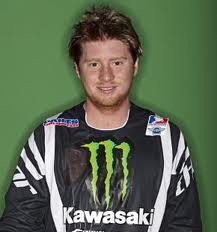
Ricky Carmichael, May 2007
It is not yet clear who will participate in the 2013 Motocross des Nations or where exactly it will be held. Taking place in the fall, after the completion of the 2013 racing season, everyone must wait until the racing season wraps up before determining who this year’s racers will be. U.S. fans of the sport are clamoring for the opportunity to cheer on their favorite riders on U.S. soil, but time will tell how this year’s event will unfold.
Motocross is without a doubt the most exciting sport on the planet. Professional motocross events take place around the globe, but the U.S. is home to the world’s best riders and hosts the biggest races in the industry. This year’s motocross events are shaping up to be more exciting than ever before, so check your calendars and get ready for some exhilarating motocross action.
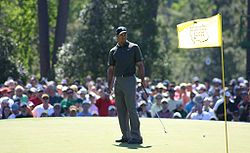
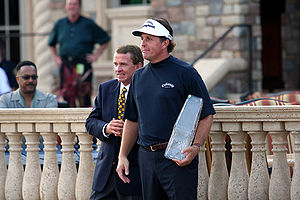
Spring is here, and for many of us that only means one thing: the Masters. And with the PGA tour heating up long before the weather, we are sure to be in for a real treat come April. Betting has already started, and the latest odds from Vegas are coming in, but they all point to the same three men. Tiger Woods seems to have finally arrived back at the top-level following a difficult couple of years, both professionally and personally. Whereas Rory McIlroy had the best year of his career in 2012, but has had a rough start to 2013. Phil Mickelson is a tour legend who should never be counted out. However, there has been a late emergence of a golfer who could shake things up at Augusta. Brandt Snedeker has recently made himself a contender in a tournament which tends to favor US golfers (six of the last 10 winners have been American). Let’s take a look at each golfer in a little greater depth.
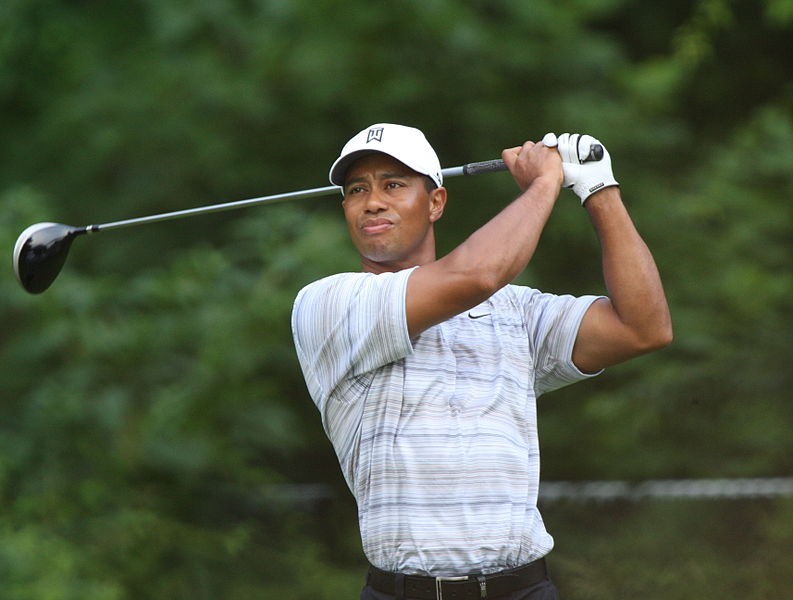
A few years ago, Tiger Woods had one of the biggest falls from grace that a professional athlete has ever experienced. Although it was a personal issue, it affected his game in ways that no one could have predicted. But a new swing and recent convincing wins at Torrey Pines and Doral have put him back in the familiar position of favorite for this year’s Masters Tournament. It will take a special performance to beat Tiger, and a brave move to bet against him.
If there is one man who can beat the mighty Tiger Woods, it is the 2012 USPGA winner Rory McIlroy. The Northern Irishman had a storming 2012, but the start of this year has left much to be desired. However, his recent play in Doral at the WGC-Cadillac Championship saw his first under par round of 2013, which could offer a glimpse of a return to form just in time for the Masters – a major that has so far eluded him. McIlroy is still looking for consistency this year however, and barely a week before Doral, we saw him walk off the course in frustration at the Honda Classic
Phil Mickelson is a player who has often struggled to find consistency throughout his golf career, but if there is one tournament in which he can always come up trumps, it is the Masters. In the last eight years, Mickelson has won three Green Jackets, and only finished outside of the top 10 three times in those eight years. Last year saw him tied for third, and he is placed third in the odds for this year at 10/1.
An outside candidate of sorts, Snedeker wins a place among the list of favorites courtesy of an excellent few months in which he has won his fifth PGA tour win, and received the February PGA tour player of the month award. A continuation of form could see Snedeker win his first major as a 16/1 outsider.
Phil Oscarson is an avid golfer/golf enthusiast. If you’re like Phil, and absolutely can’t wait for the Masters to start, you can try to pass the time by finding a golf course near you at americangolf.com.
Sometimes it seems like Tiger Woods was born holding a golf club in his hands. This is not too far of a stretch. Ever since he was a child, Woods played golf with his father. And by the time he was eight years old, he was showing remarkable talent and skill for the sport. This is evident by his young appearance on the television show “Good Morning America.” His father was Woods’ mentor and really helped him reach his potential as a golfer. In addition, Woods is an extremely competitive person. He once said that if he were to play basketball, he would want to be that person with the ball in his hands, taking the last-minute shot to win the game.
Impressive Track Record
Tiger Woods has a long list of successes as a professional golfer. In 1997, Woods became the first African-American, and the youngest man, to ever win the U.S. Masters. His career did not stop after such an impressive display of athleticism. From 2001 to 2012, Woods was able to “rake in the dough” with fourteen Majors, only second to Jack Nicklaus. During this time, Woods was referred to as the highest paid professional athlete. Woods has more career earnings than any PGA player ever. This is due to the fact that he has won 76 official PGA Tour events. This is the second highest amount of wins in golf history.
In the 1997 Masters Tournament, Woods won with a nine-shot lead. In 1999, he won the PGA Championship with one stroke. The very next year, he won the U.S. Open by 15 strokes. Within that same year, Woods won the Open Championship and the PGA Championship, making a very impressive stand by taking three championships in a single year. From 2001 to 2008, he has won two more PGA Championships, two Open Championships, three Masters Tournaments, and two U.S. Opens. Overall, Woods has a pretty impressive record.
Personal Issues
Tiger Woods has had his own share of “ups and downs.” When his father died in 2006, Woods struggled with playing his best. However, he still won a few championships. In 2010, Woods made his return to golf after a year off due to personal reasons. His abilities were not up to “par” with his regular performance standard.
On a more personal note, Tiger Woods has been known to associate with Michael Jordan. Jordan is actually a pretty good golfer, but he says that he must play a perfect game just to keep up with Woods. This is due to the amazing drive that Woods has. He typically shoots forty to eighty yards past the average professional golfer. Jordan, strong as he is, has a hard time keeping up with Woods’ drive.
Well-Rounded
Along with his ability to drive, Woods has set some impressive records. He has been the PGA “Player of the Year” ten times, along with the PGA Tour “Player of the Year.” He has also been the PGA Tour Money Leader an astounding nine times. In addition, he has received the Vardon trophy eight times and the Byron Nelson Award nine times.
Overall, Woods has stood out as one of the best golfers the PGA has ever seen. He still holds some of the top positions in PGA history and sets the standard for other players to achieve.
About the Author: Phil Oscarson is an avid golfer/golf analyst. He currently resides in the southern California region so he’s able to golf year round. When Phil isn’t golfing or writing, he is usually consulting for GolfZing.
I can remember the time when attending a football match involved being treated like cattle, finding yourself locked in a pen, being in danger of violence from other fans and suffering the worst imaginable facilities at the grounds. The whole day seemed like a feat of endurance in which you were constantly dodging the bullets of attacks by rival fans, ill-treatment by the police and food poisoning from the catering. Then another much worse issue reared its ugly head when 96 Liverpool fans were killed at Hillsborough in 1989.
Aftermath
The Hillsborough disaster saw the start of the many changes which transformed the experience of attending a football match forever. The incident served to highlight the appalling conditions fans were forced to endure, the unsafe nature of the stadia and the unacceptable attitudes of the police. The subsequent Taylor Enquiry and report led to stadia becoming all seated with the redevelopments of the grounds to accommodate this also seeing an improvement in other facilities. It was at this point that the seminal moment arrived in the shape of Sky Television. Up until this point football on television had been confined to highlights of two or three matches each week with live coverage available only for cup finals. Football was decidedly the world of the hardened fan and received little exposure in the media. All that changed with the arrival of Sky who broadcast live matches and carried highlights of every top flight game. New money poured into football and new, better stadia were built. Football was receiving a great deal more exposure and the new fans who may have shunned the old grounds and overall experience were enjoying the sport in the new more benign surroundings. All seated stadia were comfortable and were easier to police especially with new surveillance technology and so the violence associated with the game began to subside.
New Fans
Prior to 1989 attending football was such a harsh experience and the sport so poorly publicised that one particular section of society were distinctly absent from the games – women. The absence of women did not help the generally hostile atmosphere and the facilities provided for them were disgraceful. I know this because I was one of the few who did attend matches. New money, new stadia, new attitudes made football a friendlier place and now women became attracted to the sport in large numbers increasing revenue for the game even further. The situation snowballed with football being transformed into a glittering and often luxurious affair with live matches on our screens seemingly every day.
Improvement?
You would think that all of this would be cause for celebration but for many who remember the old days it really isn’t. Obviously comfortable and safe stadia are very welcome and increased television coverage a distinct bonus but the evolution of football has brought with it other changes which I believe are ruining the game. Firstly there is the issue of who is actually attending the matches. Sadly many fans have simply been priced out of the market and large portions of the grounds are given over to corporate boxes. These factors, combined with the absence of standing areas, have killed the atmosphere at many matches. The riches in the game have also made the big clubs stronger and the minnows weaker, leading to the same small group of clubs dominating affairs every season. The game is simply too predictable now. Sure there are always shock results but we all know who is going to win out in the end. I miss the days when you genuinely did not know who would win the league and who their chief rivals would be. Now everything is about premiership survival to save the finances. I also miss the days when players were loyal to their clubs rather than their wallets.
Structure
The other changes which are destroying the game are the new competition structures. The European and UEFA Cups were thrilling knockout competitions which rose to a crescendo as they progressed. The Champions League and Europa Cup are turgid affairs with far too many games which only become interesting in the latter stages and, like the Premier League, generally produce predictable winners. What chance is there these days of Red Star Belgrade winning the Champions League or Notting Forest getting promoted to the Premier League and winning it at the first attempt? The answer is none but both these events did happen in the past. Sport lacks much of its thrill when the outcome is predictable.
Modern Era
Football has certainly cleaned up its act and the fans who attend matches can do so in safety and without the threat of violence. They have a fighting chance of finding edible food and clean toilets and may even be treated with respect by the police. Sadly, though, many genuine fans can no longer afford to buy a ticket and are forced to watch the matches on the very television service which is largely responsible for their exclusion. Today’s fans are more likely to be sporting a sharp suit and Hugo Boss Watch than jeans and a Timex and the experience of attending a match is all the poorer for it.
Let’s face it, everyone loves seeing a newly painted, expensive tennis racquet go head to head with the ground in a battle of strength. In fact chances are the only reason you like a certain player is because you know at any given moment they’re potentially just three bad points away from turning their graphite racquet into a reconstructed fly swatter.
Today we’re going to pay tribute to some of the best racquet smashes the game of tennis has ever seen. We tip our hats to those players who aren’t scared of a point penalty, who carry a bagful of racquets not knowing how many will survive and who don’t mind letting their racquet manufacturer know what they really think of that piece of graphite in their hands.
So let’s begin! Here’s a top 10 countdown of the best tennis racquet smashes of all time:
There’s no better player to start off with than Marat. In fact he could be seen as the Russian God Father of smashing his tennis racquet. Whoever can completely smash a racquet after one strike on clay leaves no doubt to their ability to smash racquets at will.
He even finishes it off with great use of the net post and the back of the player’s seat to complete the job.
Fernando Gonzalez show’s his credibility when it comes to earning a spot on the top 10 list, by his efforts to leave no stone unturned when breaking his racquet. His use of his knee to finish the job goes where not many players have gone before when it comes to breaking a racquet.
And to show the true gentlemen that he is, he completes the job by placing it in the bin. Our hat goes off to you Fernando!
What better way to break your racquet then to put 3 massive dents into the centre court of Wimbledon. Maybe he was looking to dig himself a hole, who knows? He deserves to feature in this list, just for the pure aggressive outburst, but to do it in front of the world on the main stage, adds lengths to his credibility.
Who would have thought that sweet old Roger would make the list, but yes in 2009 in one of the few displays of emotion, Roger decided to do exactly what he does always on the tennis court, deliver perfection. And in this case when it came to smashing his racquet, it took just one perfect throw of the racquet to turn it into a piece of cut up fence wire.
This clip needs to be watched in its entirety. In what could only be described as an utter hissyfit, McEnroe demonstrates that he’s the undisputed king when it comes to old school racquet smashing. McEnroe, goes on a two point tirade against the umpire, throwing his racquet on two separate occasions.
5. Marat Safin in Monte Carlo 2009
In what seems his natural habitat for smashing racquets Marat makes another appearance at Monte Carlo this time in 2009. This video is worth the wait, as Marat throws the racquet with such precision and strength that it breaks into two pieces.
Hats off to Marat for the quick use of improvisation in using the bench to his advantage.
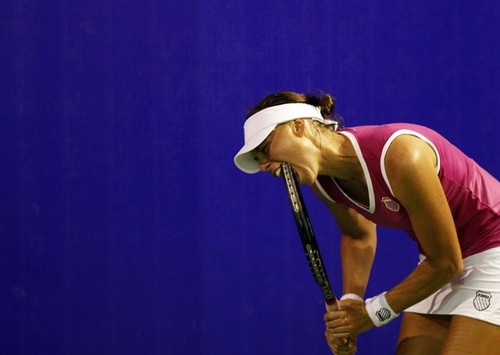
In the only female to make the list, Vera shows the women how it’s done. Complete with multiple bangs to the ground, long-distance throws, and a final kick to the racquet, Vera’s effort is nothing short of brilliant. Vera shows yet again, if you’re going to do something, at least do it well.
3. Fernando Gonzalez
Fernando makes the list yet again, this time taking it to a whole new level. Fernando’s use of the crowd in the racquet smashing affair certainly earns him his spot at number 3 on the list. If a one-throw effort wasn’t enough, he turns the tennis racquet into shattered remains by the time it reaches his bag. Perhaps he should have headed over to Tennis Drills HQ before his match for some drills to fix that second serve of his?
It wouldn’t be a top 10 list without having Andy Roddick appear somewhere. In this case he’s made it to number 2, not just because of the racquet smashing, but because he asks the umpire if he’s received his warning, and then continues to break his racquet after receiving the green light.
There was no doubting who the champion would be in this top 10 list. Marcos Baghdatis in the 2010 Australian Open shows even the most championed racquet smashes just how it’s done. If just one tennis racquet wasn’t enough, Marcos goes all out and decides to destroy four of them.
Marcos gained worldwide news headlines and created a new soft spot in the heart of every diehard tennis fan. Well done Marcos!
So there you have it, there’s 10 of the best you’ll ever see. Is there a tennis racquet smashing moment that you believe should be on the list? Please leave a comment and let us know who your favourite is!
Richard Green is a contributing author of Tennis Drills HQ, the web’s largest resource for free tennis drills for both coaches and players. He has over 30 years experience in mastering the art of throwing his racquet.
Skateboarding is one of those sports that just oozes coolness and it has been doing so for quite a while. This article takes a brief look at where it started and why it became such a worldwide phenomenon
In The Beginning
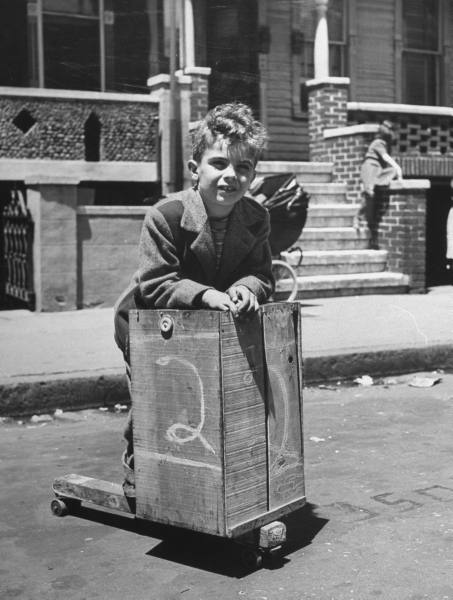
Legend has it that skateboarding was invented in California in the 1950’s, some surfers decided to swap their waves for solid ground. The early designs were said to be fairly cumbersome and not too attractive either. They were wooden boxes with roller skate wheels attached to the bottom, as you can imagine there were quite a few nasty accidents during these times. Eventually these boxes were ditched and small planks of wood were used as an improvement. At some point the planks were modified into pieces of pressed wood and skateboarding as we know it had begun.
High Times!
Skateboarding was at its peak in 1963, and there were several large competitions being held regularly. The big skateboard companies of this era were Makaha, Jack’s and Hobie, they would sponsor the events. The competitions were usually based on downhill slalom and freestyle events. The freestyle was akin to a dancing contest on the board whilst hitting some high speeds. The boards of this era were huge in comparison to the models favoured nowadays.
Crashed!
Skateboarding experienced a serious slump in 1965, and it seemed to disappear overnight like many other fads in the 1960’s. Many of the large board companies had to close down as nobody seemed to be bothered about boarding anymore. Youngsters who had the urge to go skateboarding were forced to make their own boards once more. People still dug this sport but it seemed to be destined to remain a minority sport for evermore.
Frank Nasworthy
In 1972 Frank Nasworthy invented urethane wheels, and this was a very important development and was a massive boost in the resurrection of this fabulous sport. These wheels allowed the skater far more control and speed in comparison to the old style roller skate medium.
1975
In the spring of this year, skateboarding suddenly exploded into the mainstream of teenage entertainment. There was a ground breaking show held in Del Mar that got the publics’ imagination and never let go of it. The Zephyr team proved to be the winners of the peoples’ hearts but the real winner that day was a piece of wood with four wheels!
Tricks
Up until 1978, most skating activities were centered around the downhill slalom and freestyle events. A skater by the name of Alan Gelfand devised a move that allowed him to pop the board into the air. He did this by slamming his foot down onto the tail of the board whilst jumping into the air. This maneuver was known as the ‘Ollie’, his nickname, and started the ‘tricks’ repertoire that would soon sweep the world of skateboarding.
The Fall and Rise..again
Skateboarding hit another world slump in the late seventies, and this was to last until the mid-eighties. The birth of VCR revived skateboarding and superstars like Tony Hawk were thrust into the publics’ eye once more.
When not obsessing over other sports, Jamie Strauss likes to keep up with the latest happenings in the world of skateboarding. He works at Fast Times Skateboarding, a company that sells one of the best skateboards in Melbourne. In his free time, he likes to blog about different sports.
As we spring our clocks ahead, our minds begin to fill with thoughts of the warm weather that lies ahead. Our yards will soon be in need of much TLC after a long, harsh winter. Spring break trips are being planned as well as longer summer vacations. For the cooped up action sports fan, warm weather means more chances to get out and enjoy their favorite sports. From surfing to mountain biking and motocross, the warm weather provides the perfect climate to get the adrenalin pumping. Here are three sports sure to make your summer fly.
Surfing has become increasingly popular in the United States, and surfers can be found riding waves up and down both coasts at all times during the year. Despite the fact that surfers will brave the waves during the colder months, summer is when the sport really thrives. People are more likely to enjoy “hanging-ten” when the cool water provides some relief from the heat, rather than a shock to the system.
There is perhaps no better way to enjoy the coming warm weather then with some extended time on the mountain. Whether you want to go for a hike or you prefer something a little more challenging, the mountains offer a little something for everyone. Mountain biking is a sport that can be enjoyed by yourself or with your family and friends. Grab your bike, safety equipment, water bottle and snacks and hit the trails. There is nothing like the thrill that comes with barreling down a mountain full-force on your bike. If you are looking for something a little less extreme, there are plenty of trails suited for a relaxing and scenic ride.
Motocross racing is another heart-pounding activity that can be carried out year round. However, if you would like to ride in the great outdoors, the warm weather is the best time of year. Participants in this sport need to be especially aware of the gear they choose to protect themselves during an event. Motocross pants, boots and goggles are just some of the equipment needed to keep riders safe. The warm weather is also a great time to work on your bike outside. There’s nothing like installing new motocross parts or giving your bike a tune-up while taking in some fresh air.
Warm weather means a chance to once again enjoy the outdoors. Find your preferred level of activity and go enjoy the sunshine!
Alyssa Golden is an avid blogger always looking to share her experiences and recommendations. She loves to travel, hike and surf. You can follow her on Twitter @madeofGolden.
Muay Thai boxing, also known as the art of eight weapons, is a contact sport that was developed in Thailand and can be traced back close to a thousand years. As with most classical martial arts, the sport was not first developed as a sport but rather as a discipline through which learners could learn self-discipline, control, and the art of contact fighting and so on. Muay Thai therefore has its roots in Thai culture and lore.
The history of the discipline as a sport starts more recently, some few hundred years back when Thai kings and other monarchy used to organize religious and quasi-religious festivals where they would have Thai boxers come out and entertain the masses. Mainstream western Muay Thai boxing nevertheless came into the limelight only in the 20th century.
As globalization took shape and travel became easier, a lot of cross-pollination took place between classical Muay Thai combat and more competitive contact mixed martial arts combat forms. The result is the competitive Muay Thai boxing that we have today that no longer strictly adheres to the classical ideals of the discipline.
Skills
Muay Thai boxing is called the art of eight weapons because of the fourfold attack a combatant assumes: using the fists, elbows, knees and feet to target eight parts of the opponent’s body. The skills therefore needed in Thai boxing center on attack and defense using these four body parts. The shins are also an important part of the combat arsenal but these are similarly used as the feet to create various attack scenarios from the bottom up or laterally.
In order to be a successful combatant, the fighter must learn the art of attack-block-counterattack, which is the bedrock of the sport. Unlike in conventional boxing, for instance, where trying to wear down an opponent may be an option, Muay Thai boxing relies more on trying to knock out the opponent owing to the diversity of moves involved. Anticipation, mental acuity and conditioning are therefore absolutely essential in this sport.
Training
To achieve adequate conditioning and reflexive skills, fighters must engage in rigorous daily training to strengthen their bodies and harden their bones and muscles against the strikes of the opponent. All emphasis is laid on conditioning because it is a fighter’s ability to soak in the opponent’s punches and kicks and be able to retaliate when they least expect it that makes a sure winner.
On the other hand, conditioning also reduces the chances of getting soft tissue injuries while in the ring as well as increases the speed of recovery. One interesting type of training fighters engage in is bone strengthening. This is achieved by repeatedly hitting the shins or other bone structures against a very heavy and firm surface.
The bone sustains micro fractures which are filled up with bone material and this makes the bones denser and more rigid. This is how fighters are able to kick each other hard with their shins and be able to withstand the blows. This technique is also seen in bare knuckle fighters and conventional boxers who strengthen their hand bones trough repeatedly pounding them against a tough surface. Mental preparation also factors in but this is as varied as the specific training scenario. Most fighters however use sparring and dummy fights to prepare mentally.
As a contact sport
As with many other contact sports, the people who get involved either professionally or as amateur fighters depend on a number of factors. For instance, in Thailand, most pro fighters come from the poorer sectors of society as the sport is seen as an escape from poverty. The opposite is true in the more affluent quarters where few if any become pro fighters.
More affluent persons do, nevertheless, get involved as amateur fighters and get involved mostly out of interest or for fitness purposes. Before any real fighting can be achieved, a significant amount of training must be first undertaken owing to the contact nature of the sport. The main governing bodies, which incidentally are the only governing bodies, are the International Federation of Muay Thai Amateur and the World Muay Thai Council.
To get involved in Muay Thai boxing, you must first find a gym or trainer well versed in the sport. With lots of training and conditioning, it is possible to take part in amateur fights. But besides this, the intense training also offers a good way to exercise and stay fit.
Supercross has started to become more of mainstream sport and has even developed a bit of a snowball effect in the past few years. Increasing fans can be credited to live coverage on local television stations along with a push from sponsors and companies to take the sport to the main stage.
A brief history of Supercross:
Long before supercross there was motocross, which involved men and off-road motorcycles competing in a set number of laps around a natural terrain track. In the beginning of motocross there were no man-made jumps as the motorcycles were not equipped with today’s high-tech suspension.
In 1972 Mike Goodwin created the first ever supercross to help bring motocross to the public. This race was held at the Los Angeles Coliseum and was won by Marty Tripes at the age of 16. Unlike motocross, supercross is held in large stadiums and allows spectators to gather to watch the entire race in front of them.
Today the AMA supercross series consist of 15 races making its way from coast to coast. It is the 2nd largest motorsport following NASCAR, and is expanding to other countries such as Australia.
Every sporting event loves a comeback story. The comeback story of Ryan Villopoto starting in 2011 is one that is sure to be remembered for years to come.
In 2010, his second year of racing the premier class, Villopoto was in the lead and battling with Ryan Dungey when he came up short on a jump, bailed off the bike and broke his leg. It was a horrific crash that broke his tibia and fibula and required immediate surgery, removing him from the rest of the supercross season along with the outdoor circuit.
The 2011 season began with Villopoto coming out swinging and finishing 1st overall. He remained strong for the rest of the season until a bad night left the points leader out of the main event. This was the first time in over a decade that the series leader was unable to qualify for the main event. Regrouping from the mishap at Jacksonville, Ryan was able to win the championship over Chad Reed by a margin of 4 points. He then went on to win that years outdoor motocross championship.
October of 2011 was the first ever Monster Energy Cup in Las Vegas where if a rider won all three motos they would walk away with 1 million dollars. Villopoto did just that aboard his Monster Energy Kawasaki.
In 2012, Ryan Villopoto again won the Supercross championship with a wide margin, but a mishap at Seattle left him out of the 2012 motocross series with a knee injury.
2013 is proving to be another great year for the Washington native as he currently sits atop the series standings with only four more races to go.
Ryan Villopoto will surely go into the records books as one of the greatest riders of all time. At the young age of 24 this star is sure to win many more races.
Currently Ryan Villopoto is sponsored by Monster Energy Kawasaki, Atlas Braces, Go Pro, Monster Energy, Volcom, Thor, Oakley Motocross Goggles, Alpinestars, and Falken.
Photo Sources:
Racerxill.com
Mxlarge.com
Zack Smith is from Scottsville New York where he is actively involved in local motocross along with the action sports. He is the founder of Opticpulse and is dedicated to helping athletes find the right eyewear for every occasion. When not working he enjoys spending time with his family along with being active outdoors.