The Sports Archives – The Life Of The Rodeo Rider

When we think of the rodeo, our first thoughts turn to the American West, of rodeo riders who pit their strength against bucking broncos and bulls. From their leather cowboy boots to the wide Stetson hat, the image is one of the most iconic in the US.

Steer WrestlingThese contests have been performed in the US for around 200 years, but other countries such as Canada, South America and Australia also have their own rodeo contests. The term ‘rodeo’ is taken from the Spanish ‘to round up’, and rodeos have formed around the working skills of needed by ranchers. While the rodeo is designed as a public spectacle, each event has a basis in practicality.

Because the world of ranching is open to women as well as men, and has been since its earliest days. Perhaps the most famous female rodeo rider is Annie Oakley, who’s ranching skills were second to her superb marksmanship. This made her a celebrity on both sides of the Atlantic, thanks to the tours of Buffalo Bill’s Wild West Show in the late 1800s.

Rodeo riding today

To this day, the rodeo is a big draw for those who enjoy the action and spectacle of these exciting events. Large turn outs are usually populated by families, making them great days out. The Rodeo is often a full day of events, which are mostly timed, incorporating a wide range of skills and talents

Many rodeo events are centered around roping, one of the core skills required for any cowboy and cowgirl. With cows and bulls roaming across large expanses of land, the task of bringing an animal in can be a tough one. Sometimes animals will need to be roped for medical treatment, as well as branding. To perform this task, a lasso – a rope with a loop at the end – is used to catch an animal around the head or horns with a deft throw.

In rodeo competitions, there are various different events to reflect the use of roping in a working environment. The oldest of these is Calf Roping, whereby a running calf is lassoed. The cowboy or cowgirl dismounts the horse, which has now stopped, and ropes the calf. He or she has to wrestle it to the ground and tie three of its feet together. The horse is also a key part of the process, as it should be able to keep the rope taut, backing up to help with roping.

There are many other events in the rodeo, including Barrel Racing, which involves the horse and rider avoiding a formation of barrels. A far more dangerous event is Steer Wrestling, or ‘Bulldogging’. A rider jumps from their horse onto a Corriente cow, and wrestles it to the ground by its horns. There are many things that could go wrong taking part in the event from serious injury to fatality. Such is the life of the rodeo rider!

Rocky Horrors has the best in quality, alternative footwear, like Sancho cowboy boots.

Posted in Other | Tagged , , , , , , , , , , , , , , , | Leave a comment

The Sports Archives – Preparing to Run a Marathon

MarathonLet’s face it, running a marathon isn’t something you suddenly jump out of bed and do one day, nor is it something that 99% of people could even contemplate doing. Running a marathon, be it a full or half marathon requires you to a structured training approach to the ‘big day’. Failing to prepare may mean you could seriously injure yourself or face the embarrassment of not making the finishing line.

There are many different styles of running, which use different muscle fibers, training methods, running techniques, and all of these need to be considered when preparing for a marathon.

Preparing for a marathon requires you to reach a state physically, and almost more importantly mentally, where you feel you can finish the marathon with comfort.

Never Been Running?

Many of us have agreed to take on some kind of endurance event in the heat of the moment, with a few mates around the table, having never run any further than the local shop. If this is you then keep reading, if not go to ‘The Long Run’.

Long distance running utilizes what are known as the slow twitch fibers in your muscles; basically, the fibers which allow your muscles to work under endurance. Starting your training off with 2 weekly sprints of 10 minutes is not a good way to start training these muscles.

If you have never run before, start with the some fairly long distance brisk walks to start training the lungs and muscles together. As you get fitter increase the intensity into a light jog, until you can comfortably run the 6 miles.

Get yourself some proper running shoes! If you haven’t already get some proper running shoes, fitted professionally. A proper fitter will assess your running style and find a shoe which suits it. Don’t be afraid to spend, it’s going to cost you far more when you knacker your knee’s out with bad shoes.

The Long Run

Once you have established a good level of fitness start going for longer runs, approximately 16 miles or so. These need to be done in one session and you should only do them when fully rested and ready. The important thing to note with long runs is to slow your pace down. Take your normal 1 mile pace and add another one minute to one minute and a half to it for long runs.

Long runs will be mentally and physically challenging. Make sure you are well rested before each run, experiment with which foods and drinks suit you and help you through each run and remember to stay loose and persevere through each one.

As you get better extend these long runs to 20 miles. Someone who does this once or twice a week before a marathon date will be less likely to experience ‘the wall’ during the marathon, or at least know what and when to expect it.

Training for a marathon is all about steady progression. You need to learn about and understand your body before attempting a marathon, and your training gives you a chance to experiment with this. Remember, don’t overdo it and don’t lose sight of your end goal, anyone can run a marathon when they put the time and training into it.

Project Active are Oxford Personal Trainers that specialize in group fitness and personalized weight loss plans.

Posted in Olympics, Other | Tagged , , , , , , , , , , , , , , , , | 1 Comment

The Sports Archives – Tennis Has A Financial Inequality Issue

The wealth gap in mens tennis continues to widen according to a recent study by USA Today, which claims that the last 3 years have witnessed the widest gap between the players at the pinnacle of the sport and the rest since the inception of the tour.

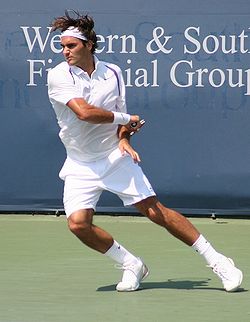
Roger Federer

Roger Federer: Overpaid?

The past five years have been almost entirely dominated by 3 players Roger Federer, Rafael Nadal and Novak Djokovic. Their level of performance has been so high that they have averaged almost 25% of the total annual tournament prize money between them. The only other time any 3 players broke the 20% barrier was in 2006, with A-Rod taking Djokovic’s place alongside Roger and Rafa.

Dominance

The top 3 players have won 11 of the last 12 majors, with only Juan Martin del Potro managing to break the stranglehold back in 2009. The Masters 1000 events have also largely been dominated by the same trio, claiming $$ 18 of the last 28. If you include the final member of the big 4, Andy Murray, the gap becomes even more significant.

There are a couple of other elements outside of their dominance which are contributing to the problem. One which has a significant impact on those ranked outside the top 50 is the lack of growth of many Challenger tour events. These are the standard hunting ground for the lower ranked guys and they have failed to keep pace with the bigger main tour events.

The other contributing factor is the way prize money is distributed, with those reaching the later rounds given a disproportionate share of the spoils. The BNP Paribas Open event in Indian Wells has highlighted this issue recently, with the winner earning double ($500,000 more) than the runner-up.

There has been controversy over finances for most of the year, and it began in Australia with players questioning the amount of revenue at grand slams which is offered as prize money. Slams currently put up around 12% of their revenue as the pot, while standard ATP events offer closer to 30%. A strike was discussed, and could be revisited in the not too distant future.

Civil War

The situation has been described as a civil war by a former world number one, who has called on everyone involved in the sport to put personal interests aside to find the best solution for the majority.

Some would say that the top guys deserve more of the money as they are usually the main attraction for fans and sponsors. Others say that without opponents for them to play there would be no tour, and so everyone deserves a fair chance to earn a living.

Author : Stuart runs the ATP Tennis World website.

Posted in Tennis | Tagged , , , , , , , , , , , , , | Leave a comment

The Sports Archives – Alcohol and Athletics – How Much is Too Much?

Alcohol and Athletics – How Much is Too Much?

MotorSportsAlcohol and athletics.  Athletics and alcohol.  Strange bedfellows, but they have such a long history together that the association has become a social norm.  Many of us don’t feel meeting up with teammates after a tough workout to down a few or celebrating personal or team victories by raising a glass or two warrants concern – and, for most of us, drinking in moderation doesn’t pose any serious threat to our health or physical ability.  However, for the serious athlete, alcohol awareness is not limited to understanding what constitutes alcohol misuse and abuse.  The serious athlete needs to take alcohol awareness to another level.

The serious athlete physically trains his or her body for high-level performance.  These athletes educate themselves as to the benefits of particular training regimens and follow those regimens religiously.  Serious athletes also educate themselves about and follow specific nutrition programs designed to support and enhance physical performance.  It is equally important for serious athletes to educate themselves as to the potential impact and risks of alcohol consumption on athletic performance

Serious Athletes Often Experience High Levels of Stress

The idea of consuming alcohol to calm performance related anxiety can be tempting.  However, alcohol is actually a depressant – and becoming depressed does not ease anxiety.  As a matter-of-fact, this is why one drink taken in the attempt to relieve pre-game anxiety can turn into misusing alcohol.  The first drink or two can actually serve to reduce anxiety.  Unfortunately, if one continues to drink the opposite often occurs and the drinker becomes anxious and/or depressed.  Wanting to recapture the sense of relaxation those first drinks brought, more alcohol is consumed.

The effect of alcohol consumption on performance is not limited to when the athlete is actively drinking.  After effects include delayed reaction time, as well impaired balance and coordination.  Alcohol consumption also has a negative impact on endurance.  Research indicates that one night of excessive drinking can result in impairment for up to three days.  Additionally, alcohol causes dehydration.  Athletic performance causes the athlete to become dehydrated; consuming alcohol afterwards further deplete the body of fluid, along with minerals and vitamins necessary in order for the body to recuperate.

Deciding How Much is Too Much

This all begs the question “How much alcohol is too much for the serious athlete?”  In some respects the answer is determined by just how serious a particular athlete is.  A professional athlete will certainly want to avoid any alcohol consumption while in training and for the duration of their particular sports season.  A non-professional athlete dedicated to their sport would want to do the same.  In both of these cases any perceived benefit of consuming alcohol is outweighed by the potential to negatively impact performance level.

On the other hand, athletes who seriously train but do not seriously compete, may consider remaining within the recommended definition of moderate drinking (one to two drinks per day) as this represents an equally moderate risk to their level of performance.

Innovation with Substance help groups and individuals to improve their alcohol awareness.

Posted in Motorsports, Olympics, Other | Tagged , , , , , , , , , | 5 Comments

The Sports Archives – Bob Tullius: Life After Racing

Bob Tullius, legendary Jaguar race car driver, will be present at March 17th’s 12 Hours of Sebring event in Sebring, Florida. This annual endurance race for sports cars happens at Sebring International Raceway and acts as a leg of endurance racing’s informal Triple Crown, along with the 24 Hours of Le Mans and Daytona’s Rolex 24. The event has been a showcase for the efforts of many of the sport’s most important participants, including Tullius himself.

The Race
It’s certainly easy for this veteran to attend, since his office, his airplane hangar and his home are all located in Sebring. In his past fifteen years of residence in Sebring, however, he has frequently scheduled out-of-town trips during this event, probably to avoid the more than 100,000 fans who invade his hometown.

This popular event often includes fans camping out for extended periods inside the green of the race track. Both RVs and cars are allowed into the track and the camping starts several days before the race, so the fans often end up being disruptive. Recently, local Spring Break attractions have been set up specifically to draw college students in Florida on their spring vacation in to see the race. Visitors can buy tickets ranging from full-access passes to tickets for the Saturday race only.

Tullius and Sebring, Florida
While Tullius is a racing hero who founded the legendary Group 44 racing team almost 50 years ago, he doesn’t live in Sebring for its racing history. Instead, he’s there because of the love for airplanes he discovered in the late 1960s. While his love for sports car racing and team ownership decreased over the years, his interest in planes grew significantly. Over the past few decades, he’s owned a wide range of planes. That includes one of the most sought-after exotics: the P-51 Mustang, a single-seat fighter-bomber used during World War II and the Korean War.

An Impressive Collection
Tullius also maintains another half a dozen planes in his private hangar, as well as several of Group 44’s race cars. The hangar collection includes the famous Jaguar XJR-7 that Chip Robinson and Bob Tullius shared during the mid-1980s, while Tullius was transitioning from actively racing to a retirement full of aircraft and activity. Despite this legendary driver’s age, he hasn’t slowed down.

Visitors to Tullius’s hangar will see his large Beechcraft King Air twin parked front and center. It’s still painted in Group 44’s trademark bright white with lime and dark green stripes and is located between a Waco biplane and a T-6 single-engine military training aircraft. This plane features twin-turboprop engines and was the first aircraft in its class.

Flight History
Bob Tullius has logged more than seven thousand hours of air time as the pilot in command, as well as many hours flying with others. That’s the equivalent of spending 9 1/2 months in the air. He still averages about a hundred hours of airtime per month, most of them spent flying the King Air.

According to Tullius, who will be turning 82 later this year, he doesn’t like to go up and simply fly around for the fun of it. When he goes up in a plane, it’s because he’s planning to go somewhere. Tullius’s most common destinations include the Kissimmee Airport just south of Orlando, where he sometimes has lunch. He also takes his plane to the Caribbean on occasion, usually on vacation with his girlfriend of 52 years.

Going online to do a car insurance comparison to save money on your insurance is quick and easy if you use Kanetix.ca. With over 40 insurance providers as partners, Kanetix Ltd. can save you up to $600 or more on your insurance. Apply online today to save time and money.

Posted in Motorsports | Tagged , , , , , , , , | 1 Comment

The Sports Archives – Four Must-Play Golf Courses!

The game of golf is in many ways unusual among sports, partly Golf Ballbecause most the most famous venues of all can be visited and played on by the general public. While some courses are open only to private members, many others allow players to walk in the footsteps of Tiger Woods, Phil Mickelson and Luke Donald. Here are four of the most famous of them all, and if you have the time and the money, you can visit them and experience the ultimate golfing experience of all.

St Andrews Old Course

Located on the western coast of Scotland, St Andrews is commonly regarded as the home of golf. this historic course regularly plays host to the Open Championship – please note that it’s NEVER officially referred to as the British Open – and the links have witnessed some of the most famous moments in the sport’s history. The Swilken Bridge, the Road Hole and several huge double greens await the visitor.

Augusta National

Among those who choose to play the finest courses in the world, Augusta National is commonly regarded as the most difficult to get into. However, there are plenty of people who have succeeded in their attempts, although for some of them it has taken several years. One of the most beautiful sporting arenas in the whole world, it’s a golfer’s paradise that provides the ultimate thrill from the moment they pull into Magnolia Drive before starting their round.

Pebble Beach

A true masterpiece of golf design, Pebble Beach hugs the coastline of California’s Monterrey Peninsula, and offers stunning views of the Pacific Ocean from many of its fairways. In 2010, Northern Ireland’s Graeme McDowell won the US Open here, emulating great names such as Tiger Woods, Tom Watson and Jack Nicklaus. If you are fortunate (and wealthy) enough to play here, be sure to bring a camera with you, because the vistas are simply breathtaking.

Royal Melbourne

Ranked among the top twenty courses in the world, Royal Melbourne is perhaps the finest in the whole Southern Hemisphere. While enjoying the honor of playing what is regarded as the cream of the crop, it’s important to concentrate on the game, of course, and that’s never going to be easy when you see the sand dunes and huge bunkers that lie in wait for errant shots. Many of the greens are relatively small, especially when compared with St Andrews, so accurate shot-making is vital from the fairways. This is a golfer’s golf course if ever there was one.

David Showell is a UK resident and a keen golfer. When he’s not trying to get his handicap down, he helps tourist to find the best deals on car rental on the Internet.

Posted in Golf | Tagged , , , , , , , , , , , , , , , , , , , , , , | 2 Comments

The Sports Archives – The Changing Face of Pro Hockey

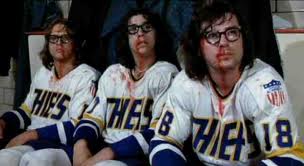
Hanson Brothers

"Old-time Hockey" - What Does it Really Stand For?

Hockey is a unique game in so many ways, but not the least of which is the tendency for its players to periodically take a break from the game itself to punch each other in the head.

This is one of the many goonish aspects of the game which have always been controversial among fans and critics alike. Some argue that the game would be improved significantly if the violent aspects were removed, while others maintain that this physicality is what makes the game of hockey great, and sets it apart from other sports.

There is a growing movement within the National Hockey League (NHL) itself to tend towards a less physical, more skill-based game, whether it’s good for the sport or not. Teams like the Detroit Red Wings and the Vancouver Canucks are at the top of the league’s standings, and they got there by playing a skillful, European-style game which does not rely on tough guys or enforcers.

If the Canucks and Red Wings can show that they have a winning formula, while also reducing the risk of injury to star players, other teams will emulate their systems and the league may change from within, regardless of the rules. There is no better way to institute change than to lead by example.

On the other hand, when Vancouver’s passing game ran into the Boston Bruins in last year’s Stanley Cup Final, they found themselves physically worn down by the Bruins’ hard and aggressive, old-time hockey style. A lot of people think that if Vancouver had an enforcer to protect its stars and shove back, things could have been a lot different.

Ultimately it will be up to the fans to decide what kind of game they want to pay to see and enjoy. If teams can succeed with a different kind of hockey, and in doing so bring in new fans and demographics who may not have been interested in the sport previously, that will be something the NHL commissioner simply cannot and will not ignore.

You never know, another ten years from now it is not hard to imagine disputes being settled more amicably. Perhaps over a mug of beer after the game at a local bar or restaurant. Peaceful and fun time to relax for all – what could be better! A lager for the American team, and perhaps a full-bodied ale for the Europeans.

Composed by the blogging club at http://www.beerclubguide.com, home of microbrew of the month clubs. BeerClubGuide is a consumer reviews site that helps visitors find the very best microbrew beer clubs.

Posted in Hockey | Tagged , , , , , , , , , , , , , | 2 Comments

The Sports Archives – Understanding The Skate

In masculine company, it may be taboo to openly display an appreciation of figure skating. It seems to somehow dilute the level of testosterone that is supposed to be maintained at all times when such company is gathered. But this denial of function due to the femininity of form results in a malformed outlook at a sport that combines interdisciplinary excellence as a matter of necessity just to reach mediocrity. To speak nothing of the requirements to reach performance notoriety.

Rough IceFigure Skating

Contrast that notion to that of ice hockey. There are those that would thumb their noses at the brutality and savage nature of a game that is lost to many due to its constant crimson splatter. The uninitiated only see men, decked in protective gear constantly crouching like Neanderthals over a prey, a fraction in size and weight to one of them. The two repeatedly and intentionally, and almost always legally, bash the opponent’s team into the Plexiglas, defies logic and clouds appreciation of any sort to the sport that underneath it all requires fitness and skill.

It’s ironic, to say the least that two very articulate sports, figure skating and ice hockey, receive such negative impressions although the skill of mind, body and soul have to be so finely tuned that many try but only few prevail.

No Easy Ice

Any sport that requires the donning of a pair of blades, and sail over hard ice requires tremendous respect. It defies every instinct hone over a hundred and fifty years of evolution. To stop, for instance, we just stop moving our legs when walking or running and physics obeys our command – we stop. When skating, physics is a stubborn five-year old. Try to stop moving by stopping your legs and one would sail effortlessly into an intimate rendezvous with the wall.

It’s The Skates

The unsung hero of these two magnificent activities is undoubtedly the pair of skates. Ice hockey skates and figure skating skates are designed with a set of similar objectives – to present the owner with the gift of speed, agility and control. This translates to freedom to handle any maneuver. Ice hockey skates for example are the simplest of ingenuity. It is merely metal blades, sharpened to samurai precision and attached to boots. The attachment is made with such sturdy cunning as to defy nature’s law of not combining metal to fabric. But it is accomplished and the result is a sturdy bond between shoe leather and cold steel, resulting in trust between the skater and the skate.

Your guest Linda Evans enjoys writing on her favorite sports and roller skates as well as ice hockey skates. She hopes you will enjoy her post and thanks this site for publishing.

Posted in Hockey, Olympics, Other | Tagged , , , , , , | 2 Comments

The Sports Archives – Is Cheerleading Considered a Sport?

Cheerleading

Is Cheerleading Considered a Sport?

No football or basketball fan would argue that cheerleaders are not an integral part of the sport experience. However, some might argue that cheerleaders are more decorative than anything . . . and that being a cheerleader does not necessarily equate to being a sports athlete. (Of course, any cheerleader would disagree with that statement!) So, why the debate over whether or not cheerleading is a sport? And if cheerleading is not a sport, what is it? Here are the highlights of both sides of this long-standing argument:

The definition of “sport.” One of the leading points people make when arguing against cheerleadings authenticity as a sport lies in the very definition of the word “sport.” A sport may be defined as a competitive athletic activity that must be conducted according to a specified set of rules and regulations. Therefore, a sport is like an athletic game or competition. While it is true that cheerleaders are athletic, and that they do compete against other squads of cheerleaders in local and national conventions, it cannot exactly be said that there are rules to the cheerleading “game.”

The purpose of cheerleading. It is also valid to point out that cheerleaders do not exist to compete against one another in a predefined competitive setting. Rather, cheerleaders exist primarily for the purpose of entertaining sports fans, hyping up morale during sports games, and cheering on sports teams. They are absolutely an integral part of sports, but don’t necessarily participate in a sport, in the traditional sense. However, this is slowly changing with time. These days, some cheerleading squads are being formed with the specific intent of competing against other cheerleading squads. As the number of this type of group grows, it is likely that cheerleading will become more widely accepted as a sport.

Cheerleading injuries. We always here about injuries when they happen to leading football or basketball stars, right? It seems cheerleaders never get injured . . . or at least we never hear about it. The truth is, the latter is the case. Cheerleader injuries actually outnumber football player injuries. News of those injuries generally stays on the sidelines, which fosters the belief that cheerleaders might not exhibit the type of athleticism that causes injuries.

Whichever side of the debate you fall on, you can’t deny the fact that cheerleaders are an important part of sports, and that they are athletes in their own right. Is cheerleading a sport? It depends on who you ask. But one thing is for certain: cheerleading is only becoming more popular and broadening its reach . . . and is arguably on its way to resembling a “real” sport.

About the Author: Rosendo Guetierrez is the father of two teen daughters, both of whom are competitive cheerleaders. When he’s not getting them from place to place, he can be found online reading about healthcare issues. One of his favorite sites is yeastinfection.org by Eric Bakker because it sheds light on the fact that the candida organism can impact men, women, and children of all ages.

Posted in Other | Tagged , , , , , , , , , | 2 Comments

The Sports Archives – Why Cars Make the Best Super Bowl Commercials

The Super Bowl is by far one of the most anticipated televised events of the year. The action, the laughs, the celebrities – it all screams excitement and entertainment. One of the best things about the Super Bowl, aside from the actual game, of course, is the commercials. Companies literally spend millions of dollars each year for a quick 30 to 60 second spot during the most watched football game of the year. The job of a Super Bowl commercial is to provide entertainment, amusement and spark interests amongst its viewers. So what commercials lead the pack and never cease to amaze us? The answer is simple: cars.

Super Bowl Commercial

The Dog Strikes Back: 2012 Volkswagen Game Day Commercial.

Car commercials spend a ton of time and money to prove to us why the car that we currently drive is actually just a piece of junk on four wheels. You watch 60 seconds of this super sporty and innovative car racing through dirt roads, whipping through rough terrain and jetting up rugged hills and mountains, and, in awe, think to yourself, “wow, there’s no way my car can do that.” And from that moment on, you’ve officially been hooked, lined and sunken into the world of “I Need That Car.” Car commercials highlight the awesome perks and features of the vehicle being advertised, which, coincidentally, are the exact same perks and features that your vehicle lacks. Funny how that works, right? The all new, 2013 model allows you to plug in your laptop to the gear shift, stream Netflix movies from the radio controls and brews a cup of Starbucks coffee in the glove compartment. Suddenly, just being able to sync your iPod or listen to Pandora in your current car just isn’t enough. Darn you advanced technology, darn you to heck!

The trick to an awesome car commercial is to make it appealing and relatable. It’s got to send a message that makes the viewers realize that this is a car they need in their lives. A favored method of accomplishing this is to throw in a well known celebrity and let them tell you how much they love driving their new wheels. Think back on this year’s Super Bowl commercials advertising cars. One major commercial involved Jerry Seinfeld going to extreme measures to get his hands on the brand new Acura. The commercial was hysterical in many ways, as Seinfeld reminded the loyal fans of his beloved sitcom that he still knew how to make us smile. The commercial surprised it’s viewers with appearances by the famed soup nazi from a hit Seinfeld episode, and a rendition of the notable “Newman!” catchphrase. As Seinfeld jumped through hoops to be the first person on the planet to get his hands on the new Acura vehicle, viewers were sold on the edgy design and safety features the vehicle had to offer. Although, in the end, dear old Jerry missed out on driving away in the sporty ride as Jay Leno swooped in and sealed the deal for himself, those at home watching couldn’t help but be intrigued and interested in what this car had to offer.

Another great commercial aired during the Super Bowl provided viewers a piece of nostalgic pie and Matthew Broderick reprised his role as the beloved Ferris Bueller to promote the latest model of the Honda CR-V. With Broderick, err, I mean as Bueller recited famous lines from the movie, acted out notable scenes and even raced through the city with the infamous Chicka Chickaah music playing in the background, the commercial did an amazing job making its viewers think, “why don’t I have this car in my driveway?!” The commercial was entertaining, amusing and made you want to buy a car that could fly over the hills and mountains in your city. And let’s be honest, didn’t it make you want to dust off your Ferris Bueller DVD and call into work the next day?

The Super Bowl is a great platform for companies to advertise the latest and greatest that they have to offer. Car commercials go to great lengths to show you why their vehicles are number one and why you need to invest in one ASAP. But more than that, these commercials are great because they leave an impression in your mind. They entertain you to the point where you talk about them at the dinner table and ask everyone at the office have they seen the commercial. In the end, we laughed, we cried, we looked in the garage and said “why am I still driving this piece of crap?”

The superbowl showcases some of the best creative teams from across the world in-between plays, and many of the ads go on to win a prestigious industry award.  If the creative spark from a commercial gets you considering buying a new vehicle you might consider first doing a quick cost benefit analysis between the vehicles that impress you.  A quick auto insurance quotes comparison can sometimes upset the apple cart, as insurance rates certainly fluctuate quite a bit.  The Kanetix service can be your friend in these cases, as you can quickly ascertain which vehicles are the most reasonable to insure.

Posted in Football | Tagged , , , , , , , , , , , , , | 1 Comment