The Sports Archives – Top 7 Most Popular Sports Played in the World!

Sports Equipment

Whether you are a player or a spectator, there are sports crazy fans throughout the world. It is the fans that have made many sports grow in popularity. Sports generate an enormous amount of money through ticket sales and sponsorship deals. They also encourage physical activity amongst children and help many community groups.

Soccer

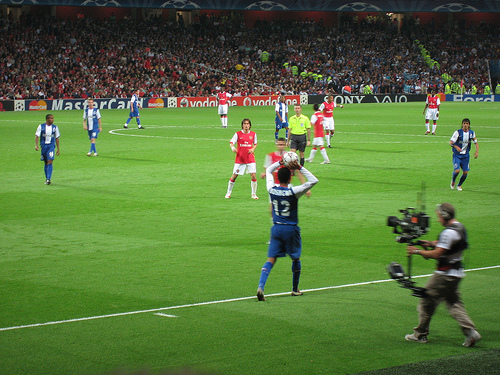
Also known as football in certain part of the world, it is a sport that originated in England. Soccer, as a sport, is enjoyed by school children and adults alike. One of the greatest soccer playing countries is Brazil, where teams actually use tennis balls to practice soccer. Soccer has a following of millions of passionate people. These fans are the reason why this sport is so popular. 32 teams participate in the World Cup.

Tennis

Tennis competitions are played between two players or teams of two players on each side. This is one of the most popular recreational sports and it also has a following of millions who follow the Grand Slam tournaments with obsession. Equipment needed is a tennis ball and racquet and specially stabilized tennis shoes for play on hard, clay or grass courts.

Cricket

Played with a bat and ball with two teams of 11 players, cricket originated in England. Cricket has a huge world following, especially in India which has produced many legendary cricketers. Until 1775, batsmen defended 2 stumps, not three. Teams of women also enjoy playing cricket at World Cup level.

Table Tennis

Also known as ping-pong, table tennis became an Olympic sport in 1988 at the Seoul summer Olympics. It is the most popular racquet sport in the world with over 10 million players competing in tournaments each year. Players achieve speeds of up to 100km per hour and games between elite players usually last 30 minutes.

Volleyball

Originally called mintonette, volleyball was invented in Massachusetts USA in 1895. Volleyball is based on a combination of tennis and handball. It consists of two teams of six players each. In 1964 it became an Olympic sport with two person beach volleyball added to the Olympics in 1996. Volleyball is the world’s most popular sport, just being eclipsed by soccer and cricket.

Hockey

Hockey is a team sport where players use a stick to shoot a ball into a netted goal. This is a very popular game in Denmark where it is played all year round. Hockey can be played both indoor and outdoor. This is definitely a team sport based on technique.

Baseball

In 1845 the first game was played in New York and this game is considered the national sport of the USA. Statistics show that fans have a 1 in 300,000 chance of being hit by a baseball while sitting in the stands. The main objective of a game of baseball is ‘to go home’.

The definition of a sports fan is ‘an enthusiastic devotee’. Millions of people throughout the world live and breathe sports. They follow every movement and every news article of their favourite team with unrestrained passion. Sports fans often spend a lot of money on tickets, custom t-shirts and merchandise which has made sport what it is today.

Tara Blair is a business professional based in Brisbane, Australia. When she is not busy conducting her daily business duties you will find her actively participating in many social and competitive sports. Tara’s love for sport initiated from growing up in a household with 3 brothers. She also designs and distributes custom t-shirts and uniforms for her social clubs as a side business.

Photo Credit:  lmc-tv.org

Related Blogs:
Why Playing Table Tennis is One of the Best Things You Can Do!
Some Of The World’s Weirdest And Most Unbelievable Sports – Have You Heard of Wife Carrying?
Out Of The Melting Pot – Sports Which Have Found International Popularity!
Posted in Baseball, Cricket, Hockey, Olympics, Other, Soccer, Tennis | Tagged , , , , , , , , , , , , , , , , , , , , , , , , , | Leave a comment

The Sports Archives History Lesson – Popular American Football Defenses!

If you’re getting ready to play football for the first time, or if you just want to have a better understanding of the game, you need to know the most popular football defenses. These are the defenses that are commonly used by teams at all levels.

4-3 Defense

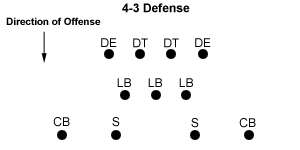
Football 4-3 DefenseThe 4-3 defense is one of the most popular defenses in football.  This defense uses:

Four defensive linemen (two tackles and two ends)

  • The defensive linemen stay within five yards of the line of scrimmage. Their primary job is to protect against the run, but they may also be called on to protect the flats.

Three linebackers

  • Typically, one linebacker will have a specific role, and the other two linebackers will react as the play unfolds. For instance, one linebacker may go in for a sack, while the other two hang back until they determine if they need to guard against the run or the pass.

Four defensive backs (two cornerbacks and two safeties)

  • Typically, the defensive backs protect against pass plays. However, they could split jobs, where some guard against the pass and others rush the passer.

Some teams have some trouble with this defense because it only uses four down lineman. If the linemen are small, the team will have a hard time protecting against the run. That changes with bigger teams, though. If your team has large down lineman, this is a powerful defense, especially since it can be modified.

Nickel Defense

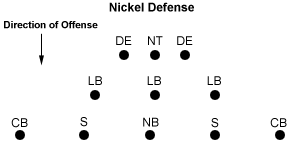
Football Nickel DefenseThe nickel defense gets its name because it uses five defensive backs instead of four. The fifth defensive back is referred to as a nickelback.

Some teams put in a third wide receiver in place of a fullback when playing offense. When that occurs, a team may run the nickel defense to defend against the pass play.

The nickel defense uses:

  • Four down lineman (two tackles and two ends)
  • Two linebackers
  • Five defensive backs (two cornerbacks, a nickelback and two safeties)

Two defensive ends sit on each end of the line, with two defensive tackles in between them. Two linebackers sit behind the defensive line.

Two cornerbacks and a nickelback cover the wide receivers.

If this defense is run correctly, it’s very difficult for the offense to complete a pass for yardage.

Goal Line Defense

Football Goal line DefenseThis defense is used to stop the run right by the goal line. The middle two linebackers are used to stop the running back. They stay back to stop him as he runs toward the goal line. They are prepared to modify their strategy if the running back leaves his feet and dives for the end zone. Since they are back, they are also able to protect against a pass play to the middle of the end zone. The two cornerbacks guard against the run first, but also work to contain any other plays that may occur. If a pass occurs, the cornerbacks will fall back to the corners of the end zone. The six down linemen push into the offensive back field. The safety’s job is to read the quarterback and play the ball.

Now, you can use this information to play or watch football. Be sure to tell your family and friends about the most popular football defenses. You’ll be certain to impress them with your knowledge.

A football fanatic, Tommy Albrecht writes blog post and articles related to sports and health topics, he also loves staying fit by working out from home.

Photo Credits:
www.firstbasesports.com

Related Blogs:
The Sports Archives History Lesson – Football’s Four Downs
The Sports Archives History Lesson – Football’s Taunting Rule

Posted in College Football, Football | Tagged , , , , , , , , , , , | 3 Comments

The Sports Archives – Rugby Sevens – What’s It All About?

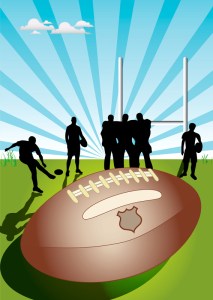
what_is_rugby_sevensFirst played in 1883, Rugby 7’s is referred to by many different names which include the Borders Game, the “Short Game” or Seven-a-side.  Rugby 7’s was the brainchild of 2 butchers from Melrose who initially thought up the tournament as fund-raising event for their local Rugby Club, Melrose RFC.  A tournament is still held every year in Melrose, and it is a popular game at all levels, with amateur and club tournaments held throughout the year.

Rugby 7’s is a variant of Rugby Union except each team fields 7 players instead of the usual 15 and the games are shorter consisting of 2 halves of 7 minutes and a half time break of 2 minutes.  The game is one of the most well-distributed forms of Rugby and is popular across the world.

The first Rugby 7’s World Cup was held in 1993 in Scotland the home of Rugby Sevens, this tournament was won by England who beat Australia 21 – 17; unlike the full Rugby World Cup, Australia and New Zealand have never won the Rugby Sevens world cup.  The winning team of the Rugby 7’s World Cup is presented with the Melrose Cup.  Named after the birthplace of Rugby 7’s

Rugby 7’s is now recognised as an Olympic sport and is due to make its debut in the 2016 Olympic Games scheduled to be held in Rio de Janeiro.

The following are some variations on the laws of the game:

  • There are only five substitutes, with only three interchanges instead of 7 and 7.
  • Teams are only given one minute half-time, two minutes in finals instead of ten minutes.
  • Matches that are drawn after regulation are continued into Extra Time, in 5-minute periods.
  • All conversion attempts must be made by a drop-kick and kicks must be taken within 40 seconds of scoring a try, in major competitions, there are additional official’s present to judge success of kicks at goals and ensuring that the game is not delayed, by waiting for touch judges to move into position to judge the conversion attempts.
  • There are only three players to a scrum instead of eight players.
  • In Rugby 7’s, the team that scores restarts the game, unlike Rugby Union when the conceding team restarts the game
  • Yellow cards net a 2-minute suspension in the Sin Bin.
  • Referees decide on advantage quickly where one play usually ends advantage, not true in fifteens.
  • Rugby 7’s is a much faster sport than the normal 15 a-side game which results in less handling errors in during the game.

Unlike your usual run of the mill Rugby Game this game is a lot easier to get involved in and can be a fun way to spend your time.

Featured images:

Brian Johnstone plays for his local amateur rugby team and has played in several tournaments to help raise funds to purchase new Rugby Kit for the team.

Related Blogs:
Twickenham’s Highest Visiting Points Scorers!
Britain’s Rugby Stadiums: A Brief History

Posted in Olympics, Rugby | Tagged , , , , , , , , , , , , , , , | 7 Comments

The Sports Archives – Too Much Debate; Not Enough Football!

Football Soccer MatchLet’s get one thing straight. I am an avid football fan and my team (Liverpool) have been on the wrong end of as many bad refereeing decisions as any other. I get as incandescent as anyone else about penalties not given, ridiculous red cards and bad offside calls. I also understand that the debates in the aftermath of such atrocities keep us all interested. To an extent controversy does fuel interest in the game but even I have now had enough. The magnificent theatre that is football is getting lost behind an ocean of debate and media coverage, not about the sporting action but about refereeing decisions and player’s antics off the ball.

Media and Social Networking

At first glance it is difficult to imagine what can be done about the situation. We live in a world dominated by media outlets and social networking. The nano second after any incident occurs there are journalists and broadcasters queuing up to dissect it and the tweets and Facebook posts have started. Within minutes there has been a forensic analysis of the episode that any crime bureau would be proud of and then the recriminations start. Never mind the fantastic football match what about that yellow card? These insidious debates are now powering a hatred of referees and bitterness between players that just goes on and on and it is spilling over onto the terraces. I can see the bad days of 1970’s hooliganism rearing its ugly head again.

Technology

I believe a lot of the current troubles could be put to bed almost before they have started with the use of modern technology. I don’t mean the goal line camera variety either, although that would help. Lately most of the big talking points have surrounded the issue of what has been said on the pitch. The Mark Clattenburg controversy is a perfect example. Did he make a racist comment or not? If he did what was the provocation? Perhaps if he was wearing a recording device or even a video camera the matter would be solved instantly. The small helmet cameras used in other sports are now readily available and would not only immediately reveal the truth of a situation, their use would also probably stop a lot of the bad behaviour in the first place. The footage would not even have to be broadcast live, merely reviewed after an issue has arisen. Microphones around the pitch would be a great help as well. The incident between John Terry and Anton Ferdinand is another case in point. Nobody knows who said what to who and why, It is possible that even the two players involved have inaccurate recall. This argument has run for over a year, caused untold disruption and is appears to be still escalating. Recording devices would have settled this the same day, apologies could have been made, punishments handed down and then on we go. I don’t want to belittle the issue of racism in the game, it has to be wiped out, but as it stands players can accuse anyone of saying just about anything and whilst nothing can be proven the mud certainly sticks.

Decisions

Helmet type cameras would also stop the avalanche of criticism that drops on a referee’s head after an incorrect decision. It is all very well reviewing the incident in the television studio from 20 different camera angles but isn’t it time to have a look at exactly what the poor official could actually see? The referee may be closer to the players than the TV camera but his line of sight may be blocked and he doesn’t have slow motion replay. Let’s get people talking about the drama of the sport after the match, not the officials. In view of the amount of post-match discussion there is about offside decisions it might be a good idea to equip the referees assistants with cameras as well.

The Fans

Maybe, just maybe, if we knew what was actually being said on the pitch and why referees make the decisions they do we could halt a tsunami of ill will and recrimination flattening our beautiful game. If the players behave themselves and broadcasters shut up, the fans are more likely to follow suit and we don’t have to be looking over our shoulders at past times coming back to haunt us all over again.

Citations:
Featured images:

S. Stacey is a guest blogger with a passion for sport, especially her favourite team Liverpool FC.  This post has been written in association with Vision MX who sell helmet cameras suitable for multiple sports.

Related Blogs:
Hawk Eye Technology In Sport!
Why Do People Use Rangefinders in Golf?

Posted in Soccer | Tagged , , , , , , , , , , , , , , , , , , , , | Leave a comment

The Sports Archives – The Money in College Sports!

College sports is more than just weekend entertainment. College sports is a big business that keeps growing every year. NCAA Division 1-A alone brought in more than $6 billion in revenue in 2010. That’s more money than the GDP of some countries, including Belize and Fiji.

Most of the money generated through college sports goes to pay the coaches of the top teams. The top grossing football head coach is Mack Brown at Texas with a $5.1 million salary. The school is more than willing to pay that much for a coach since the Texas football program is one of the highest grossing college programs in the United States. Besides football, the top money-making sports programs include men’s and women’s basketball, men’s baseball and hockey.

It’s not just the coaches and schools getting into the money game either. About $2.5 billion is illegally wagered on the NCAA March Madness basketball tournament each year.

From: Top Business Degrees

Related Blogs:
The Business of College Sports

College Sports Business

Posted in College Basketball, College Football | Tagged , , , , , , , , , , , , , | 4 Comments

The Sports Archives – Great moments at the Australian Open!

Sporting memorabilia merchants such as HTFM exist for a reason. The greatest moments in sporting history are etched into the memories of sporting fanatics the world over, and what better way to relive the glory than through an item from or commemorating that very moment?

We’re all familiar with slow montages of sporting triumphs, failures, moments of humour and pathos. And with the Australian Open a matter of weeks away, it’s a good time to reflect on some of the more memorable moments in our tennis history.

Jim Courier is so frequent a visitor to our shores come Summer, he’s practically an honorary Australian. In fact, I’ll be damned if one or another of our beaming, mildly ridiculous Lord Mayors hasn’t already presented him with a key, Akubra, or stuffed kangaroo, and assured him that here in Melbourne, ‘we think of you as one of our own!’. Now a mainstay of the commentary box, Courier took out two Australian Open titles in the 90’s. The most memorable of these happened when Courier managed to overcome searing heat to take out everyone’s favourite shy Swede (mine, anyway) in 1993. He proved his mettle as a True Aussie Bloke (of sorts) when he plunged into that murky, toxic, brown puddle we call the Yarra to cool off, post victory.

Williams SistersAlso no strangers to Melbourne soil, the Williams sisters have provided many a memorable moment throughout all the Australian Open’s that they have competed in. The spectacle that we all craved – sister vs sister!- eventuated in 2003, when the much-anticipated final being contested between Venus and Serena was forced indoors because of unmanageable heat. I can’t remember my own name when it’s 44 degrees. Serena and Venus fought for the championship in it. And that’s why we all love elite sport. Because, by God, we would not be seen doing anything more taxing than licking a Frosty fruit in those conditions.

To view some amazing sporting memorabilia, visit www.htfm.com.au.

Related Blogs:
The Australian Open 2013: Can Djokovic Three-peat?
The Sports Archives Greatest Rivalries – Tennis Siblings

Posted in Tennis | Tagged , , , , , , , , , , , , , | 2 Comments

The Sports Archives – Viagra Now Enhancing Performance Outside Of Bedrooms!

Given the incredible potential for fortune and fame in professional sports, it is little surprise that athletes are willing to cheat in order to gain an edge. Talk of performance enhancing substances began in the late 1980s, and the conversation has reached a boiling point over the last decade as superstars in all major sports have been caught breaking the written rules and compromising their own morality. Chicago Bear wide receiver Brandon Marshall recently revealed that Viagra is widely used in football locker rooms in order to give players a competitive edge. It makes sense. Here’s why.

The Breakdown

Unless you’ve been living under a rock for the past 10 years, you’re well aware that Viagra is designed to treat erectile dysfunction in males. Treatment for ED has been a growing industry over the past few decades, and Viagra was essentially a pioneer in its field. The pills are seen as magic to many men who need it in order to maintain proper sexual functions, and it works like a charm in most cases. The general idea is that Viagra increases the amount of oxygen that is able to get into the bloodstream, and this has proven to be useful in many realms outside of the bedroom.

The On-Field Benefits

Getting an increased amount of oxygen into the bloodstream can benefit a professional football player in a number of ways. Studies have shown that wide receivers and the cornerbacks who cover them often run between six and seven miles over the course of a typical game. Needless to say, such a feat requires that an athlete be in excellent physical condition, and oxygen getting into their blood is an essential component of peak performance. In cold weather and high altitude climates, football players are often seen taking additional oxygen through a mask and machine on the sidelines. If taking Viagra before the game can essentially accomplish the same feet as an oxygen tank and doing so has not yet been deemed illegal, then there is little reason not to experiment with the oxygen-enhancing pill. For players such as Brandon Marshall, having a Viagra or two in the system could be the difference between being too tired and fatigued to reach out and catch the long bomb for a game-winning touchdown and being up to the task.

But What about the Effects?

While is quite obvious that Viagra is designed to help flaccid penises become erect, they will not do so unless they are actually sexually stimulated in some way. Without getting into a discussion about the possible ratio of homosexuals in professional sports, it is safe to say that none of the players are in a state of sexual arousal on any given Sunday. If you eliminate the word Viagra and substitute it with the phrase “oxygen-enhancing pill,” then taking one or two before a football game would not come with a stigma of any kind. Image Credit: Mike Morbeck

Featured images:

Derek often likes to blog about football and sports. When he is not blogging, he enjoys spending time with his family and coaching his son’s pee-wee football team. The article above is for treatment for ED.

Related Blogs:
Did Lance Armstrong Deserve to be Stripped of his Titles?
Alcohol and Athletics – How Much is Too Much?

Posted in Football, Other | Tagged , , , , , , , , , , , , | Leave a comment

The Sports Archives – Games Our Ancestors Used to Play!

Calcio FiorentinoWhen we think about games and athletics today, we often end up thinking about things like football, handball and basketball. While these sports have a very modern feel to them, the truth is that our ancient ancestors played games that were quite similar! However, the further back you go, the more hilariously dangerous and in some cases frightening the sport can look! The games our ancestors played must have been amazing to watch, and in some cases, deadly to actually play.

Calcio Fiorentino

Calcio Fiorentino was a game that originated during the 1500s in the city of Florence, Italy. It put two teams of around 30 men onto the field, and goals were scored by putting a ball over a goal line. It sounds simple enough, but this sport became known as one of the most dangerous games that you could play in Europe at the time. For many years, the only real rule was that kicks to the head were not allowed; everything else, it was presumed, was fair game. Fascinatingly enough, after a 200 year hiatus, this game returned to Florence in the 1930s and is still played to this day, though with more rules and more referees.

Pitz

The Mayans of Central America played a game called pitz, which was both described the colonizing Spanish and depicted in their art. This game was played with a heavy rubber ball, and goals were scored by kicking or throwing the ball through a vertical hoop that was set high up on a wall. Both teams seemed to use the same goal, with scorekeepers keeping track of who sent the ball through the hoop. Human sacrifice through beheading is thought to be a part of this game, though the question of whether the winning team or the losing team was sacrificed is up in the air.

Pankration

Many ancient sports seem to simply be less safe, more violent versions of our modern sports, but pankration is actually a less safe, more violent version of two sports. In this Ancient Greek game, two men entered the ring and engaged in a round of wrestling and punching. In later versions, competitors were allowed to wrap their hands in leather, but this was not a part of the earliest versions. The rules stated that biting and gouging at the other person’s face with one’s fingernails was not appropriate, but just about everything else was.

Jousting

When there wasn’t a handy war around, people in medieval Europe would hold jousts instead. A joust consists of two people in armor on horse back racing at each other along either side of a long rail. As the horses passed one another, the riders would use long wooden poles, known as lances, to knock the other person off of the horse. Keeping in mind the fact that the horses would have built up quite a head of speed, and that there was certainly no safety measures taken beyond the armor, even this game could be quite fatal. Flying wood splinters could fly into a person’s face, and the trauma of being thrown off of a fast moving horse by a solid blow to the chest could be fatal!

Naumachia

Ancient Rome gives us the term naumachia, which refers to a complex where staged naval battles could take place. Rome was an empire that was justifiably proud of its ships, and when it wanted to bring some of that glory home, it would flood an amphitheater and bring in biremes and triremes, the battleships of the day. Then the ships would be crewed with prisoners of war, and an actual naval battle would be fought. In one match, hosted by Julius Caeser, there were more than 6000 participants.

Jamie Adams, writer and athlete, writes for MyAAEWorld, an online store specializing in sports equipment.

Related Blogs:
Boxing: A Brief History
Swimming Through the Centuries: The History!

Posted in Basketball, Boxing, Football, Other | Tagged , , , , , , , , , , , , , , , , , , , , , , , , , | Leave a comment

The Sports Archives – A Sports Fan’s Guide to Melbourne!

If you’re a sports nut, you may never want to leave Melbourne.  Victoria’s capital is not just the home of the Australian Football League (10 of the 18 teams are from the state of Victoria), it is also an important centre for cricket, horse racing, motor sport, and sailing.  Footie is king in winter, though.

Aussie Rules
Everything grinds to a halt in Melbourne for the Aussie Rules Football Grand Final every October, when the two leading teams face off at the Melbourne Cricket Ground.  Invented in the 1850s, Aussie Rules combines elements of rugby and Gaelic football to create a fast, physical, and uniquely Australian game.  Don’t miss the opportunity to catch a game when you’re in Melbourne, the birthplace of the Australian Football League.  With 10 of the 18 teams in the league coming from the state of Victoria, there is nothing is more Melburnian that getting caught up in the ‘footy’ madness.


The Melbourne Cricket Ground
Confusingly, the AFL play their finals at the Melbourne Cricket Ground (MCG), Australia’s biggest, oldest, and most popular sporting venue.  As well as hosting the first-ever Cricket Test and the 1992 World Cup final, countless VFL/AFL Grand Finals, the 1956 Olympic Games and 2006 Commonwealth Games, the MCG has accommodated FIFA World Cup soccer qualifiers, rugby league home and away matches, and State of Origin and international rugby union clashes.  (Pope John Paul II even said Mass here).  See priceless Australian sporting memorabilia at the National Sports Museum.  Bear in mind when bringing kids to a match that the language in the stands can get pretty colourful!

Cricket
Since cricket was first played on the MCG in 1856, the ground has witnessed such historic firsts as the world’s best first-class score (1107 – Victoria v NSW, 1926); the first Test match (Australia v England, 1877); and the first century in Test cricket (Charles Bannerman).  The world’s first one-day international cricket match was also held here in 1971.  The modern Melbourne Cricket Club is an umbrella group for sports from baseball to croquet, lacrosse, and tennis – but cricket remains its first love. Try to catch a game when you’re in town.

Horse Racing
Melbourne goes mad for horses during the Spring Racing Carnival, but horse racing has been a Melburnian obsession for years.  Indeed, the first sporting event in the town was a race meeting held in March 1838 on land west of Spencer Street.  Dating from 1861, the Melbourne Cup is Australia’s most significant thoroughbred horse race, and one of the most highly anticipated race events in the international calendar.  If you are in Melbourne on the first Tuesday of November, you’ll know what the fuss is about!  The richest and most prestigious “two-mile” handicap in the world, “the race that stops a nation” is a public holiday in metropolitan Melbourne.

Motor Racing
The Melburnian obsession with racing extends from the four-legged to the four-wheeled variety.  Sandown Raceway is a Melbourne landmark, a truly iconic Australian motor circuit that was established in March 1962.  It has staged some of the most memorable events in motorsports history, involving some of the world’s greatest drivers.  Legends including Fangio, Moss, Brabham, Brock, Skaife and Richards have all raced around the fast and famous circuit, which is the official ‘Heritage Round’ of the V8 Supercar Championship.  Sandown is one of the world’s few remaining permanent circuits, but because of its proximity to residential areas, it is restricted to running just five major motorsport weekends during the year.

Sailing
With its stunning setting on the broad expanse of the Yarra River estuary, it’s hardly surprising that Melbourne is a sucker for sailing.  Yachting Victoria and Sail Melbourne recently secured the prestigious Oceanic Leg of the ISAF Sailing World Cup.  Starting in 2013, at Melbourne’s  Sandringham Yacht Club,  the event will be held in Melbourne for the following four years.

Featured images:

Aoife O’Carroll is a staff writer for Nova Car Hire, a convenient website for arranging car rental in 26,000 locations worldwide, including car hire from Melbourne Airport.

Related Blogs:
The Australian Open 2013: Can Djokovic Three-peat?
Is the Australian Pride Misplaced?

Posted in Cricket, Horse Racing, Motorsports, Olympics, Other, Rugby, Soccer, Tennis | Tagged , , , , , , , , , , , , , , , , , , , , , , | 1 Comment

The Sports Archives – Overcoming All Odds – Five Inspirational Disabled Athletes!

2012 London Paralympics

The London Olympics were incredible for myriad reasons, but one of the most important of these was undoubtedly the treatment of the Paralympics. For possibly the first time, the Paralympics were treated as of equal importance, and the Paralympians were catapulted into the limelight alongside their able-bodied brethren. In light of their awe-inspiring achievements, we give you five incredible disabled athletes.

1. – Oscar Pistorius

Nicknamed “Blade Runner”, Pistorius is known for the distinctive carbon fibre prostheses he uses to run. The South African is classified as T43 as he had both of his legs amputated below the knee at the age of just 11 months, but he instead chooses to race alongside the T44 competitors – people who have had one leg amputated.

With gold medals in the last three Paralympics he is a formidable athlete, but was banned from competing in able-bodied competition in 2008 due to “unfair advantage”. However, this was soon overturned, and in 2012 he became the first double-leg amputee to compete in the Olympics, as part of the South African 4 x 400 metres relay squad.

2. – Matt Stutzman

Another favourite at the London Paralympics, Stutzman’s style is easily recognised – self-dubbed “The Armless Archer”, he sits on a camping stool, raises his bow with the toes of his right foot, pulls the cord using his teeth and then inserts the arrow with his left foot. Almost every time he loosed his arrow, he hit the full ten points.

Incredible to watch, even the other Paralympians could hardly believe archery was possible without arms, but Stutzman has proven even his harshest critics wrong. Having been born without arms, Stutzman has overcome adversity his entire life, and came away from the 2012 Paralympics as a silver medallist and a fan favourite.

3. – Clodoaldo Silva

Silva was paralysed at birth, following complications during delivery, and grew up as part of a poor family in Brazil. This has seemingly failed to effect his dreams and ability to pursue them however, first winning three bronzes and a silver medal in men’s S4 swimming at the Sydney Paralympics, and ending his Paralympic career with a bronze in the S5 4 x 50m freestyle.

All this, without mentioning his greatest moment. In the 2004 Games in Athens, Silva came away with a Phelps-like tally: six gold medals, one silver. He is a truly inspirational athlete, the best swimmer in Paralympic history.

4. – Lu Dong

Like Stutzman, Dong has become one of the iconic images from the London Paralympics. The photograph – depicting her clenching the towel between her teeth to allow her to launch into the pool for the 100m backstroke – shows the pure grit and determination shown by every disabled athlete.

The 20-year-old Chinese woman lost her arms in a car accident at the age of 14, but never faltered under the hardship of her new disability. She tried swimming for the first time and found her strength in the water. 2012 was her first Paralympics, and she not only won gold in the backstroke but smashing the world record by almost two seconds in an incredible display of athleticism.

5. – Kyle Maynard

Stepping away from the Paralympics, our final entry is the American Kyle Maynard. Born in 1986, he suffered from congenital amputation and has no arms below the elbows and legs that end near the knees. This, however, has not stopped his drive.

He took up wrestling in high school and kept at it, despite losing every single match his first year. He went on to win 36 matches in his senior year, and even became the first quadruple amputee to fight mixed martial arts. As if that wasn’t enough, in January 2012 he also became the first quadruple amputee to climb the entirety of Mount Kilimanjaro unaided. No matter how you look at it, Kyle Maynard is a truly inspirational person.

Tom Rokins is a freelance journalist, and is currently writing on behalf of www.quest88.com, manufacturers of products to aid people with standing and walking.

Related Blogs:
History of the Paralympics!
A Career in Sports Engineering

Posted in Olympics, Other | Tagged , , , , , , , , , , , , , , , , , , , , , , , , | 6 Comments