The Sports Archives – The Evolution of the Golf Club!

The Evolution of the Golf Club

Antique Golf Clubs

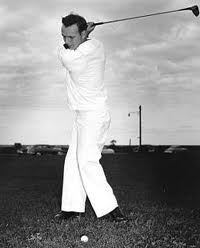
The golf club, now a sophisticated piece of metal, has a much cruder past than one might think. While machines and years of engineering have made them into a solid and expensive tool, its ancient counterparts had much less technology on their side. For example, metal clubs, which are the majority’s choice for swinging in today’s times, are now lightweight and come in a variety of options. Even just a few decades ago, however, wooden clubs were regularly chosen by laymen and professionals alike, lowering club face size and accuracy.

But what about the first golf clubs? With the help of Mother Nature and an imagination, these clubs were whittled, textured, and fashioned into comfortable clubs. Anyone who wanted to play the game could create their own set, and there was no standard as to what they were to look like. Early golf players (1500s) made round clubs, flat-faced clubs (similar to modern-day irons), and even versions that would look more like a hockey stick. The handles, though, seemed to fare much more universal-ness. Long, smooth grips were needed for comfort and execution – created by removing knots or knobs and tying the club face and handle together.

Later, during the 1600s, golfers began using iron clubs, as they were more powerful and accurate. However, after the invention of the feathery golf ball – made by sewing fine feathers inside a leather ball – many golfers stuck to wooden clubs, as they provided less damage to these expensive balls.

Centuries later, professional club makers began creating and selling their products – in a number of materials, including multiple types of metals and woods. At first only wealthy individuals could afford such a luxury, but over time the process would become cheaper to reproduce and more widespread.

Golf clubs have long since been a source of betterment and expansion. And while we may never return to a time of lobbing wooden balls with larger wooden clubs, knowing the history behind one’s sport is one of the best ways to completely understand its roots.

Post brought to you by PalmBeachGolfCenter.com, your stop for golf clothing and equipment.

Written by Bethaney Wallace

Posted in Golf | Tagged , , , , , , , | 3 Comments

The Sports Archives – Murray And Me!

Heroes

Andy MurrayI have always been a great fan of professional tennis, partly out of admiration as I am a useless player myself. I grew up in the 70’s and 80’s watching all of the big tournaments on the television and frequently visiting Wimbledon and Wembley Arena to watch the game played live. When I look back at the players that were my biggest heroes they all had one thing in common – none of them were British.

No Choice

There was a very good reason why my idols were all foreign and that was the absence of any world-class British male players. There was John “Legs” Lloyd, of course, but he was never going to win a grand slam singles event. No, the tennis world was dominated by Americans and Eastern Europeans but at least it was a time when there were some real characters in the game.

Hero

My ultimate hero was the very badly behaved but incredibly entertaining John McEnroe. I first saw him play at Wimbledon in 1977 when he was just 18 and although he was only a qualifier that year you could see he was something special. I followed his career from that day onwards and personally witnessed several of his legendary outbursts including one at Wimbledon when he seemed to think it was unreasonable to stop the game even though it was pouring with rain. McEnroe went on to become one of the greatest players of all time and I am so grateful that I was often there to cheer him on.

Entertainment Factor

Another favourite of mine was Ilie Năstase whose amazing sense of humour and on-court antics surpassed his playing ability but made him compulsive viewing. In addition to the characters of the game I was always blown away by the skills of Bjorn Borg and Jimmy Conners and the dynamics of the rivalries between the great star players of the era. It was also amazing how these men could be so volatile and yet still play the most incredible tennis.

Patriotism

For so long I reveled in the successes of McEnroe and admired the other great players but always wondered what it would be like to have a British player at the top of the game. Then I could really get behind them with patriotic fervour as well as admiration. Well I had a long wait! It wasn’t until the arrival of Tim Henman that a truly world-class player emerged in the British Game. There is no doubt that Henman was a very good player and he flirted with grand slam success a few times. I was on Centre Court when he played and lost his Wimbledon semi-final against Leyton Hewitt. You always live in Hope but somehow I always felt that Henman was just not quite good enough. Also as it was 2002 and we had not had a slam winner since Fred Perry in 1936 and so I wondered how long it was going to be before we had another player of any note.

Andy Murray

As it turned out not too long! Andy Murray burst onto the scene in 2005 and quite early on it seemed to me that we had someone who could actually one day win a Grand Slam. Murray lacked the character of McEnroe and the flair of Năstase but he was British so I didn’t care that much. It was agony watching a series of near misses over the ensuing seasons until 2012 when finally Britain had a Grand Slam Champion with Murray winning the c in an absolutely epic match against Novak Djokovic.

The Man

How much did it matter to me that there was a British Champion? Quite a lot as it turns out but I have to say that it is McEnroe who is still my all-time tennis Hero. In the end heroes are about the man not just the player and Murray has a little way to go in that regard.

Jeanstore offer a great selection of Fred Perry clothing and footwear, inspired by greats of Tennis.

Posted in Tennis | Tagged , , , , , , , , , , , , , , , , , , , , | Leave a comment

The Sports Archives – Four Annual Sporting Events Around the World you must see!

You don’t have to be particularly active to watch sports, and sometimes it can be fun to sit back and watch other people do the running around and goal-scoring. But here’s a list of annual sporting events around the world that anyone can enjoy – even if sports isn’t really your thing.

Pamplona Running of the Bulls

Pamplona Running with the BullsThis is the highest-profiling event of the San Fermin Festival, and is broadcast live every year by two television channels in Spain. The first bull-running of the festival is on July 7th at 8am, and happens every morning after until the end of the festival, on the 14th. People who wish to participate in the Running of the Bulls must be over 18, not under the influence of alcohol and must not provoke the bulls. However, if being chased by bulls down the streets of Pamplona isn’t your thing, you could always watch this classic sporting event from the safety of a balcony or hill.

Gloucestershire Cheese Rolling

MC Cheesemaster

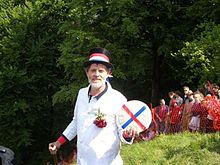
You don’t normally think of cheese as a particularly sporty food, but if the cheese is a giant wheel and it’s paired with a steep hill, then you’ve got yourself a sport! It’s exactly what it sounds like – a wheel of cheese gets let loose down a hill and hundreds of people chase after it, the winner being the first one to grab the cheese. The hill in question is Cooper’s Hill in Gloucestershire, England, and the cheese being rolled is locally made by Diana Smart of Churcham, who has been providing cheese rollers with traditional Double Gloucester Cheese since 1988. Gloucestershire Cheese Rolling is a beloved event with thousands of fans, and though it was banned in 2010 due to health and safety reasons, a rogue cheese-rolling event popped up earlier this year to start the tradition again.

ING New York City Marathon

This is the event that claims to have changed the meaning of the word ‘marathon’. To quote the official website: “Before the New York race began, marathons were modest events run by a few athletes and followed by a few fans interested in the limits of human endurance” but since Fred Lebow and the New York Road Runners started the ING New York City Marathon, marathons have become media events, with hundreds and thousands of fans rather than just a dedicated few. The marathon even attracts professional athletes, who are drawn not only to the $6000,000 prize money, but the prestige and media coverage that comes along with winning.

Six Nations Rugby Championship

RugbyThis is for all the rugby fans out there; the Six Nations Rugby Championship is a rugby competition played between six European countries: England, Ireland, Scotland, Wales, France and Italy. It is a big deal in the European Rugby world, and if you’re interested in Euro-sports, then this is the Championship for you. Grab a beer at your local pub and join in the fun.

If that list didn’t whet your appetite for watching people run, jumpFooseball Player and/or tackle, you clearly just need to see any one of these sports for     yourself to understand the beauty, majesty and cheesiness that is spectator sports.

Edison Lam is a connoisseur of bizarre sports. When he is not out in search of the perfect game of fooseball, he can be found in his Eucalypt office.

Posted in Other, Rugby | Tagged , , , , , , , , , , , , , , | 2 Comments

The Sports Archives – Swimming Through the Centuries: The History!

SwimmingSwimming has always been a popular pastime, but it has been popular for longer than you may think. Despite the modesty of some of our more prudish ancestors people have been swimming for recreation for centuries. In the southwest of Egypt there are cave paintings that depict people enjoying the water in what has been referred to as ‘the cave of Swimmers’, there has also been found an ancient clay tablet that is believed to depict swimmers who appear to be performing the front crawl. Both the ancient Greeks and the Ancient Romans enjoyed the water and there is a quote attributed to Plato that remarks on how people who lacked the ability to swim were probably not very well-educated. Despite the popularity of the water the ancient Olympic Games did not feature any water based activities. The only difference between swimming for recreation then and now is that now our modesty prohibits us from swimming together in the nude.

The Dirty Middle Ages

Swimming and a general enjoyment of the water was not something that was popular during the Middle Ages, this was the time when many people believed that illness and infection was carried in the water and would be absorbed into the body. Bathing for the sake of being clean was not too popular either, however it was generally agreed that knights of the realm should be able to swim, and in armour too. Diseases like the Black Death brought the general lack of hygiene to the fore and public perceptions began to change, bathing both in private and public was then performed in undergarments or in the nude.

Bring on the Spas

Spas started to spring up during the 18th and 19th centuries, which produced a revival in the popularity of swimming for pleasure, but brought increased modesty along with it. Days of swimming in the nude were gone and now everyone was covered up from neck to ankle in bathing attire that was considered ‘decent’, there were even small weights sewn into the hems of the ladies bathing dresses so that they did not billow up around them in the water, heaven forbid that their legs should be exposed. Things lightened up a little during the Victorian period when these cumbersome bathing dresses gave way to two piece bathing suits, which involved bloomers and long sleeves. Men too were required to cover up and wore one piece swim suits that covered both their arms and their legs. Not that men and women were allowed to bathe/swim together though, that would never do.

Perceptible Shrinkage

With the change in modesty that the modern era brought with it swimming attire has undergone something of a revolution, since around 1940 swimsuits have become smaller and smaller until bikinis have as much substance to them as dental floss and men’s trunks being generally referred to as budge smugglers, and the mankini, well that defies the description. Just how much longer will it be before we are all back bathing in the nude again?

Are you looking for more information about swimming lessons for children? Visit PuddleDucks.com now.

Posted in Olympics, Other | Tagged , , , , , , , , , , , | 6 Comments

The Sports Archives – How To Get A Better Hockey Shot!

Practice makes perfect, and that is exactly what is needed to improve your hockey shot. Of course, you must practice techniques properly, in order for this improvement to take place, and this can be done both on and off the ice. This sport is a true game of skill, requiring the player to be able to perform impeccably, while standing on ice skates. At the same time, during a game, there will be opponents to deal with, who will try to take the puck away, often using force, in addition to their own stick handling techniques.

How to Improve Your Hockey Shot

1. With a hockey net equipped, preferably with targets in all four corners, practice wrist shots from a close distance. Precision is always best, and once accuracy is developed, you can try the slap shot, which will require positioning yourself at a greater distance from the net. Try hitting the different targets each time, until it becomes second nature.

2. Stick handling, which is necessary to hold onto the puck during a game is required. Then the flick the wrist by applying pressure and let it go.

3. Once the wrist shot is perfected, practice the slap shot. This is a crucial shot for every player, and especially the defenseman, who normally positions himself at the blue line, when in the opposing team’s end zone. The same equipment should be used, i.e., a net with targets.

4. This hockey shot is the most powerful of all in the game. It requires lifting the stick back, so that the blade is pointing to the ceiling, then following through with all the power in you to slap the puck. The best slap shot is that which is only inches from the ice, because it gives teammates the opportunity to deflect the puck for a scoring opportunity.

5. The above techniques can also be practiced without targets in place, but it is always aim at the different corners to develop accuracy.

A Hockey Shot Without Warning

One of the best shots in the game is the snap shot because it has the quickest release, with plenty of power. What makes it so great is that the opponents are never warned, as there is no wind up. So, it is imperative to master it. It is faster than the wrist shot and more accurate than the slap shot, making it the most commonly used shot in hockey today. Lots of practice is necessary to gain the skill, however. Stand about 20 feet from the net when practicing.

All of these shots, among others, are necessary for any player, so work hard to develop the skills each requires. They all take time and dedication to master, but they will improve your game.

Jimmy Telps is a proud hockey dad and freelance writer. Although he has retired from hockey for 4 years now, he still learns more and more everyday. When not practicing with his son, he’s writing about hockey strength training tips and tricks.

Posted in Hockey | Tagged , , , , , , , , , , | 2 Comments

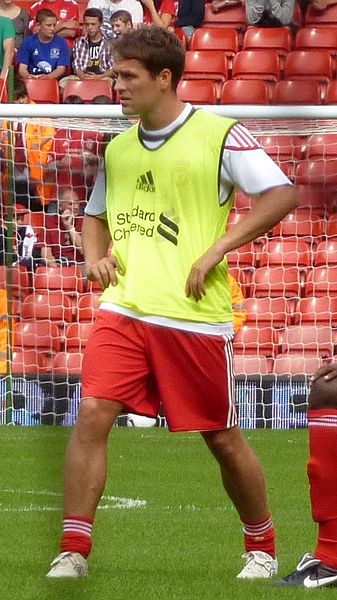
The Sports Archives – Michael Owen – Footballer Extraordinaire!

Early YearsMichael Owen

Michael James Owen was born 14th December 1979 in Chester, England. He is the son of Chester and Everton footballer Terry Owen. In 1979 Michael scored 79 goals for Deeside Primary School, breaking the record of Liverpool legend Ian Rush. Despite being an Everton fan, Owen signed a schoolboy contract with Liverpool at the age of 12 having been impressed by a letter from Steve Heighway, the Liverpool Youth Development Officer.

Progression

Owen progressed through the ranks quickly at Liverpool and was playing in the youth team at just 16 years of age when most of his colleagues in the side were already 18. He attended the FA school of excellence at Lilleshall and represented England at under 15 level, breaking scoring records for both club and country. On 6th May 1997, Owen made his Liverpool first team debut against Wimbledon and scored. He was just 17 years old but obviously destined for great things.

A Star is Born

With his exceptional pace and eye for goal, Michael quickly established himself in the Liverpool side and in 1998 won the PFA Young Player of the Year Award and was the Premier League top scorer winning him the Golden Boot award. In the 1998 World Cup finals he scored one of his and England’s most memorable goals with a stunning individual effort against Argentina that propelled him onto the world stage. In 1999 Owen was again Premier League top scorer despite not finishing the season through injury. Owen’s career has been dogged by injury and in season 1999/2000 he had only completed 6 games by January but the following season was to be one of Liverpool’s greatest ever and probably the Zenith of his career.

The Treble

At the start of season 2000/2001 there was little sign of the great things to come. Liverpool’s start was average in the league and they struggled to progress through the early rounds of the UEFA Cup. By January, however, Liverpool were on a roll reaching the final of the league cup and the last 16 of the UEFA CUP with the challenge of playing Italian champions elect AS Roma in the next round . They had also successfully negotiated the third round of the FA CUP against Rotherham but now faced a tough match against Leeds to progress further. After a spectacular but controversial victory over Roma in which Michael Owen scored twice and missed a penalty and an eleventh hour win over Leeds there was talk of achieving a magnificent treble. This seemed highly unlikely but by May the League Cup had been won against Birmingham and Liverpool had reached the finals of both the FA Cup and UEFA Cup.

The Finals

To say Liverpool played badly in the 2001 FA Cup final would be a gross understatement and with 7 minutes to go they were 1:0 down and had hardly created a chance. Entrance Michael Owen who scored first from a set piece and then set the stadium alight with yet another amazing individual effort to win the game. He was described as winning the cup for Liverpool all by himself. Four days later on an incredible night in Dortmund, Germany, Liverpool beat Alaves 5:4 with a golden goal to claim the UEFA Cup and an extraordinary Trebble. Michael Owen scored a penalty in the match and later gained both The European and World Player of the year awards.

Later Career

Owen played for Liverpool until 2004 gaining a further League Cup winners’ medal in 2003. He continued to score goals passing the 100 mark for Liverpool but in 2004 moved to Real Madrid where he rarely played. He then returned to England and signed for Newcastle United for whom he played until the disastrous 2008/2009 season in which Newcastle were relegated. His domestic and international career continued to be interrupted by injury and he never returned to the form of his days at Liverpool. Owen signed for Manchester United in 2009 but failed to make an impact and left for Stoke City in 2012.

Away From Football

Away from the pitch Michael has attained many lucrative advertising deals. He was the face of breakfast cereal Nestlé Sporties, appeared in adverts for Persil washing powder, was a cover athlete for the Pro Evolution Soccer 2008 Game and has a contract with Jaguar Cars. Michael has also been an ambassador of the Swiss watchmaker Tissot, advertising their men’s Couturier watches including a limited edition named after him.

Attached Images:

Watch Hub offer the range of Mens Tissot Couturier watches as championed by Michael Owen

Posted in Soccer | Tagged , , , , , , , , , , , , , , , , , , , , , , , | 2 Comments

The Sports Archives – Where Skiing Began, An Ongoing Event!

Where Skiing Began, An Ongoing Event

Nordic CombinedSpeeding down the side of a mountain on a set of skis has long since been a favorite pastime – by all ages. Whether in North America, Europe, or possibly another mountainous climate, people from all over the world have been mastering their downhill skills. But despite how popular skiing may be in today’s standards, it still has a specific set of origins. Whether it was created as a sport or an act of survival, balancing on skis has a great deal of history behind it.

This history, however, is being actively pursued by an organization known as the International Skiing History Association. Hosting 700 members in 14 different countries, the group works to document important ski history, such as timelines, events, stats, and to help get that info into museums. The organization is also meeting with former notable skiers to get their stories, many of whom had been documenting individually.

As far as the sport itself, where it came from, or even how old versions of the sport actually are, are all facts that are disputed. Modern skiing is shown to be little more than a century and a half old, while ancient hieroglyphics have been found depicting varied forms of skiing. Historians argue whether or not this is accurate, and if the intended act (skiing or not) can actually be proven.

In Olympic history, the event, has been around since the beginning of the Winter Olympic Games, which began in 1924. At this initial appearance, cross-country, Nordic combined, and ski jumping were all competed by men from 15 different countries.

While skiing’s history has yet to be determined, there is an active effort to work toward pinning these events down. Hopefully, through added research, these timelines and events can be proven and documented, giving the world an accurate representation as to how this beloved sport came to be.

For more information on skiing or where to pick up your gear, head to JANS.com.

Guest post by Bethaney Wallace

Posted in Olympics, Other | Tagged , , , , , , , , , , | 3 Comments

The Sports Archives – Karate: A Look into its Origin!

Karate: A look into its origin

Chomo Hanashiro

Chomo Hanashiro

Depending on what part of the world you are in, the kind of martial arts you are exposed to varies. However, one of the most popular and timeless forms of defense forms is Karate. It is considered one of the oldest and most effective forms of fighting that can be put into use for protecting yourself and others. Along with protection, practice of karate gives the body inner strength and power to heal different ailments. In addition, Karate is being practiced for having inner peace and sanity. This specialized art of fighting was originated during the 20th century. It is said that karate was originally brought into Japan from China, which was the birthplace of karate. Sakukawa Kanga and Matsumura are known as the fathers of karate. It is said that these two had brought in karate from Ryukyu Kingdom to Japan.

About its history

It was from the year of 1932 that Karate gained popularity with schools and training institutes being set up so that enthusiasts could know about and learn this unique form of self-defense. In karate, a person uses their hands, elbow and legs to punch and kick the opponent. The body movements are swift yet slow with some proper leg movements. Use of weapon is also adapted in karate. Weapons like Nunchuks and swords are customized for using in karate. Experts state that, karate is one of the deadliest yet simple forms of safety that can be taken into use for safety and body healing. It was during the era of 60s and 70s that karate got even more popularity. Hollywood adopted the methods of karate and it was extensively used in the movies. Masters of karate have always taught their students that Karate should not be taken into use for harming any person in particular. It is something that has to be ethically followed, and one can gain perfection with years of practice. There are different styles of karate, and all of them need to be learned and understood before putting them into practice.

Nunchucks Parts

Mentioned below are the primary styles of karate:

Kihon: This is one of the major styles of karate and highly popular. In Kihon, various styles of karate are mixed together. It is can also be performed as a part of drill by group of Karateka’s.

Kata: In karate, Kata is stated to be the stance in which a person is standing in front of their opponent. It is a formulized steps or movements, which comprises of different leg and hand sequences. There are defensive and offensive postures, which can be learned with use of Kata. To attain the higher levels or belts in karate, a person has to demonstrate all the forms of karate in Kata.

Kumite: There are different stages of Kumite, which is to be learned in Karate. Kumite means the meeting of hands. Full contact, semi contact and light contact are the different Kumite techniques. Along with the style, it is important to get the proper coordination of hands and legs so that movements can be swift and you can easily have control on your body and mind.

Carla Smith is a famous martial arts trainer in Houston. She has several years of experience in this field of martial arts. If you would like to know more about Carla’s trainings on martial arts from revolution dojo houston visit her website , http://www.revolutiondojohouston.com

Posted in Other | Tagged , , , , , , , , , , , , | 2 Comments

The Sports Archives – Chinese Football (aka Paper Football)!

What is Paper Football?

Paper FootballPaper Football or Chinese Football is a game played on a table that is similar to American Football.  It requires a football made out of paper with two opponents sitting across from each other at a table.

The game starts with a kickoff with one player holding the football and flicking their finger to make the ball go towards the other player to score a touchdown.  If the football hangs off the edge of the table, it is considered a touchdown.  And if a touchdown is not made the other player receives the ball.  That player will try to flick the ball along the table to the other side to attempt a touchdown.  Each player will take turns flicking the ball until a touchdown is made.

Scoring is the same as American Football with a touchdown being six points and a field goal one point.  A field goal is achieved by the opposite player making a field goal with their hands, and the person who scored flicking the football through the field goal.  A two point conversion can also be achieved by the one who scored, again trying to flick the football to hang over the side of the table.

How to Make a Paper Football

You begin with an 8 ½ x 11 inch piece of paper.  Place the paper horizontally in front of you, so the long side is facing you.  If the paper contains holes, place it so the holes are pointing towards the top.  Fold the top of the paper in half and crease the edge to make long strip.  Then evenly fold the left side of the paper to the right and crease it again.  Now, unfold the strip and draw a line down the center crease.

Place the strip vertically in front of you and fold the bottom up towards the left to match the center crease.  It should look like a backwards “L”.  Next fold the bottom up again to match the crease, and then fold the remaining paper along the bottom strip.  You then take the protruding excess and fold it to the left to square off the bottom.  Take the top half and fold it down, then flip it over and fold the excess again to create a square.  Again fold the top part down and then fold the whole top into the pocket on the bottom.  When you fold one side down, a triangle should be formed, and then you can push the side into the pocket to form a paper football.

V.K. enjoys covering the topic of flick football.

Posted in College Football, Football, Other | Tagged , , , , , , , , , | 1 Comment

The Sports Archives – Top 5 Cycling Legends in History!

Although it is primarily a more popular sport in Western Europe, bicycle racing has become increasingly widespread through the United States and other countries across the world. The three most significant stage races for a professional cyclist are the Tour de France, Giro d’Italia and Vuelta a España; these races have produced some of the most renowned cyclists in history. These are five of the most prominent cycling legends in history:

Eddy Merckx

Born 1945 in Meensel-Kiezegem, Belgium

Tour de France wins: 1969, 1970, 1971, 1972, 1974

One could argue that Eddy Merckx is one of history’s greatest cycling legends. Born in Belgium in 1945, Eddy Merckx received his first, used, racing bike at the age of eight. He later competed in his first race at Laeken in 1961 and would participate in 12 more races that year before winning his first race at Petit-Enghien. Merckx is one of the most decorated cyclists in history, winning five Tour de France titles, five Giro d’ Italia (Tour of Italy), all classic tours (except Paris), professional and amateur world championships and a hour world record.

Bernard Hinault

Born 1954 in Yffiniac, Brittany

Tour de France wins: 1978, 1979, 1981, 1982, 1985

Winner of five Tour de France titles, French cyclists Bernard Hinault is another celebrated cyclist legend. Unlike some of the top cyclists, Hinault is the only rider to finish either first or second in each Tour de France he completed. Hinault also holds three Giro d’ Italia titles and two Vuelta a España (Tour of Spain) titles. In addition, he is the only cyclist to win all three Grand Tours more than once in his cycling career.

Jacques Anquetil

Born 1934 in Mont-Saint-Aignan, France

Died 1987 in Rouen, France

Tour de France wins: 1957, 1961, 1962, 1963, 1964

A significant cycling legends in history, Jacquest Anguetil, was the first rider to win five Tour De France titles. His wins contributed to his remarkable capacity to ride alone against the clock in the individual timed stages of the tour. Besides to his tour victories, he won two Giro d’ Italia titles and one Vuelta a España title and was the first rider to receive the yellow jersey and wear it from the first day until the last of the Tour De France.

Miguel Indurain

Born 1964 in Villava, Navarre, Spain

Tour de France wins: 1991, 1992, 1993, 1994, 1995

Miguel Indurain was the top cyclist of the 1990s in world cycling. Indurain contributed to several historic moments in cycling at a very young age; youngest rider to win the Spanish Amateur Championship at 18 and the youngest to win a stage of Tour de l’Avenir (Tour of the Future) at 20. With five Tour de France titles, Indurain also won the Giro D’Italia title twice, a world time-trial championship and Olympic time-trial championship.

Fausto Coppi

Born 1919 in Castellania, Italy

Died 1960 in Tortona, Italy

Tour de France wins: 1949, 1952

Fausto Coppi is one of only three cyclists to win five Giro d’ Italia titles. Coppi was the leading international cyclist in the years before and after the Second World War; frequently referred to the golden years of international bicycle racing. In addition, to his Giro d’ Italia titles he holds a world championship title and two Tour de France titles.

Kelly prides herself as an active mum who makes sure her kids get a good dose of vitamin D and exercise in the weekends. Kelly has worked at several Perth shops for bicycles. She has recently bought her two sons mountain bikes for their 18th birthday.

Posted in Other | Tagged , , , , , , , , , , , , , , , , , , | 4 Comments