The Sports Archives – Twickenham’s Highest Visiting Points Scorers!

With the culmination of the inaugural Rugby Championship – formerly the Tri Nations but now with Argentina included – we were reminded that it will soon be time to welcome the crème-de-la-crème of foreign rugby union to the British Isles for the autumn internationals. England will hope that fortress Twickenham can withstand the onslaught of the world’s best, which hasn’t always been the case. Here’s a rundown of the most successful individual performers to have thrived on the Twickenham turf at international level…

Dan Carter (NZ), 86 points- Is there a ground where rugby’s highest ever points scorer hasn’t come away with a hatful of points? Twickenham in particular has been a happy stomping ground for Carter, who will hope to stretch his lead over Jonny Wilkinson at the top of the standings, and add to his 1342 points, when he bids for an undefeated sixth win there as an All Black on December 1st. His top score at the home of English rugby is 26 points in the 2006 autumn international, when he bagged his only try there along with three conversions and five penalties.

MC Burke (Aus), 69 pts.- Prolific kicker Matt Burke is no exception in terms of individual brilliance but unfortunately always came away from Twickenham empty-handed. Despite scoring 69 points in only three matches there, Australia were beaten each time Burke faced England. Perhaps most cruelly of all, Burke scored a try and all 19 of his side’s points in November 2000, only to see them go down by three.

AP Mehrtens (NZ), 56 pts.- Another player to score heavily in a legendary New Zealand side was Andrew Mehrtens who, along with former giants of the game like Jonah Lomu and Christian Cullen, visited Twickenham only three times but scored 56 points in total. The all-time Test conversions leader took 15 points off England as the All Blacks beat them 30-16 in Group B of the 1999 World Cup, not quite surpassing his biggest haul of 21 in a 26-all draw two years earlier.

C Lamaison (Fra), 46 pts.- An incredible 46 points in two games for the mercurial Frenchman who put two of the best teams ever to walk onto a rugby field to the sword at Twickenham. Firstly the England side of Carling, Underwood, Johnson and Dallaglio went down 23-20 in the Five Nations, with Lamaison helping himself to 18 points. Then, on the biggest stage of all, in the World Cup semi final, France took New Zealand to the cleaners in a stunning finale to one of the greatest games ever. They won 43-31 and Lamaison finished with a try, two drop goals, three penalties and four conversions, 28 points in total.

CD Paterson (Sco), 40 pts.- Perhaps a slightly less explosive but a nonetheless consistent set of performances at Twickenham came from Scotland kicker Chris Paterson, for whom six matches has yielded 40 points. Alas his side have never chalked up a victory away from home against England, but he came closest with a 10 point display as the Scots fell to Jonny Wilkinson’s England 42-20 in the 2007  Six Nations.

Attached Images:

This article was brought to you by sports hospitality specialist Keith Prowse – suppliers of tickets to autumn rugby internationals and other high quality hospitality.

Posted in Rugby | Tagged , , , , , , , , , , , , , , , , , , , , , , | 3 Comments

The Sports Archives – Five Biggest Chokes in PGA Tour History!

5. Jason Dufner 2011 PGA Championship
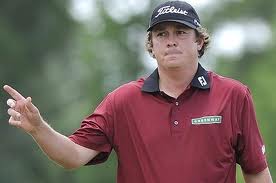
Jason Dufner ArchivesJason Dufner had a tremendous year in 2012, turning in one of the most consistent seasons of anyone on the tour, notching his first two PGA tour victories, and contending for major championships.  He finished the year ranked in the top ten of the World Golf Rankings, and he performed very well for team USA in the 2012 Ryder Cup.

His great year was almost enough to make everyone forget about his epic collapse at the 2011 PGA Championship.

Almost.

Dufner, who at this point was a virtual unknown and had zero career victories, was leading a major championship by five strokes with four holes to go.  Dufner wilted under the pressure, however, bogeying the next three holes.  He made a difficult putt on hole 18 to save par and force a playoff with rookie Keegan Bradley.

In the playoff, Dufner again was presented with an excellent opportunity to prolong the match and put himself in position to win, but he botched an easy five-foot putt on the first of the playoff holes, essentially handing the victory to Bradley.

Fortunately, this story ends in redemption as Dufner was able to follow through on his vow to “not let this define my career”.  His excellent showing in 2012 has not made anyone forget his meltdown in 2011, but it has made it seem like a distant memory.

4. Jean Van de Velde, 1999 British Open

Sometimes you only get one shot at the spotlight, and it is unfortunate when you fall flat on your face in that one opportunity.  Jean Van de Velde was a journeyman Euro Tour player, but he was thrust into the limelight with a brilliant performance at the 1999 British Open.  Well, it was brilliant four 71/72th of the British Open.

His great play had earned him a three shot lead heading into the 18th hole on Sunday.  All he needed to do was double-bogey and the tournament was his.  Instead, he made some terrible shots and some even worse decisions and spoiled his one and only chance at golf immortality.

He had a poor drive, and then instead of laying up and playing it safe, he recklessly  went for the green and ended up in the deep rough.  Again, having the chance to play it safe, he went for gusto instead, and the ball ended up in the drink.  He took a stroke penalty and then hit the ball into the bunker.  By this point he was on life-support, but he managed to get up-and-down to score a triple-bogey and force a playoff.  No doubt fazed by his epic collapse, Van de Velde promptly lost the playoff.

He would never get anywhere near major contention again in his career.

3. Phil Mickelson, 2006 U.S. OpenPhil Mickelson Archives
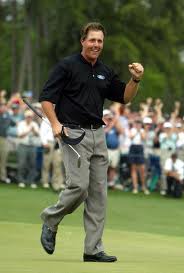
For years, Phil Mickelson carried a huge gorilla on his back.  Though he was one of the finest golfers in the world, he was unable to win a major.  That all changed at the 2004 Masters, and then he won the 2005 PGA Championship and opened the 2006 major season with another Masters victory.

Heading into the 2006 U.S. Open, Phil had a chance to do something that only two other golfers – the great Ben Hogan and Tiger Woods – had ever done: win three straight majors.

And it looked like he was going to do it, as he carried the lead into the final hole, and needed a par to complete the victory or, at worst (it seemed), a bogey to force a playoff.

Instead, he took a page out of the Van de Velde guide to last-hole tragedy, and tried to win with an exclamation point rather than by playing it safe.  Attempting to approach the green on his drive, he instead hit a crowded hospitality tent amidst a cluster of trees.   But the bounce was very lucky, and actually had a decent lie.  A short pitch out to the fairway would put him in a solid position to save par and win the tournament.  In one of the most mind-numbing mental blunders in golf history, Mickelson refused to take that route, and instead went for the green.

He didn’t hit the green.  He hit a tree.  When he tried again, he hit it into the sand.

He ended up with a double bogey and a third place finish.

2. Greg Norman, 1996 Masters

In 1996, Greg Norman was the top ranked golfer in the world, and he came to Augusta looking for the elusive Masters Championship that had eluded him during his prolific career.  He came out blazing on Thursday, notching a course record 63 and vaulting to the top of leaderboard.  He would not relinquish the lead on Friday, and after another impressive performance on Saturday, he was six strokes up with only one day to play.   Nobody had ever blown that big of a lead at the Masters.  But nobody knew how to cave under pressure like Greg Norman.

Norman was one of the best golfers of all time, having spent a massive 331 weeks combined atop the World Golf Rankings Standings during the 1980s and 1990s.  But he is widely regarded as a bit of a disappointment, primarily because he only won two majors during his lengthy career.  His failures in the major tournaments were characterized by agonizingly close calls where bad luck, bad timing and personal choke jobs all conspired against “The Shark”, often at the same time.

The 1996 Masters epitomizes these failures.  On the final day of competition, Norman made it through the first eight holes without catastrophe, but then he bogeyed holes 9, 10 and 11 and followed that up by splashing his tee shot on 12 into the water, resulting in a double bogey that cost him the lead.  He had a few opportunities to get back in contention, but on hole 16 his tee shot again found the drink and his failure was complete.  He finished the day with a 78, and Nick Faldo won the Masters by five strokes.  A simple 72 would have won him the green jacket, but instead it was another epic failure for Australia’s best golfer.

1. Arnold Palmer, 1966 US Open

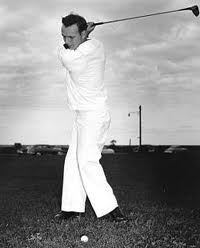
Arnold Palmer ArchivesIf blowing a six stroke lead at the final day of a major tournament is an epic collapse, then what do you call blowing a SEVEN shot lead on the BACK NINE of the final day of a major championship?  Words perhaps do not do justice for what happened to Arnold Palmer at the 1966 U.S. Open.  All one can say is that it was a collapse for the ages from one of the greatest performers the sport has ever seen.

With nine holes to play Palmer was 7 strokes up on Billy Casper.  He strolled around the course with the genial smile that had made him golf’s first true superstar, interacting with the crowd and telling folks that he was going for the course record held by Ben Hogan, by now an old-timer who had never gotten along with the younger, more popular Palmer.

While Palmer was busy chasing the record and awaiting his coronation, something happened.  The first was that Casper started playing great.  The second was that Palmer started slipping.  But he still seemed to have the tournament wrapped up.  He led by five strokes with only four to play.

But he bogeyed 15, and Casper birdied.  Same thing on 16.  The lead was down to one with two holes to play and the generally calm and charismatic Palmer’s face was awash with tension.  When on 17, he had a seven foot putt to retain the lead, the pressure was too much for Palmer to bear and he came up a few inches short.  His lead was gone.

On 18, Palmer somehow managed to save par and force a playoff, which back then was a full 18 holes the following day.  Palmer came out and took the lead from Casper, up two with nine holes to go.  But for the second day in a row, he melted down and Casper went on to win by four strokes.

Palmer would call it the biggest disappointment of his career.

He would never win another major.

By Scott McCormick

Scott McCormick feels fortunate that when he chokes on the golf course, there are no cameras recording it for posterity. His golf writing appears courtesy of Golf Now Phoenix and Golf Now San Diego. For more of McCormick’s commentary, see his recent post on the Belly Putter controversy.

Posted in Golf | Tagged , , , , , , , , , , , , , , , , , , , , , , , | 4 Comments

The Sports Archives – More News about the Costs of Playing Football!

James HarrisonJames Harrison is in the news again. This time it has nothing to do with jabs at Roger Goodell or trash talking other teams’ offenses. This time, it is much more serious. James Harrison recently stated that he has had twelve concussions in his career and to prevent those, he is now wearing additional padding in his helmet. It’s quite ironic considering his past fines over his hits. But such is the life of an NFL linebacker; you hit hard, you get hit hard with injuries too.

Harrison has had his share of injuries. He consulted a back specialist last year and had back surgery to remove a herniated disc that was on a nerve. It had bothered him all season and rather than addressing it during the season and risk the loss of pay, he chose to endure the pain and play for his team. He is like many other players. Oftentimes, NFL players will risk injuries in order to avoid being cut and help the team. This had led to an onslaught of lawsuits.

Injury Lawsuits

There have been countless lawsuits against the NFL from former players who say that the NFL did not warn them about the ramifications of concussions. This was in the news rather recently when Junior Seau committed suicide as many wondered whether concussions and brain degeneration contributed to his death.

This is nothing new. Several players have committed suicide due to the effects of concussions, including Andre Waters, a hard-hitting safety from Buddy Ryan‘s all-star Eagles defense of the 80s who took his life with a self-inflicted gunshot wound.  Doctors said that the 44-year-old football star had the brain of an 85-year-old with Alzheimer’s. News of concussions came back in the news when Alex Karras passed away earlier this month. He had recently followed suit with hundreds of other players to blame the NFL for their carelessness.

Football Huddle

It isn’t known how badly James Harrison will be affected by his concussion-like symptoms in the past. He said that he didn’t see spots or have memory loss. In the meantime, he will wear a helmet with CRT padding to hopefully protect his likelihood. It’s most likely he’ll continue to consult a back specialist as well to make sure his nagging injury doesn’t come back. This is just another story about the hardships NFL players endure in order to make a living. Hopefully, something will be done to make sure Harrison, his contemporaries and formers players are protected and enjoy the rest of their lives.

Attached Images:

Christopher Hardwick is a part of an elite team of writers who have contributed to hundreds of blogs and news sites.

Posted in College Football, Football | Tagged , , , , , , , , , , , , , , , | 3 Comments

The Sports Archives – What is the difference between Squash & Racquetball?

To the untrained eye or to the sports fan that has little knowledge of either sport, there may appear to be a lot of similarities between squash and racquetball. Both are fast-paced games played in a small area where players will strike a small ball against a wall with a racquet; so it is easy to see at first glance why these two sports are intrinsically linked. This is not the case though with both sports having their own identity and feel. There are many major differences between the two sports.

Equipment

The racquets used in the sports are the first difference. In racquetball, the racquets are smaller with the largest permitted length being 22 inches. In squash, it is possible to play with a racket that a maximum of 27 inches.

Similarly, the balls are different too. In squash, the ball is smaller, coming in at 4 cm whereas a racquetball has a diameter of 2.25 inches. The racquetball itself is made of elastic of rubber, the squash ball is not. This makes a difference because the squash ball will expend a greater amount of energy when it is struck, which will slow down a rally as a match continues.

The Court

In squash, there is an area that is “out of bounds” but there is no such area when playing racquetball. A squash court is played in a rectangle area of 32 by 21 feet and the four walls have various height levels. The racquetball court is one that is fully enclosed, traditionally taking up a space of 40 feet by 20 feet with a ceiling height of 20 feet. The service area and the serve-receiving area are marked out with red lines.

There are several line markings in squash along with boundaries at the top of the court and 19 inches from the bottom of the front wall. If the ball hits the court line, goes above it, hits the front wall line or goes under it, the ball will be deemed as out.

If the ball strikes the ceiling in squash, the ball is deemed to be out but if the ball hits the ceiling in racquetball, it is deemed to still be in play. This adds an extra dimension to racquetball, causing players to have a greater degree of focus.

When playing squash, a player needs to allow their opponent to hit the front wall but when playing racquetball, it is possible to limit an opponent to only having to permit their opponent an amount of the wall to aim for.

Scoring

In squash, games are played up to 9 points and 11 points for professional tournaments. In racquetball, matches are played up to 15 points. The ball is also served differently in both sports.

It may seem that there are only limited differences between the two sports but the rules are as such meaning that players from both sports, whilst likely will be familiar with the basics, may not know the full rule set for each.

Attached Images:

This article has been provided by the team behind rulesofsport.com – an independent site dedicated to explaining the rules of various sports in a clear, easy to understand way.

Posted in Other | Tagged , , , , , , , , | 1 Comment

The Sports Archives – The Evolution of the Golf Club!

The Evolution of the Golf Club

Antique Golf Clubs

The golf club, now a sophisticated piece of metal, has a much cruder past than one might think. While machines and years of engineering have made them into a solid and expensive tool, its ancient counterparts had much less technology on their side. For example, metal clubs, which are the majority’s choice for swinging in today’s times, are now lightweight and come in a variety of options. Even just a few decades ago, however, wooden clubs were regularly chosen by laymen and professionals alike, lowering club face size and accuracy.

But what about the first golf clubs? With the help of Mother Nature and an imagination, these clubs were whittled, textured, and fashioned into comfortable clubs. Anyone who wanted to play the game could create their own set, and there was no standard as to what they were to look like. Early golf players (1500s) made round clubs, flat-faced clubs (similar to modern-day irons), and even versions that would look more like a hockey stick. The handles, though, seemed to fare much more universal-ness. Long, smooth grips were needed for comfort and execution – created by removing knots or knobs and tying the club face and handle together.

Later, during the 1600s, golfers began using iron clubs, as they were more powerful and accurate. However, after the invention of the feathery golf ball – made by sewing fine feathers inside a leather ball – many golfers stuck to wooden clubs, as they provided less damage to these expensive balls.

Centuries later, professional club makers began creating and selling their products – in a number of materials, including multiple types of metals and woods. At first only wealthy individuals could afford such a luxury, but over time the process would become cheaper to reproduce and more widespread.

Golf clubs have long since been a source of betterment and expansion. And while we may never return to a time of lobbing wooden balls with larger wooden clubs, knowing the history behind one’s sport is one of the best ways to completely understand its roots.

Post brought to you by PalmBeachGolfCenter.com, your stop for golf clothing and equipment.

Written by Bethaney Wallace

Posted in Golf | Tagged , , , , , , , | 3 Comments

The Sports Archives – Murray And Me!

Heroes

Andy MurrayI have always been a great fan of professional tennis, partly out of admiration as I am a useless player myself. I grew up in the 70’s and 80’s watching all of the big tournaments on the television and frequently visiting Wimbledon and Wembley Arena to watch the game played live. When I look back at the players that were my biggest heroes they all had one thing in common – none of them were British.

No Choice

There was a very good reason why my idols were all foreign and that was the absence of any world-class British male players. There was John “Legs” Lloyd, of course, but he was never going to win a grand slam singles event. No, the tennis world was dominated by Americans and Eastern Europeans but at least it was a time when there were some real characters in the game.

Hero

My ultimate hero was the very badly behaved but incredibly entertaining John McEnroe. I first saw him play at Wimbledon in 1977 when he was just 18 and although he was only a qualifier that year you could see he was something special. I followed his career from that day onwards and personally witnessed several of his legendary outbursts including one at Wimbledon when he seemed to think it was unreasonable to stop the game even though it was pouring with rain. McEnroe went on to become one of the greatest players of all time and I am so grateful that I was often there to cheer him on.

Entertainment Factor

Another favourite of mine was Ilie Năstase whose amazing sense of humour and on-court antics surpassed his playing ability but made him compulsive viewing. In addition to the characters of the game I was always blown away by the skills of Bjorn Borg and Jimmy Conners and the dynamics of the rivalries between the great star players of the era. It was also amazing how these men could be so volatile and yet still play the most incredible tennis.

Patriotism

For so long I reveled in the successes of McEnroe and admired the other great players but always wondered what it would be like to have a British player at the top of the game. Then I could really get behind them with patriotic fervour as well as admiration. Well I had a long wait! It wasn’t until the arrival of Tim Henman that a truly world-class player emerged in the British Game. There is no doubt that Henman was a very good player and he flirted with grand slam success a few times. I was on Centre Court when he played and lost his Wimbledon semi-final against Leyton Hewitt. You always live in Hope but somehow I always felt that Henman was just not quite good enough. Also as it was 2002 and we had not had a slam winner since Fred Perry in 1936 and so I wondered how long it was going to be before we had another player of any note.

Andy Murray

As it turned out not too long! Andy Murray burst onto the scene in 2005 and quite early on it seemed to me that we had someone who could actually one day win a Grand Slam. Murray lacked the character of McEnroe and the flair of Năstase but he was British so I didn’t care that much. It was agony watching a series of near misses over the ensuing seasons until 2012 when finally Britain had a Grand Slam Champion with Murray winning the c in an absolutely epic match against Novak Djokovic.

The Man

How much did it matter to me that there was a British Champion? Quite a lot as it turns out but I have to say that it is McEnroe who is still my all-time tennis Hero. In the end heroes are about the man not just the player and Murray has a little way to go in that regard.

Jeanstore offer a great selection of Fred Perry clothing and footwear, inspired by greats of Tennis.

Posted in Tennis | Tagged , , , , , , , , , , , , , , , , , , , , | Leave a comment

The Sports Archives – Four Annual Sporting Events Around the World you must see!

You don’t have to be particularly active to watch sports, and sometimes it can be fun to sit back and watch other people do the running around and goal-scoring. But here’s a list of annual sporting events around the world that anyone can enjoy – even if sports isn’t really your thing.

Pamplona Running of the Bulls

Pamplona Running with the BullsThis is the highest-profiling event of the San Fermin Festival, and is broadcast live every year by two television channels in Spain. The first bull-running of the festival is on July 7th at 8am, and happens every morning after until the end of the festival, on the 14th. People who wish to participate in the Running of the Bulls must be over 18, not under the influence of alcohol and must not provoke the bulls. However, if being chased by bulls down the streets of Pamplona isn’t your thing, you could always watch this classic sporting event from the safety of a balcony or hill.

Gloucestershire Cheese Rolling

MC Cheesemaster

You don’t normally think of cheese as a particularly sporty food, but if the cheese is a giant wheel and it’s paired with a steep hill, then you’ve got yourself a sport! It’s exactly what it sounds like – a wheel of cheese gets let loose down a hill and hundreds of people chase after it, the winner being the first one to grab the cheese. The hill in question is Cooper’s Hill in Gloucestershire, England, and the cheese being rolled is locally made by Diana Smart of Churcham, who has been providing cheese rollers with traditional Double Gloucester Cheese since 1988. Gloucestershire Cheese Rolling is a beloved event with thousands of fans, and though it was banned in 2010 due to health and safety reasons, a rogue cheese-rolling event popped up earlier this year to start the tradition again.

ING New York City Marathon

This is the event that claims to have changed the meaning of the word ‘marathon’. To quote the official website: “Before the New York race began, marathons were modest events run by a few athletes and followed by a few fans interested in the limits of human endurance” but since Fred Lebow and the New York Road Runners started the ING New York City Marathon, marathons have become media events, with hundreds and thousands of fans rather than just a dedicated few. The marathon even attracts professional athletes, who are drawn not only to the $6000,000 prize money, but the prestige and media coverage that comes along with winning.

Six Nations Rugby Championship

RugbyThis is for all the rugby fans out there; the Six Nations Rugby Championship is a rugby competition played between six European countries: England, Ireland, Scotland, Wales, France and Italy. It is a big deal in the European Rugby world, and if you’re interested in Euro-sports, then this is the Championship for you. Grab a beer at your local pub and join in the fun.

If that list didn’t whet your appetite for watching people run, jumpFooseball Player and/or tackle, you clearly just need to see any one of these sports for     yourself to understand the beauty, majesty and cheesiness that is spectator sports.

Edison Lam is a connoisseur of bizarre sports. When he is not out in search of the perfect game of fooseball, he can be found in his Eucalypt office.

Posted in Other, Rugby | Tagged , , , , , , , , , , , , , , | 2 Comments

The Sports Archives – Swimming Through the Centuries: The History!

SwimmingSwimming has always been a popular pastime, but it has been popular for longer than you may think. Despite the modesty of some of our more prudish ancestors people have been swimming for recreation for centuries. In the southwest of Egypt there are cave paintings that depict people enjoying the water in what has been referred to as ‘the cave of Swimmers’, there has also been found an ancient clay tablet that is believed to depict swimmers who appear to be performing the front crawl. Both the ancient Greeks and the Ancient Romans enjoyed the water and there is a quote attributed to Plato that remarks on how people who lacked the ability to swim were probably not very well-educated. Despite the popularity of the water the ancient Olympic Games did not feature any water based activities. The only difference between swimming for recreation then and now is that now our modesty prohibits us from swimming together in the nude.

The Dirty Middle Ages

Swimming and a general enjoyment of the water was not something that was popular during the Middle Ages, this was the time when many people believed that illness and infection was carried in the water and would be absorbed into the body. Bathing for the sake of being clean was not too popular either, however it was generally agreed that knights of the realm should be able to swim, and in armour too. Diseases like the Black Death brought the general lack of hygiene to the fore and public perceptions began to change, bathing both in private and public was then performed in undergarments or in the nude.

Bring on the Spas

Spas started to spring up during the 18th and 19th centuries, which produced a revival in the popularity of swimming for pleasure, but brought increased modesty along with it. Days of swimming in the nude were gone and now everyone was covered up from neck to ankle in bathing attire that was considered ‘decent’, there were even small weights sewn into the hems of the ladies bathing dresses so that they did not billow up around them in the water, heaven forbid that their legs should be exposed. Things lightened up a little during the Victorian period when these cumbersome bathing dresses gave way to two piece bathing suits, which involved bloomers and long sleeves. Men too were required to cover up and wore one piece swim suits that covered both their arms and their legs. Not that men and women were allowed to bathe/swim together though, that would never do.

Perceptible Shrinkage

With the change in modesty that the modern era brought with it swimming attire has undergone something of a revolution, since around 1940 swimsuits have become smaller and smaller until bikinis have as much substance to them as dental floss and men’s trunks being generally referred to as budge smugglers, and the mankini, well that defies the description. Just how much longer will it be before we are all back bathing in the nude again?

Are you looking for more information about swimming lessons for children? Visit PuddleDucks.com now.

Posted in Olympics, Other | Tagged , , , , , , , , , , , | 6 Comments

The Sports Archives – How To Get A Better Hockey Shot!

Practice makes perfect, and that is exactly what is needed to improve your hockey shot. Of course, you must practice techniques properly, in order for this improvement to take place, and this can be done both on and off the ice. This sport is a true game of skill, requiring the player to be able to perform impeccably, while standing on ice skates. At the same time, during a game, there will be opponents to deal with, who will try to take the puck away, often using force, in addition to their own stick handling techniques.

How to Improve Your Hockey Shot

1. With a hockey net equipped, preferably with targets in all four corners, practice wrist shots from a close distance. Precision is always best, and once accuracy is developed, you can try the slap shot, which will require positioning yourself at a greater distance from the net. Try hitting the different targets each time, until it becomes second nature.

2. Stick handling, which is necessary to hold onto the puck during a game is required. Then the flick the wrist by applying pressure and let it go.

3. Once the wrist shot is perfected, practice the slap shot. This is a crucial shot for every player, and especially the defenseman, who normally positions himself at the blue line, when in the opposing team’s end zone. The same equipment should be used, i.e., a net with targets.

4. This hockey shot is the most powerful of all in the game. It requires lifting the stick back, so that the blade is pointing to the ceiling, then following through with all the power in you to slap the puck. The best slap shot is that which is only inches from the ice, because it gives teammates the opportunity to deflect the puck for a scoring opportunity.

5. The above techniques can also be practiced without targets in place, but it is always aim at the different corners to develop accuracy.

A Hockey Shot Without Warning

One of the best shots in the game is the snap shot because it has the quickest release, with plenty of power. What makes it so great is that the opponents are never warned, as there is no wind up. So, it is imperative to master it. It is faster than the wrist shot and more accurate than the slap shot, making it the most commonly used shot in hockey today. Lots of practice is necessary to gain the skill, however. Stand about 20 feet from the net when practicing.

All of these shots, among others, are necessary for any player, so work hard to develop the skills each requires. They all take time and dedication to master, but they will improve your game.

Jimmy Telps is a proud hockey dad and freelance writer. Although he has retired from hockey for 4 years now, he still learns more and more everyday. When not practicing with his son, he’s writing about hockey strength training tips and tricks.

Posted in Hockey | Tagged , , , , , , , , , , | 2 Comments

The Sports Archives – Michael Owen – Footballer Extraordinaire!

Early YearsMichael Owen

Michael James Owen was born 14th December 1979 in Chester, England. He is the son of Chester and Everton footballer Terry Owen. In 1979 Michael scored 79 goals for Deeside Primary School, breaking the record of Liverpool legend Ian Rush. Despite being an Everton fan, Owen signed a schoolboy contract with Liverpool at the age of 12 having been impressed by a letter from Steve Heighway, the Liverpool Youth Development Officer.

Progression

Owen progressed through the ranks quickly at Liverpool and was playing in the youth team at just 16 years of age when most of his colleagues in the side were already 18. He attended the FA school of excellence at Lilleshall and represented England at under 15 level, breaking scoring records for both club and country. On 6th May 1997, Owen made his Liverpool first team debut against Wimbledon and scored. He was just 17 years old but obviously destined for great things.

A Star is Born

With his exceptional pace and eye for goal, Michael quickly established himself in the Liverpool side and in 1998 won the PFA Young Player of the Year Award and was the Premier League top scorer winning him the Golden Boot award. In the 1998 World Cup finals he scored one of his and England’s most memorable goals with a stunning individual effort against Argentina that propelled him onto the world stage. In 1999 Owen was again Premier League top scorer despite not finishing the season through injury. Owen’s career has been dogged by injury and in season 1999/2000 he had only completed 6 games by January but the following season was to be one of Liverpool’s greatest ever and probably the Zenith of his career.

The Treble

At the start of season 2000/2001 there was little sign of the great things to come. Liverpool’s start was average in the league and they struggled to progress through the early rounds of the UEFA Cup. By January, however, Liverpool were on a roll reaching the final of the league cup and the last 16 of the UEFA CUP with the challenge of playing Italian champions elect AS Roma in the next round . They had also successfully negotiated the third round of the FA CUP against Rotherham but now faced a tough match against Leeds to progress further. After a spectacular but controversial victory over Roma in which Michael Owen scored twice and missed a penalty and an eleventh hour win over Leeds there was talk of achieving a magnificent treble. This seemed highly unlikely but by May the League Cup had been won against Birmingham and Liverpool had reached the finals of both the FA Cup and UEFA Cup.

The Finals

To say Liverpool played badly in the 2001 FA Cup final would be a gross understatement and with 7 minutes to go they were 1:0 down and had hardly created a chance. Entrance Michael Owen who scored first from a set piece and then set the stadium alight with yet another amazing individual effort to win the game. He was described as winning the cup for Liverpool all by himself. Four days later on an incredible night in Dortmund, Germany, Liverpool beat Alaves 5:4 with a golden goal to claim the UEFA Cup and an extraordinary Trebble. Michael Owen scored a penalty in the match and later gained both The European and World Player of the year awards.

Later Career

Owen played for Liverpool until 2004 gaining a further League Cup winners’ medal in 2003. He continued to score goals passing the 100 mark for Liverpool but in 2004 moved to Real Madrid where he rarely played. He then returned to England and signed for Newcastle United for whom he played until the disastrous 2008/2009 season in which Newcastle were relegated. His domestic and international career continued to be interrupted by injury and he never returned to the form of his days at Liverpool. Owen signed for Manchester United in 2009 but failed to make an impact and left for Stoke City in 2012.

Away From Football

Away from the pitch Michael has attained many lucrative advertising deals. He was the face of breakfast cereal Nestlé Sporties, appeared in adverts for Persil washing powder, was a cover athlete for the Pro Evolution Soccer 2008 Game and has a contract with Jaguar Cars. Michael has also been an ambassador of the Swiss watchmaker Tissot, advertising their men’s Couturier watches including a limited edition named after him.

Attached Images:

Watch Hub offer the range of Mens Tissot Couturier watches as championed by Michael Owen

Posted in Soccer | Tagged , , , , , , , , , , , , , , , , , , , , , , , | 2 Comments