The Sports Archives – Top 10 Biggest Sports Stadiums in the World!

10. Melbourne Cricket Ground

Melbourne Cricket GroundThe Melbourne Cricket Ground, in Melbourne, Australia, can hold 100,000 spectators for cricket matches and other sporting events. The ground opened to the general public on the 30th of September, 1854. At that time, 130,000 people could get into the arena. However, safety restrictions over the decades saw the capacity go down to 100,000.

9. National Stadium Bukit Jalil

Malaysia’s national stadium can hold 100,200 people for sporting events. Athletics, Commonwealth Games events, and football matches are held at this stadium throughout the year. The National Stadium was built in 1998 for the Commonwealth Games of that year.

8. Neyland Stadium

This stadium is the home of the Tennessee Volunteers, an American football team from Knoxville, Tennessee. The stadium has a capacity of 102,037 and is home to various political conventions and National Football League exhibition games. It was built in 1921.

7. Ohio Stadium

Ohio Stadium is the home of Ohio State University’s football team, the Buckeyes. The stadium has a capacity of 102,329 for sporting events and 110,000 for musical concerts. The stadium opened in 1922, but has undergone several renovations to keep it in line with more modern stadia.

6. Jornalista Mario Filho

Rio de Janeiro’s principle football stadium, the Jornalista Mario Filho, hosts 103,045 for games all year round. The stadium is owned by the government and used by the country’s best football teams. The likes of Flamengo, Botafogo, and Fluminense call Jornalista Mario Filho their home.

5. Beaver Stadium

Located in Philadelphia, Pennsylvania, the Beaver Stadium is home to Pennsylvania State University sports teams. 107,282 people can cram into Beaver Stadium for games every week as they cheer on their school against some of the best teams in the United States.

Beaver Stadium

Beaver Stadium

4. Michigan Stadium

Michigan Stadium edges out Beaver Stadium by only a few seats, with a capacity of 107,501. It is located in Ann Arbor, Michigan and plays host to the University of Michigan’s football team. The last time the stadium had an attendance of less than 100,000 was in 1975.

3. Estadio Azteca

The Aztec Stadium, or Estadio Azteca, has a capacity of 114,465. The Mexican National Team plays all their games at this stadium, and they rarely lose at the Estadio Azteca. America, a Mexican club football side, also hosts their games at this stadium. The Estadio Azteca is the only stadium to host two football World Cup finals – 1970 and 1986.

2. Salt Lake Stadium

Located in Kolkata, Salt Lake Stadium is India’s largest sports stadium. The stadium, which has a capacity of 120,000, goes by the official name of “Yuva Bharati Krirangan”. The stadium’s construction was completed in 1984 and plays host to various football, athletics, and hockey games.

1. Rungnado May Day Stadium

Pyongyang, North Korea is the home of the largest stadium in the world. Rungando May Day Stadium is used to various sports events and also plays host to political rallies. It is said that 190,000 people were in the stadium for a wrestling game in 1995.

Rŭngnado May First Stadium

Rŭngnado May First Stadium

Steve is a travel enthusiast who loves to travel the world and visit man-made wonders such as the stadiums listed above. He works at a steel fabricators in Brisbane and would love to one day work on a project as large as those on this list.

Posted in College Football, Cricket, Football, Other, Soccer | Tagged , , , , , , , , , , , , , , , , , , , , , , , , , | 6 Comments

The Sports Archives – Where to Find Your Favorite Teams for Spring Training!

If you want to watch your favorite baseball team during spring training, there are one of two places you will find them – in Florida or Arizona. Florida is home to the Grapefruit League, which includes the Braves, Nationals, Astros, Mets, Blue Jays, Tigers, Phillies, Yankees, Red Sox, Pirates, Orioles, Rays, Twins, Cardinals, and Marlins. These teams play at 13 different stadiums throughout Florida.

The rest of the teams play their spring training games in the Arizona Cactus League. 10 different sports stadiums in central Arizona play host to the Royals, Rangers, Padres, Mariners, Reds, Indians, White Sox, Dodgers, Giants, Rockies, Diamondbacks, Angels, Cubs, Brewers, and Athletics.

The Red Sox stadium is less than a year old, while the Pirates have been playing in their stadium since 1923. Tickets for these spring training exhibition games range from $6 to $41. There are many young pitching prospects to look out for this season, as well as a shortstop for the Boston Red Sox – arguably one of the toughest field positions in baseball.

Source: Sports Management Degree Hub

Related Blogs:

Baseball’s “The Natural”
Baseball Card Manufacturing Broken Down In 5 Steps

GrapeFruit League Infographic

Posted in Baseball | Tagged , , , , , , , , , , , , , , , , , , , , , , , , , , , , , , , , , , , , , , , , , | 11 Comments

The Sports Archives – Looking For A New Sport To Follow?

motocross

Not surprisingly, motocross racing has dramatically increased its viewership in the past few years. Not only does the equipment get better year after year, but the rising stars of the sport such as Ryan Villopoto, Josh Coppins, and Ryan Dungey vie with each other to surpass the feats of such legendary stars as Roger DeCoster and Jeremy McGrath. One thing is for sure – the action is continually getting better every year.

A Little Bit of History

Born in the dusty fields of England at the beginning of the 20th century, motocross has evolved to become the pre-eminent, “no holds barred” form of motorcycle racing in the world. Motocross races are held year round in every type of weather and on the most difficult tracks in the world and motocross riders have only one goal: to finish first.

The sport grew in popularity throughout the 20s, 30s and 40s but finally hit its stride with the introduction of the Fédération Internationale de Motocyclisme. For many years, this international body held the honor of proclaiming the world motocross champion. Eventually, however, it was eclipsed by other governing bodies as the sport grew ever popular.

The Present

These days, the sport has blossomed and there are four distinct racing categories: FIM Motocross World Championship, AMA Motocross Championship, Motocross des Nationsand the British Motocross Championship. In addition, in the U.S. there is Freestyle, Supermoto, Quadmoto and Supercross. Every one of these distinct varieties of motocross demands a different set of skills, both physical and mental. However, they all demand a ruthless determination to win.

With a burgeoning following that grows every year, motocross is definitely a sport destined for greatness in the 21st century. It combines technological know-how with physical strength and mental dexterity. If you’ve never experienced the thrill of a motocross race and you are a real sports fan, you should definitely check out a race. There’s nothing quite like the noise, the vibration and the crowd at a Motocross event.

What Next?

If you can’t catch a motocross race in person, try watching it on ESPN2, FUEL-TV or at the X-Games. It is a fascinating sport. You’ll never look back. With these things said, make time in one of your busy weekends, put on the required motocross clothing, pack your friends into the car and head out to see one of the most exciting 21st century sports. You and your friends will not regret or soon forget your motocross experience.

Featured images:

Heather B loves to watch different sports. She always likes to share the newest and most interesting ones with others.

Related Blogs:
Motocross MX Nationals Management Tweaks The Rules!
Extreme Motocross – Three Challenges You Must Conquer!

Posted in Motorsports | Tagged , , , , , , , , , , , , , , , , , , , , , , | 7 Comments

The Sports Archives – Time To Bring Out The Big Guns!

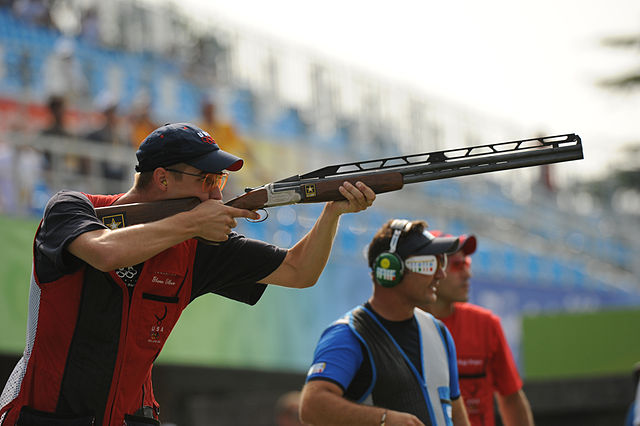
Peter Wilson Olympic Gold Medal WinnerSince Peter Wilson dramatically won a British gold in the 2012 Olympics, clay pigeon shooting has risen in popularity and is getting the exposure it deserves. Since the Olympic Games, the profile of the sport has been raised significantly, with more people gaining an understanding of it and getting involved as a result.


Olympic Glory

When the event first began, actual pigeons were used before clay was later substituted as a more suitable target. Since the early days of competitive shooting with just three events in 1896, the event has grown and grown featuring an impressive 15 events at London 2012 and boasting 390 athletes from 103 countries worldwide.

Of course, no clay pigeon shooting event would be able to proceed without the very best equipment available, which includes a whole range of eco-friendly targets, as well as an array of electric and manual traps.

During the London 2012 games, a grand total of 270,000 clay pigeons were used across the various competitions and skeet shooting, trap shooting and double trap shooting were all showcased spectacularly with a huge degree of skill and precision seen and appreciated by crowds who weren’t necessarily too familiar with the sport just a couple of months earlier.

One For All and All For One

Thanks to Wilson’s big win, clay pigeon shooting is now gaining further recognition with many people realising that its unique appeal is in its simplicity and the fact that it can be practised by a huge variety of people, whether they are a novice or more experienced.

In fact, Wilson only began shooting a mere six years before his big win, starting from scratch just because he liked the sound of it. This proves that success can be achieved very quickly for those brave enough to follow their passions. A certain level of discipline is of course is essential, as well as a good eye and dedication to the sport, but those in possession of these qualities can certainly go a long way.

An all-weather sport that requires limited equipment to get started, this type of shooting is taught and practised countrywide, with the Olympics simply prompting a renewed interest in it. So, with plenty to recommend clay pigeon shooting, including considerable Olympic glory, where will the sport take you? You needn’t get too hung up on the shooting aspect as at heart, the sport is just a measurement of a person’s skill.

Walton Eller at 2008 Summer_Olympics double trap finals

Lewis Ellison is interested in most competitive sports, with a particular fascination for shooting, which he has enjoyed watching at various events. He is now hoping to get involved and is going to make some purchases from gdktrading.co.uk.

Photo Credits: Wikipedia

Related Blogs:
Did You See That? Top London 2012 Moments!
The Olympics: The Greatest Show on Earth?

Posted in Olympics, Other | Tagged , , , , , , , , , , , , , , , | 4 Comments

The Sports Archives – Michael Jordan: 23 Must Know Facts About His Royal Airness!

Michael Jordan is considered by most, the greatest basketball player who ever lived. His legend and image have long outlived his actual playing career, having been retired for over a decade now. He continues to appear on television frequently with endorsement deals while overseeing the Charlotte Bobcats as President of Basketball Operations and part owner.

The winner of six NBA championships as a player—including two three-peats in the 1990s and winning Finals MVP all six times, Jordan has dominated the sports and media marketing climate like no athlete before or since. Jordan is the definition of being his own brand. An inspiration to generations of children and athletes worldwide, his image and brand have dominated cultural and economic barriers the world over. With Jordan’s 50th birthday being celebrated in 2013, here are 23 things you may or may not have known about the greatest living basketball player/endorsement icon that has ever laced up sneakers, who just happens to be best known by his trademark jersey #23.

Source: Top Online Colleges

Related Blogs:
How Michael Jordan Forever Changed the Game of Basketball
1982 Michael Jordan March Madness

Michael Jordan Infographic

Posted in Basketball | Tagged , , , , , , , , , , , , , | 2 Comments

The Sports Archives – The Allure Of Augusta!

The Masters 9th Hole

The Masters 9th Hole

The Augusta Golf Club has a rich history, dating back to 1931 when the land in Georgia was purchased. Originally a fruit orchard, the area boasted many unique natural features. The founders of the club, Bobby Jones and Clifford Roberts, saw a unique opportunity to create an amazing golf club. With the vision of Jones and Roberts, Augusta opened in 1934, hosting annual invitation tournaments.

What’s in a Name?

This prestigious club flourished, changing its tournament name from the Augusta National Invitation Tournament to the Masters in 1939. This tournament is one of four major professional golf championships, and the only one that plays at the same course each year. The Masters attracts golfers and spectators alike as it displays some of the best professional golf that the world has to offer.

Green with Envy

The classic green jacket associated with Augusta was the vision of Roberts, who originally intended it as a uniform for the staff so that helpful assistance could be easily recognized. The jacket soon became the badge of honor for the members of the club and for the winners of the Masters Tournament. From the first endowment of the jacket to Sam Snead in 1949, to the latest victor, Bubba Watson, this tradition has become a symbol of honor and prestige for its wearers.

The A-List

One must be invited to join this exclusive club; there is no application process. This makes membership at the Augusta Golf Club a coveted title. Until 1990, African-Americans were not allowed to join, and past rules of the club stated that all caddies must be black. It was an epic year at the Masters in 1997 when Tiger Woods, employing a white caddie, won his first of four Masters Championships. Some of the more notable Augusta members include Bill Gates, President Dwight Eisenhower, Warren Buffett, Lynn Swann and T. Boone Pickens, Jr. In August 2012, the club admitted its first two female members, Condoleezza Rice and Darla Moore. The club has been the object of severe criticism for its membership policy, but Augusta has always stood firm, saying that it’s a private club, and their policy regarding who is allowed to join is also private.

The Price of Success

Because of the exclusive nature of Augusta, actual membership fees and annual dues is a well-kept secret. Anonymous members have disclosed general ball-park figures regarding the investment required to join the golfing elite. The amount lies in the “low five-figures,” with annual dues being “a few thousand dollars.” Considering this amount is drastically lower than some other golf clubs (requiring upwards of $500,000 to $750,000), it is clearly not about the money. Augusta profits more from revenues of the Masters Tournament than from the dues of its members.

Augusta Architecture

Augusta has undergone many changes and improvements to its landscape. These additions have added depth and beauty to Augusta, intensifying its meaning and creating sentimental attachment to the club for its members.

  • Water Under the Bridge: Dwight Eisenhower inspired the building of a 3-acre pond which was named in his honor, Ike’s Pond. Many legendary golfers have inspired the construction of bridges at Augusta. In 1955, Sarazen Bridge was built to honor Gene Sarazen’s miraculous “shot heard round the world,” leading to his victory over Craig Wood. Hogan Bridge was constructed in 1958 in honor of Ben Hogan and his 1954 score of 274 in four rounds, the record at that time. Nelson Bridge, named after Byron Nelson, honors his 1937 victory against Ralph Guldahl.
  • The Fountain of Youth: The Par 3 Fountain lists the contest winners, beginning with Sam Snead.  The Record Fountain commemorates the 25th anniversary of the Masters Tournament. These tributes to past winners allow players to connect with legendary Augusta victors.

The Masters Tournament LogoSacred Ground

So, what exactly is the attraction of Augusta? It is a connection to the past for those who appreciate the sport. Through the years, it has taken its place as a venue unlike any other. Its exclusive membership and its rich legacy of golfers who have played here have given it the sacred position as the home of the masters.

About the Author: Phil Oscarson is an avid golfer/golf analyst. He currently resides in the southern California region so he’s able to golf year round. No matter where you want to golf, there is always a place to find great golf deals.

Photo Credits:  Wikipedia

Related Blogs:
What’s in a Name? The History Behind Golf!
A few Interesting Facts That you Never Knew About Golf!

Posted in Golf | Tagged , , , , , , , , , , , , , , , , , , , , , , , , , , , , , , | 2 Comments

The Sports Archives – Training A Racehorse For Flat Track!

Horse Cooled DownTraining a horse for horse racing is very similar to the basic training techniques for all disciplines of horse training. Any breed of horse can race, but the most common racing breeds are the Quarter horse, Thoroughbreds and the Arabian horses. Thoroughbreds are especially made for running. Their strong, sleek bodies have the ability to propel them forward at remarkable speeds.

The most common racing for racehorses is flat track. This involves a full-speed run on a flat surface with no obstacles to overcome. Flat track racing is the most popular kind of racing since it is heavily advertised and many people bet on the outcomes. While it may seem relatively straightforward, training a horse for flat track racing can be quite challenging. These basic training tips will get your horse started to begin a long, healthy career as a racehorse.

Slow and Steady Conditioning

The main focus of training a racehorse is conditioning. All horses have the natural ability to run, but they will only run for short distances. Much like humans, horses have to build up their stamina so that they can finish any race. Start by building the endurance slowly.This should include short gallops around the paddock in to order to build his muscles and lung capacity. Ride your horse for a minimum of three miles, but only every three days. As the horse progresses, you can start to lengthen his gallops so that he gets use to running long distances. Once your horse is conditioned properly, you can push him to run faster. Again, you will want to start out slow and only push the horse a few hundred yards at first. As your horse gets use to the speed, you can push him for longer distances and more frequently.

Rest and Recuperation

Also like humans, the horse’s body needs time to recuperate. A young horse must slowly build up muscles, tone and control to exert the amount of effort necessary to race on a flat track. For that reason, a good workout should be followed by an appropriate period of rest. You will also want to invest in equine massage. The massage will help the horse to develop his muscles in a more evenly distributed and healthy manner. It will also help to increase circulation, which is extremely helpful in reducing any swelling or inflammation of the ankle, which is coming for young racehorses.

Starting Gate Preparation

The other focus should be training the horse on how to start from the starting gates. The first step is training the horse to go from a complete stand still to a run. Once the horse understands this concept, you can try it in a confined space. Lead the horse through so that he will get the idea that he is supposed to leave the chute. When the horse becomes familiar with the chute, make him go from complete stand still to a run just like before. Finally, put the horse in the chute with the front and back openings closed off. Then, open the front of the chute and simultaneously ask the horse to run out. This will replicate the starting gate.

Training a racehorse can be exhilarating. However, not every horse is meant to race on a flat track. Also, it’s important to never push a horse younger than 32 months into speed training. Before this age, the horse’s knees are not fully closed up. This could result in severe damage if the horse is pushed too hard. It’s best to wait until the horse’s body is matured and ready.

Featured images:

Karen Smith is a freelance writer and avid horseplayer. In her spare time, she enjoys horse racing betting online. Karen looks forward to attending the Kentucky Derby each year with her husband Richard.

Related Blogs:
Things You Never Knew about Horse Racing!
What to Consider When Choosing a Racehorse Trainer

Posted in Horse Racing | Tagged , , , , , , , , , , , , , , , | 1 Comment

The Sports Archives – What Is Brazilian Jiu Jitsu?

Brazillian Jiu JitsuBrazilian jiu jitsu is a combination of several styles of Asian martial arts that was developed in the country of the same name. It was designed to be an effective form of self-defense that has some cultural elements from Brazil integrated into the maneuvers. It has grown in popularity over the last century and is now an officially recognized martial art. Students of the technique start as white belts and eventually move up to black belts and finally red belts. There are several distinct elements involved in this style of fighting.

Leverage

One of the main concepts in Brazilian jiu jitsu is leverage. Leverage means that an individual will use specific techniques, the weight of the body and the weakness of the opponent in order to gain an advantage during a match. Properly using this concept means that the size, strength and weight of an opponent is largely irrelevant. Leverage is achieved in a number of ways including finding methods to knock an opponent off-balance and using fighting stances to retain control when holding an opponent.

Ground Fighting

The most definitive part of the technique is ground fighting. This means fighting from a position where all or most of the body is on the ground. Ground fighting can be incredibly effective. There are moves that will deal with standing opponents as well as opponents who have been taken to the ground. Ground fighting often uses the feet and legs to strike opponents in areas that cannot be defended. It is also an effective way to target the legs to draw opponents to the floor.

Guard Position

An important position that every student of Brazilian jiu jitsu learns is known as the guard position. This position involves wrapping both legs around the waist or torso of an opponent. The fighter can be located in front of or behind the opponent. The position is executed from a ground fighting position. Guard position is very effective because it constantly keeps the opponent off-balance and often neutralizes common attacks such as punches and kicks. The person performing the guard position can use the arms and the weight of the body in order to move an opponent around, draw the opponent to the ground or to attack.

Submissions

Submissions are special holds that are used to subdue an opponent or to end a fight. The idea of a submission is to achieve a solid hold on the opponent in a way that will restrict breathing or the flow of blood to the brain. Submissions are usually launched from a ground fighting or grappling position although there are exceptions. Some submissions are designed to cause large amounts of pain by compressing sensitive muscles.

Competition

There are many official Brazilian jiu jitsu competitions held all around the world. Many of the moves, positions and techniques that are part of the fighting style are against the rules of more formal mixed martial arts competitions. This is one reason why competitors must take part in separate competitions. Another option for competitors is to use a modified form of the fighting style that excludes the maneuvers that are considered to be against the rules.

Featured images:
  •  License: Royalty Free or iStock source: depositphotos.com

Josh Torrance is A Toronto based blogger who enjoys writing about BJJ, Muay Thai and all other MMA disciplines.

Related Blogs:
MMA – Everything That Boxing Isn’t!
Popular Styles of Mixed Martial Arts!

Posted in Other | Tagged , , , , , , , , , , , , , , , , , , , , , | 1 Comment

The Sports Archives – 10 Reasons Why a Golf Simulator Helps Your Short Game!

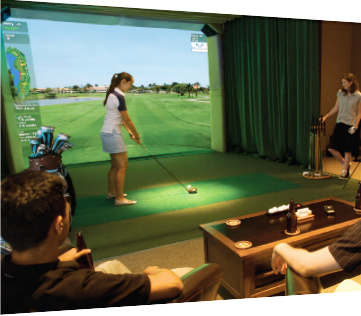
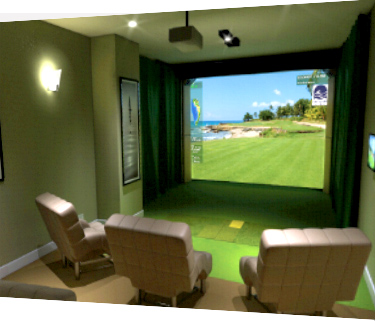
Golf Simulation


The driver is sexy. However, money is won on the short game. A great drive followed by a poor chip shot and a three-putt is not a winning strategy. Why not use a golf simulator to improve the least practiced part of the game?

1. Calibrate your pitch shot.

Using the exact same swing, find out the distance of your wedge, your sand wedge, your nine iron, and even your seven iron. Keep practicing until the distances are consistent.

2. Practice in inclement weather.

Snow is not a factor indoors. Neither is extreme cold, driving rain or lightening. Using a golf simulator inside your own home improves your games 10X.

3. Practice during your lunch break.

Even in July, you can spend 30 minutes practicing your short game and return to work without having broken a sweat.

4. Gather feedback.

Golf simulators analyze your swing. This is true for the short game as well as for driving.

5. Putt to a target instead of a hole.

When you use a golf simulator, you put to a target which eliminates the need to watch the ball into the hole. This will teach your eyes to remain still until you have completed the putt.

6. Adjust the stimp.

You are not limited to putting on easy courses.

7. Be entertained.

Practice is more fun at Pebble Beach or St. Andrews.

8. Pitch and chip to the distance not to the visual.

Professional golfers think in distances. Amateurs tend to rely on visual information as well as distance. Many simulators’ pitch shots appear to be about 20 feet long even if they are 60 feet long. Learning to play to the distance will improve your game.

Golf Simulator9. Feel the distance of a putt.

In the same way as pitching, feeling the distance of putts, rather than eyeballing them, is a professional approach.

10. There is no marshal.

Take your time and practice that shot as often as you like

Practicing your short game is a winning strategy. Golf simulators make it easy to get that practice time in before the company tournament. Use the simulator effectively and your score will certainly go down.

About Brian: 

Brian Benko is the owner of GolfSimulators.com (since 1997), a golf enthusiasts website and blog that’s dedicated to the golf players motivated to improve their game.  When Brian’s not on the golf course, or using his golf simulator, he’s working within the internet/tech industry in New York.

Related Blogs:

Choosing A Set Of Golf Clubs
What’s in a Name? The History Behind Golf!

Posted in Golf | Tagged , , , , , , , , , , , | 4 Comments

The Sports Archives – How & Why Basketball Is Growing In Popularity Globally!

BasketballWhilst basketball has always been a popular pastime in America, in recent years it has started to break out across the Atlantic to the UK and Europe. From a little known sport that was first played in the 1890s with balls thrown into fruit baskets nailed to the wall, basketball has become a multi-million pound industry, complete with star players and fans on every continent. Even in 2007 the sport was fast gaining ground, with a report by Roper Starch Worldwide finding that 11% of the world played basketball. The report also highlighted that the sport had already replaced football as the most popular sport in areas like Asia and Australia and predicted world domination was next.

Roper Starch Worldwide isn’t the only organisation to have seen the potential of the sport. Although he might be slightly biased, according to the secretary general of FIBA, the governing body of international basketball, the sport is not simply gaining ground but has already established dominance. Patrick Baumann said recently, “if you look around the world and get the statistics of what’s the most popular sport in the age group 14-18, it’s basketball across all genders.” But what is it that makes basketball so popular and how is its fame spreading?

As with any sport, the international broadcast of games has much to do with the fact that basketball now has a serious fan base. No matter where you are in the world you can watch the American NBA games thanks to the wonders of satellite TV, and most domestic leagues also have their own coverage. The internet has also fueled interest in basketball, with teams having their own web pages, chatrooms and forums, as well as the buzz that is generated all over the world on social media when a big game is played.

Then there’s the celebrity element – whilst Michael Jordan may once have been the only real celebrity in basketball, now the names are numerous – not everyone is that familiar with the minutiae of the team sheets, but most people will have heard of the LA LakersKobe Bryant (considered to be the second Michael Jordan by many), Miami Heat’s Lebron James (or ‘King James’ as he is also known) and the Chicago BullsDerrick Rose. As well as the celebrity players themselves, the profile of the game has undoubtedly also been raised by the celebrity connections – there are always plenty of famous faces attending the matches, from Leonardo Di Caprio to Justin Bieber and Kanye West, and of course anyone who has every watched ‘Keeping Up With The Kardashians’ will recognise Los Angeles Clippers player Lamar Odom.

Basketball has also made its way into the parks and playgrounds of countries outside of the US and this too has contributed to its widespread popularity. In the UK, football and rugby are no longer the only options for those looking to get involved in some team sports and there are basketball leagues, federations and amateur competitions all over the country, encouraging participating from everyone from primary school children to the over 60s. Luke Mohr who runs a sports club called Go Mammoth, which runs numerous social basketball leagues in London points to other reasons for the games growing popularity with social players in the UK;

“With a set of rules that doesn’t hold the same complexity as some of the more involved sports and similarity in terms of the basics to other games such as netball, making the transition to playing basketball has been a natural step for many.”

And with more than 300,000 people a month in the UK already playing the sport, its profile looks set to get even stronger in the years to come.

Featured images:

John is a freelance sports journalist from London.

Related Blogs:
How Michael Jordan Forever Changed the Game of Basketball
Will Allen Iverson play in China?

Posted in Basketball | Tagged , , , , , , , , , , , , , , , , , , , , , , , , , , , , , , | 2 Comments