
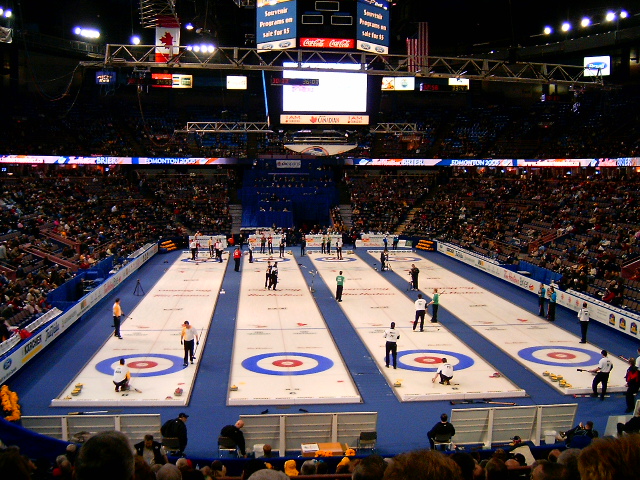
Curling, sometimes referred to as the ‘roaring game’, which comes from the noise a curling rock makes when moving on the ice. It’s not clear where the game originates from but it’s known for being one of the oldest team sports. A 16th-century painting by a Flemish artist shows a game which looks a lot like curling. It’s considered that perhaps curling used to be a simple time-killer and people threw stones on ice, making use of the cold winter. But then it developed to being the oldest and one of the most appreciated team sports. These days there is a World Curling Championship which has many followers and attracts a big audience of viewers.
Rules
The rules of this sport were officially drawn in 1804 and strangely, they haven’t quite changed ever since. There are only a few small exceptions. In curling, there are two teams of four players. Each team slides a curling rock on ice towards a target at the other end of the ice field. Every team aims to get more stones as close as they can to the centre of the target. Once 16 stones have been played, the score is counted, according to the location of the rocks. Every stone that is closer to the centre than the one of the other team, brings one point.




 will open up next year’s Sprint Cup series onFebruary 23rd of 2014. For Johnson, 2014 will be an opportunity to claim his seventh championship in nine years. For someone looking to see all the action up close and personal, this is a perfect time and place to start a season-long road trip.


