The Sports Archives – Some Less Active Sports to Try Out!

Playing a sport is a great way to get some exercise, to improve a range of skills from control to spatial awareness, and to give yourself a brilliant hobby to improve yourself in and to pass the time. At the same time when playing a sport this can be a brilliant way to socialise and a great thing to do with friends, and you’ll find that conversation tends to flow a lot more smoothly when you have a sport or some kind of competition to involve yourself in.

Runner with StitchHowever not everyone is cut out for sports and while for some people a game like football is a great way to keep fit and meet people, for others it can be stressful, tiring and embarrassing even. If you don’t have a particular knack for team sports or athletics, or if you’re someone who gets easily tired then you might not be cut out for these kinds of activities. Likewise even if you are a fan of football or baseball, then it only takes a knee injury or the spectre of old age to unfortunately take you out of the game at which point it’s time to look for something new.

The good news is that there are plenty of sports that aren’t all that active that can be just as good as a way to improve your spatial awareness, that can be just as competitive and sociable, and that can be just as addictive. Here we will look at some of the less active alternatives you can try out if you want to play sports but don’t like the idea of legging it around a pitch and helping you to choose the right one for you.

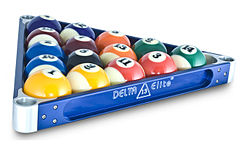
Pool: Pool is a great game that anyone can play without having to run around or sufferPool Balls any impacts on the joints. At the same time though it’s also an incredibly sociable game (there’s a reason they put pool tables in pubs) and it’s a great game for strategy and planning. You can really feel yourself improve in pool over time so it’s highly addictive once you start.

Snooker: Snooker is similar to pool in appearance but there are a lot of differences – the table is faster, the balls are smaller and the rules are very different and more complex. If you are more serious about sports and want to delve into a game that has a bit more depth, then snooker is a better option than pool.

Darts in a DartboardDarts: Darts are a game you play standing up but again it doesn’t involve any rapid movements, and in fact you can play with a drink in one hand when you get good (and many people do). Again though it requires precise control and it’s highly addictive.

Golf: Golf is a game that unlike the previous options will get you outside and help you to see a bit of the world. This makes it brilliant for travel and great for developing a tan, but at the same time it’s also an incredible deep and addictive game in itself that won’t let you go once you start to get drawn in. Besides, riding around in a golf buggy is always fun.

The article is written by Henry Wood, a sports blogger and freelance writer.

Posted in Baseball, Football, Golf, Other, Soccer | Tagged , , , , , , , , , , | 4 Comments

The Sports Archives – Traditional Versus Sport Taekwondo

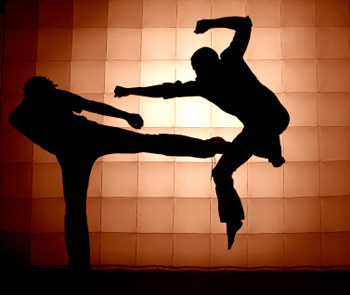
Traditional and Modern Sport TaekwondoBefore embarking on the physical engagement of martial arts one must recognize that each style of martial arts training stems from steep traditions. In the case of taekwondo, there are two different approaches that classes offer: (i) traditional katas and self-defense movements, and (ii) the sport sparring version of martial arts. Each is important for growing as a martial artist, as form bears a different focal point in the physical, mental and spiritual aspects. Therefore, it is crucial that one is in tune with the two main benefits of learning taekwondo so that he or she may become an all-rounded practitioner.

The first type of taekwondo is known as “traditional taekwondo” began thousands of years ago in the Korean Military. This style of martial arts emphasizes the elements of Korean history, intellect, and culture. Often at the beginning of each class, students repeat a code of conduct, one that reflects the vitality of self-restraint and modesty. This dates back to the concept of Confucianism, which held the ideals that a superior man should never show off. In addition, traditional taekwondo emphasizes the importance of the spiritual journey; it allows each student to go through his or her voyage to spiritual and personal improvement. Also, there are a number of technique differentiations between sport taekwondo and traditional.

Sport sparring technique is geared more toward the physical aspect of the participant. Overall, it promotes a more westernized style of teaching. The movements taught in traditional training use an older style kick and involve a lot of movement; whereas the sport version teaches movement and technique that is centered around competition. Also, the sparring in traditional taekwondo is not meant to necessarily hit the opponent hard, where sport sparring is geared around hard hitting, scoring, speed, and quick footwork.

It has been said that traditional taekwondo utilizes customary patterns, hand movement, and technique; while sport taekwondo focuses less on the traditional movements by adjusting them to a combat situation. Therefore, one should be aware of his or her ultimate goals before deciding which from best suits them. As the majority of martial arts are based on traditions, taekwondo is one of the arts that has branched out into two facets and many prefer the traditional style of it.

As the traditional style will stay true to the Korean values that it was based on, the concept of patterned movements and light sparring and sport sparring will focus more on combat situations and defeating an opponent. Ultimately, it depend on the journey that the student desires to take, be it traditional or sport, the art of taekwondo will be discovered.

Attached Images:

Visit with Sandoval Freestyle Karate for Gilbert and Chandler karate, kickboxing, and taekwondo lessons.

Posted in Boxing, Other | Tagged , , , , , , , , , , , , , , , , , , , | 2 Comments

The Sports Archives – Five NBA Players With The Strongest Star Power!

In terms of social status, athletes rank right up there with movie stars and musicians. Not just any basketball player enjoys superstar status, though. Generally, only the highest caliber players from the National Basketball Association are able to build a brand that easily sells jerseys, shoes and even autographs for top dollar. Having the off-the-court charisma certainly does not hurt a player’s case either.

Here are some of the most popular NBA players gracing the court today.

Lebron James (Miami Heat)

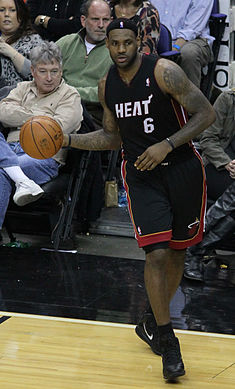
Lebron James ArchivesThere is little doubt that King James is the most popular, and therefore most highly-scrutinized player currently active in the NBA. James is essentially this era’s version of Michael Jordan. The public is so interested in the 6-foot-8 small forward, that when it came time for him to announce which team he would sign with out of free agency, ESPN devoted an hour-long special to the occasion. Just last season, James finally broke through and captured an NBA Championship ring along with his Miami Heat teammates. Still just 27 years old, the phenomenon known as Lebron James is not going away any time soon.

Derrick Rose (Chicago Bulls)

The Bulls stumbled through the postseason last year after losing this star to a knee injury. Rose is obviously a vital part of the Bulls and his popularity is right on par with his talent. A study released earlier in the year by the NBA revealed that Rose’s jersey was the top-selling jersey of any player in the NBA. Fans are not only dying to drape that No. 1 across their chests and back, but are also flocking to his shoe line.

Jeremy Lin (Houston Rockets)

Fans might be waiting to see if last year’s breakout season for Lin was a fluke or the real thing, but in terms of popularity, no one can deny that Lin is at the top thanks to a meteoric rise. The 6-foot-3 Harvard graduate, who toggled between the NBA and the league’s farm system, prompted an era dubbed “Linsanity” when his breakout performance led the New York Knicks on a lengthy winning streak last season. Lin was all anyone could talk about for much of the season, and he still has the attention of many as he joins up with the Houston Rockets for the upcoming year.

Kobe Bryant (Los Angeles Lakers)

Aside from Lebron James, Kobe Bryant has been one of the most celebrated players of the last few decades. While Bryant may be on the last leg of his career at age 34, he is the most recognizable figure for the most recognizable team in all of basketball. Fans both young and old flock to his merchandise and memorabilia. There is little the 6-foot-6 shooting guard has not accomplished, including owning a jaw-dropping five NBA championship rings.

Kevin Durant (Oklahoma City Thunder)

Since breaking into the league as a rookie in 2007, the 6-foot-9 sharpshooting small forward has watched his stock rise steadily. Durant was a high-profile collegiate player during his time at the University of Texas, and he parlayed that into popularity with the NBA. While Durant does not play for a big-market team, his talent is undeniable.  Illustrated in the fact he is a three-time all-star selection and was named Rookie of the Year in 2008. While Durant is still seeking his first piece of an NBA title, the Thunder reached the NBA finals last year, bowing out to the Miami Heat.

This article was contributed by ItsAlreadySigned4U.com. Visit ItsAlreadySigned4U for the best selection of sports memorabilia on the net!

Posted in Basketball, College Basketball | Tagged , , , , , , , , , , , , , , , , , , , , , , , , | 6 Comments

The Sports Archives – Snowboarding vs. Skiing: Which One Is Best?

Snowboarding and skiing rank among the most popular winter sports and as such, they have avid supporters. No doubt about it, winter sports enthusiasts like either one or the other, there would be no opinions in between.

Which winter sport is better? To assess skiing and snowboarding, we will have to look at different aspects and draw the final comparison.

Main Differences Explained

Skiing and snowboarding are two rather different sports. Each one has its unique technique and it will attract a particular group of people who will probably find the other option less attractive.

The only similarity between skiing and snowboarding focuses on the fact that equipment is used by the athlete to go down a snow-covered hill or track. This is as similar as the two sports get. Many differences exist, however.

Snowboarding involves no supportive equipment like the poles in skiing. This equates constant alertness. On the other hand, snowboarding is a sport that goes easy on the knees.

The surface that the two sports can be practiced on is different, as well. Snowboarding works best on powder. Many off-track experiences involve the snowboard. Skis work better on a well-processed track or on ice.

According to many people who have tried both sports, snowboarding is easier to learn and a better option for beginners. Ski lovers, however, will claim that skiing allows for bigger freedom and creativity in terms of maneuvering, which makes it worth the effort.

Which is Easier to Learn?

To start the comparison, let us look at the manner in which each of the sports can be mastered. When it comes to learning, is skiing or snowboarding easier?

Some claim that the basics of skiing are easier to master but once the specifics of snowboarding are learned, control becomes a whole lot easier to achieve. Once again, discovering completely unbiased opinions about one sport or the other will prove to be exceptionally difficult.

In the case of snowboarding, it will be difficult to get used to the bodily position and the fact that both of the feet are strapped to the board. It feels less natural than skiing precisely because of this position.

The Adrenaline Rush

Another important factor to consider is the adrenaline rush connected to each of the two winter sports.

The experiences are very different and comparing skiing down the hill to snowboarding will be a very challenging task. The fact that different styles are available in both of the sports turns the task into even a bigger of a challenge.

Some experiments were carried out to find out which sport allows for a bigger speed. Skiing proved to be the better option for everyone who just loves a high velocity.

In terms of adrenaline rush, skiing and particularly freestyle is considered superior but snowboarding and learning how to control and master the board will let you experience great exhilaration, as well.

Injuries

Each sport comes with a particular injury risk. As already mentioned, skiing is known for the knee trauma that many experience.

Snowboarding is connected to some dangers, as well. Wrist injury is highly likely, especially among beginners. Falling down when being strapped to a board can be a rather unpleasant and painful experience, as well.

Skiing allows for better maneuvers and a higher speed. Snowboarding is the perfect off-piste experience that comes with a higher coolness factor, as well. Is skiing or snowboarding better? It all depends on your preferences, the type of workout you are looking for and the particular adrenaline rush you are willing to achieve. Give them a try to figure it out.

Attached Images:

David Cope created this post on behalf of Sealskinz.com. Purveyors of fine apparel for elite sportsmen and women, their rather excellent winter skiing gloves will see you through rad air and apres ski. David is a passionate snowboarder and sealskinz blogger in his spare time.

Posted in Olympics, Other | Tagged , , , , , , , , , , , , , | 10 Comments

The Sports Archives – Twickenham’s Highest Visiting Points Scorers!

With the culmination of the inaugural Rugby Championship – formerly the Tri Nations but now with Argentina included – we were reminded that it will soon be time to welcome the crème-de-la-crème of foreign rugby union to the British Isles for the autumn internationals. England will hope that fortress Twickenham can withstand the onslaught of the world’s best, which hasn’t always been the case. Here’s a rundown of the most successful individual performers to have thrived on the Twickenham turf at international level…

Dan Carter (NZ), 86 points- Is there a ground where rugby’s highest ever points scorer hasn’t come away with a hatful of points? Twickenham in particular has been a happy stomping ground for Carter, who will hope to stretch his lead over Jonny Wilkinson at the top of the standings, and add to his 1342 points, when he bids for an undefeated sixth win there as an All Black on December 1st. His top score at the home of English rugby is 26 points in the 2006 autumn international, when he bagged his only try there along with three conversions and five penalties.

MC Burke (Aus), 69 pts.- Prolific kicker Matt Burke is no exception in terms of individual brilliance but unfortunately always came away from Twickenham empty-handed. Despite scoring 69 points in only three matches there, Australia were beaten each time Burke faced England. Perhaps most cruelly of all, Burke scored a try and all 19 of his side’s points in November 2000, only to see them go down by three.

AP Mehrtens (NZ), 56 pts.- Another player to score heavily in a legendary New Zealand side was Andrew Mehrtens who, along with former giants of the game like Jonah Lomu and Christian Cullen, visited Twickenham only three times but scored 56 points in total. The all-time Test conversions leader took 15 points off England as the All Blacks beat them 30-16 in Group B of the 1999 World Cup, not quite surpassing his biggest haul of 21 in a 26-all draw two years earlier.

C Lamaison (Fra), 46 pts.- An incredible 46 points in two games for the mercurial Frenchman who put two of the best teams ever to walk onto a rugby field to the sword at Twickenham. Firstly the England side of Carling, Underwood, Johnson and Dallaglio went down 23-20 in the Five Nations, with Lamaison helping himself to 18 points. Then, on the biggest stage of all, in the World Cup semi final, France took New Zealand to the cleaners in a stunning finale to one of the greatest games ever. They won 43-31 and Lamaison finished with a try, two drop goals, three penalties and four conversions, 28 points in total.

CD Paterson (Sco), 40 pts.- Perhaps a slightly less explosive but a nonetheless consistent set of performances at Twickenham came from Scotland kicker Chris Paterson, for whom six matches has yielded 40 points. Alas his side have never chalked up a victory away from home against England, but he came closest with a 10 point display as the Scots fell to Jonny Wilkinson’s England 42-20 in the 2007  Six Nations.

Attached Images:

This article was brought to you by sports hospitality specialist Keith Prowse – suppliers of tickets to autumn rugby internationals and other high quality hospitality.

Posted in Rugby | Tagged , , , , , , , , , , , , , , , , , , , , , , | 3 Comments

The Sports Archives – Five Biggest Chokes in PGA Tour History!

5. Jason Dufner 2011 PGA Championship
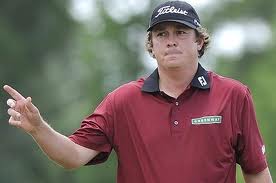
Jason Dufner ArchivesJason Dufner had a tremendous year in 2012, turning in one of the most consistent seasons of anyone on the tour, notching his first two PGA tour victories, and contending for major championships.  He finished the year ranked in the top ten of the World Golf Rankings, and he performed very well for team USA in the 2012 Ryder Cup.

His great year was almost enough to make everyone forget about his epic collapse at the 2011 PGA Championship.

Almost.

Dufner, who at this point was a virtual unknown and had zero career victories, was leading a major championship by five strokes with four holes to go.  Dufner wilted under the pressure, however, bogeying the next three holes.  He made a difficult putt on hole 18 to save par and force a playoff with rookie Keegan Bradley.

In the playoff, Dufner again was presented with an excellent opportunity to prolong the match and put himself in position to win, but he botched an easy five-foot putt on the first of the playoff holes, essentially handing the victory to Bradley.

Fortunately, this story ends in redemption as Dufner was able to follow through on his vow to “not let this define my career”.  His excellent showing in 2012 has not made anyone forget his meltdown in 2011, but it has made it seem like a distant memory.

4. Jean Van de Velde, 1999 British Open

Sometimes you only get one shot at the spotlight, and it is unfortunate when you fall flat on your face in that one opportunity.  Jean Van de Velde was a journeyman Euro Tour player, but he was thrust into the limelight with a brilliant performance at the 1999 British Open.  Well, it was brilliant four 71/72th of the British Open.

His great play had earned him a three shot lead heading into the 18th hole on Sunday.  All he needed to do was double-bogey and the tournament was his.  Instead, he made some terrible shots and some even worse decisions and spoiled his one and only chance at golf immortality.

He had a poor drive, and then instead of laying up and playing it safe, he recklessly  went for the green and ended up in the deep rough.  Again, having the chance to play it safe, he went for gusto instead, and the ball ended up in the drink.  He took a stroke penalty and then hit the ball into the bunker.  By this point he was on life-support, but he managed to get up-and-down to score a triple-bogey and force a playoff.  No doubt fazed by his epic collapse, Van de Velde promptly lost the playoff.

He would never get anywhere near major contention again in his career.

3. Phil Mickelson, 2006 U.S. OpenPhil Mickelson Archives
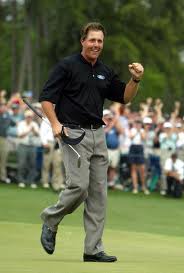
For years, Phil Mickelson carried a huge gorilla on his back.  Though he was one of the finest golfers in the world, he was unable to win a major.  That all changed at the 2004 Masters, and then he won the 2005 PGA Championship and opened the 2006 major season with another Masters victory.

Heading into the 2006 U.S. Open, Phil had a chance to do something that only two other golfers – the great Ben Hogan and Tiger Woods – had ever done: win three straight majors.

And it looked like he was going to do it, as he carried the lead into the final hole, and needed a par to complete the victory or, at worst (it seemed), a bogey to force a playoff.

Instead, he took a page out of the Van de Velde guide to last-hole tragedy, and tried to win with an exclamation point rather than by playing it safe.  Attempting to approach the green on his drive, he instead hit a crowded hospitality tent amidst a cluster of trees.   But the bounce was very lucky, and actually had a decent lie.  A short pitch out to the fairway would put him in a solid position to save par and win the tournament.  In one of the most mind-numbing mental blunders in golf history, Mickelson refused to take that route, and instead went for the green.

He didn’t hit the green.  He hit a tree.  When he tried again, he hit it into the sand.

He ended up with a double bogey and a third place finish.

2. Greg Norman, 1996 Masters

In 1996, Greg Norman was the top ranked golfer in the world, and he came to Augusta looking for the elusive Masters Championship that had eluded him during his prolific career.  He came out blazing on Thursday, notching a course record 63 and vaulting to the top of leaderboard.  He would not relinquish the lead on Friday, and after another impressive performance on Saturday, he was six strokes up with only one day to play.   Nobody had ever blown that big of a lead at the Masters.  But nobody knew how to cave under pressure like Greg Norman.

Norman was one of the best golfers of all time, having spent a massive 331 weeks combined atop the World Golf Rankings Standings during the 1980s and 1990s.  But he is widely regarded as a bit of a disappointment, primarily because he only won two majors during his lengthy career.  His failures in the major tournaments were characterized by agonizingly close calls where bad luck, bad timing and personal choke jobs all conspired against “The Shark”, often at the same time.

The 1996 Masters epitomizes these failures.  On the final day of competition, Norman made it through the first eight holes without catastrophe, but then he bogeyed holes 9, 10 and 11 and followed that up by splashing his tee shot on 12 into the water, resulting in a double bogey that cost him the lead.  He had a few opportunities to get back in contention, but on hole 16 his tee shot again found the drink and his failure was complete.  He finished the day with a 78, and Nick Faldo won the Masters by five strokes.  A simple 72 would have won him the green jacket, but instead it was another epic failure for Australia’s best golfer.

1. Arnold Palmer, 1966 US Open

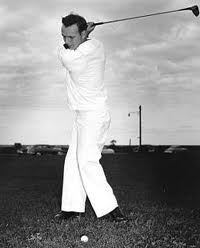
Arnold Palmer ArchivesIf blowing a six stroke lead at the final day of a major tournament is an epic collapse, then what do you call blowing a SEVEN shot lead on the BACK NINE of the final day of a major championship?  Words perhaps do not do justice for what happened to Arnold Palmer at the 1966 U.S. Open.  All one can say is that it was a collapse for the ages from one of the greatest performers the sport has ever seen.

With nine holes to play Palmer was 7 strokes up on Billy Casper.  He strolled around the course with the genial smile that had made him golf’s first true superstar, interacting with the crowd and telling folks that he was going for the course record held by Ben Hogan, by now an old-timer who had never gotten along with the younger, more popular Palmer.

While Palmer was busy chasing the record and awaiting his coronation, something happened.  The first was that Casper started playing great.  The second was that Palmer started slipping.  But he still seemed to have the tournament wrapped up.  He led by five strokes with only four to play.

But he bogeyed 15, and Casper birdied.  Same thing on 16.  The lead was down to one with two holes to play and the generally calm and charismatic Palmer’s face was awash with tension.  When on 17, he had a seven foot putt to retain the lead, the pressure was too much for Palmer to bear and he came up a few inches short.  His lead was gone.

On 18, Palmer somehow managed to save par and force a playoff, which back then was a full 18 holes the following day.  Palmer came out and took the lead from Casper, up two with nine holes to go.  But for the second day in a row, he melted down and Casper went on to win by four strokes.

Palmer would call it the biggest disappointment of his career.

He would never win another major.

By Scott McCormick

Scott McCormick feels fortunate that when he chokes on the golf course, there are no cameras recording it for posterity. His golf writing appears courtesy of Golf Now Phoenix and Golf Now San Diego. For more of McCormick’s commentary, see his recent post on the Belly Putter controversy.

Posted in Golf | Tagged , , , , , , , , , , , , , , , , , , , , , , , | 4 Comments

The Sports Archives – More News about the Costs of Playing Football!

James HarrisonJames Harrison is in the news again. This time it has nothing to do with jabs at Roger Goodell or trash talking other teams’ offenses. This time, it is much more serious. James Harrison recently stated that he has had twelve concussions in his career and to prevent those, he is now wearing additional padding in his helmet. It’s quite ironic considering his past fines over his hits. But such is the life of an NFL linebacker; you hit hard, you get hit hard with injuries too.

Harrison has had his share of injuries. He consulted a back specialist last year and had back surgery to remove a herniated disc that was on a nerve. It had bothered him all season and rather than addressing it during the season and risk the loss of pay, he chose to endure the pain and play for his team. He is like many other players. Oftentimes, NFL players will risk injuries in order to avoid being cut and help the team. This had led to an onslaught of lawsuits.

Injury Lawsuits

There have been countless lawsuits against the NFL from former players who say that the NFL did not warn them about the ramifications of concussions. This was in the news rather recently when Junior Seau committed suicide as many wondered whether concussions and brain degeneration contributed to his death.

This is nothing new. Several players have committed suicide due to the effects of concussions, including Andre Waters, a hard-hitting safety from Buddy Ryan‘s all-star Eagles defense of the 80s who took his life with a self-inflicted gunshot wound.  Doctors said that the 44-year-old football star had the brain of an 85-year-old with Alzheimer’s. News of concussions came back in the news when Alex Karras passed away earlier this month. He had recently followed suit with hundreds of other players to blame the NFL for their carelessness.

Football Huddle

It isn’t known how badly James Harrison will be affected by his concussion-like symptoms in the past. He said that he didn’t see spots or have memory loss. In the meantime, he will wear a helmet with CRT padding to hopefully protect his likelihood. It’s most likely he’ll continue to consult a back specialist as well to make sure his nagging injury doesn’t come back. This is just another story about the hardships NFL players endure in order to make a living. Hopefully, something will be done to make sure Harrison, his contemporaries and formers players are protected and enjoy the rest of their lives.

Attached Images:

Christopher Hardwick is a part of an elite team of writers who have contributed to hundreds of blogs and news sites.

Posted in College Football, Football | Tagged , , , , , , , , , , , , , , , | 3 Comments

The Sports Archives – What is the difference between Squash & Racquetball?

To the untrained eye or to the sports fan that has little knowledge of either sport, there may appear to be a lot of similarities between squash and racquetball. Both are fast-paced games played in a small area where players will strike a small ball against a wall with a racquet; so it is easy to see at first glance why these two sports are intrinsically linked. This is not the case though with both sports having their own identity and feel. There are many major differences between the two sports.

Equipment

The racquets used in the sports are the first difference. In racquetball, the racquets are smaller with the largest permitted length being 22 inches. In squash, it is possible to play with a racket that a maximum of 27 inches.

Similarly, the balls are different too. In squash, the ball is smaller, coming in at 4 cm whereas a racquetball has a diameter of 2.25 inches. The racquetball itself is made of elastic of rubber, the squash ball is not. This makes a difference because the squash ball will expend a greater amount of energy when it is struck, which will slow down a rally as a match continues.

The Court

In squash, there is an area that is “out of bounds” but there is no such area when playing racquetball. A squash court is played in a rectangle area of 32 by 21 feet and the four walls have various height levels. The racquetball court is one that is fully enclosed, traditionally taking up a space of 40 feet by 20 feet with a ceiling height of 20 feet. The service area and the serve-receiving area are marked out with red lines.

There are several line markings in squash along with boundaries at the top of the court and 19 inches from the bottom of the front wall. If the ball hits the court line, goes above it, hits the front wall line or goes under it, the ball will be deemed as out.

If the ball strikes the ceiling in squash, the ball is deemed to be out but if the ball hits the ceiling in racquetball, it is deemed to still be in play. This adds an extra dimension to racquetball, causing players to have a greater degree of focus.

When playing squash, a player needs to allow their opponent to hit the front wall but when playing racquetball, it is possible to limit an opponent to only having to permit their opponent an amount of the wall to aim for.

Scoring

In squash, games are played up to 9 points and 11 points for professional tournaments. In racquetball, matches are played up to 15 points. The ball is also served differently in both sports.

It may seem that there are only limited differences between the two sports but the rules are as such meaning that players from both sports, whilst likely will be familiar with the basics, may not know the full rule set for each.

Attached Images:

This article has been provided by the team behind rulesofsport.com – an independent site dedicated to explaining the rules of various sports in a clear, easy to understand way.

Posted in Other | Tagged , , , , , , , , | 1 Comment

The Sports Archives – The Evolution of the Golf Club!

The Evolution of the Golf Club

Antique Golf Clubs

The golf club, now a sophisticated piece of metal, has a much cruder past than one might think. While machines and years of engineering have made them into a solid and expensive tool, its ancient counterparts had much less technology on their side. For example, metal clubs, which are the majority’s choice for swinging in today’s times, are now lightweight and come in a variety of options. Even just a few decades ago, however, wooden clubs were regularly chosen by laymen and professionals alike, lowering club face size and accuracy.

But what about the first golf clubs? With the help of Mother Nature and an imagination, these clubs were whittled, textured, and fashioned into comfortable clubs. Anyone who wanted to play the game could create their own set, and there was no standard as to what they were to look like. Early golf players (1500s) made round clubs, flat-faced clubs (similar to modern-day irons), and even versions that would look more like a hockey stick. The handles, though, seemed to fare much more universal-ness. Long, smooth grips were needed for comfort and execution – created by removing knots or knobs and tying the club face and handle together.

Later, during the 1600s, golfers began using iron clubs, as they were more powerful and accurate. However, after the invention of the feathery golf ball – made by sewing fine feathers inside a leather ball – many golfers stuck to wooden clubs, as they provided less damage to these expensive balls.

Centuries later, professional club makers began creating and selling their products – in a number of materials, including multiple types of metals and woods. At first only wealthy individuals could afford such a luxury, but over time the process would become cheaper to reproduce and more widespread.

Golf clubs have long since been a source of betterment and expansion. And while we may never return to a time of lobbing wooden balls with larger wooden clubs, knowing the history behind one’s sport is one of the best ways to completely understand its roots.

Post brought to you by PalmBeachGolfCenter.com, your stop for golf clothing and equipment.

Written by Bethaney Wallace

Posted in Golf | Tagged , , , , , , , | 3 Comments

The Sports Archives – Murray And Me!

Heroes

Andy MurrayI have always been a great fan of professional tennis, partly out of admiration as I am a useless player myself. I grew up in the 70’s and 80’s watching all of the big tournaments on the television and frequently visiting Wimbledon and Wembley Arena to watch the game played live. When I look back at the players that were my biggest heroes they all had one thing in common – none of them were British.

No Choice

There was a very good reason why my idols were all foreign and that was the absence of any world-class British male players. There was John “Legs” Lloyd, of course, but he was never going to win a grand slam singles event. No, the tennis world was dominated by Americans and Eastern Europeans but at least it was a time when there were some real characters in the game.

Hero

My ultimate hero was the very badly behaved but incredibly entertaining John McEnroe. I first saw him play at Wimbledon in 1977 when he was just 18 and although he was only a qualifier that year you could see he was something special. I followed his career from that day onwards and personally witnessed several of his legendary outbursts including one at Wimbledon when he seemed to think it was unreasonable to stop the game even though it was pouring with rain. McEnroe went on to become one of the greatest players of all time and I am so grateful that I was often there to cheer him on.

Entertainment Factor

Another favourite of mine was Ilie Năstase whose amazing sense of humour and on-court antics surpassed his playing ability but made him compulsive viewing. In addition to the characters of the game I was always blown away by the skills of Bjorn Borg and Jimmy Conners and the dynamics of the rivalries between the great star players of the era. It was also amazing how these men could be so volatile and yet still play the most incredible tennis.

Patriotism

For so long I reveled in the successes of McEnroe and admired the other great players but always wondered what it would be like to have a British player at the top of the game. Then I could really get behind them with patriotic fervour as well as admiration. Well I had a long wait! It wasn’t until the arrival of Tim Henman that a truly world-class player emerged in the British Game. There is no doubt that Henman was a very good player and he flirted with grand slam success a few times. I was on Centre Court when he played and lost his Wimbledon semi-final against Leyton Hewitt. You always live in Hope but somehow I always felt that Henman was just not quite good enough. Also as it was 2002 and we had not had a slam winner since Fred Perry in 1936 and so I wondered how long it was going to be before we had another player of any note.

Andy Murray

As it turned out not too long! Andy Murray burst onto the scene in 2005 and quite early on it seemed to me that we had someone who could actually one day win a Grand Slam. Murray lacked the character of McEnroe and the flair of Năstase but he was British so I didn’t care that much. It was agony watching a series of near misses over the ensuing seasons until 2012 when finally Britain had a Grand Slam Champion with Murray winning the c in an absolutely epic match against Novak Djokovic.

The Man

How much did it matter to me that there was a British Champion? Quite a lot as it turns out but I have to say that it is McEnroe who is still my all-time tennis Hero. In the end heroes are about the man not just the player and Murray has a little way to go in that regard.

Jeanstore offer a great selection of Fred Perry clothing and footwear, inspired by greats of Tennis.

Posted in Tennis | Tagged , , , , , , , , , , , , , , , , , , , , | Leave a comment