The Sports Archives – Colin Kaepernick: Against All Odds!

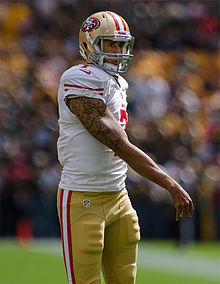
Colin KaepernickMost people probably wouldn’t assume that a mixed race kid born in Milwaukee, Wisconsin and adopted by white parents and moved to California would be able to ignore the stereo-types and odd questions and funny looks and concentrate hard enough in high school to get a 4.0 while starring in three sports.

It’s also against the odds that the same kid would attend the University of Nevada and begin shattering NCAA records while leading the Wolf Pack as their quarterback.

And lead his team to a Super Bowl? No, that’s against all odds. That’s a fairy tale story, but that’s what Colin Kaepernick did… and may do again very soon.

Colin Kaepernick just lead the San Francisco 49ers past Aaron Rogers and the Green Bay Packers in the play-offs for the second consecutive year and is in position to lead his team back to a second Super Bowl in as many years.

Still, what may be more remarkable that what he has done is how he has done it, by remaining true to his family, his team, and most of all, to himself.

The Tattoos

If you don’t know Colin Kaepernick or his story and you saw him on the street, at first glance you might assume he was raised by Dennis Rodman’s tattoo artist and that he makes a living running guns for the Mexican Mafia. He doesn’t have some tattoos, he`s covered in them.

It’s fair to say, your first thought wouldn’t be that he was an exceptional student, was raised in middle-class Suburban America and exceptionally well spoken. You probably wouldn’t assume that he is devoutly religious either.

But, upon closer examination, you’d quickly realize that is exactly what he is. His academic success wasn’t a fluke and his body being covered with tattoos is a testament to his faith. Almost every tattoo he has on his body is a tribute to his family or his religious beliefs.

Continue reading

Posted in Football | Tagged , , , , , , , , , , , , , , , , , , , , , | Leave a comment

The Sports Archives – NFL Now: What it Means for the Future of Digital Sports Consumption!

ESPN Headquarters, Bristol CT

As new technologies rapidly change the way people consume content, there has always been one area that was immune !to those changes: sports. While “cord-cutters”—people who choose to forgo cable television altogether—are becoming more and more common as new entertainment technologies become available, sports have remained a relatively solid selling point for cable providers, a fact that is reflected in the subscription fees paid to networks.

The subscription fee ESPN charges cable providers is $4.69 per household per month, by far the largest of any cable network. By comparison, the next-closest national cable network is TNT, logging in at $1.16 per household per month.

The statistics indicate the fact that the sports networks are the only thing holding back many sports fans from becoming cord-cutters. Sports fans are also some of the only television watchers that advertisers can count on to watch an entire event in its entirety, and in its original time slot. Since so much of the experience of being a sports fan depends on seeing an event as it happens, sports fans are unlikely to record events to watch later. As a result, they are less likely to skip over commercials than fans of other types of television content.

On the other hand, the statistics indicate that non-sports fans who continue to subscribe to cable television will be paying a high premium for sports content that doesn’t even interest them. In the words of NPR’s Frank Deford, cable television subscribers have become “hostages of sports.”

So, when the NFL announced its plans to launch a new digital network, NFL Now, in July, it came as a ray of hope for both sports fans, and for media technology observers who were hoping for a break in the sports-cable television logjam.

Continue reading

Posted in Football | Tagged , , , , , , , , , , , , , , , , , , , , , , | 4 Comments

The Sports Archives – The History of Bicycle Racing!

Introduction

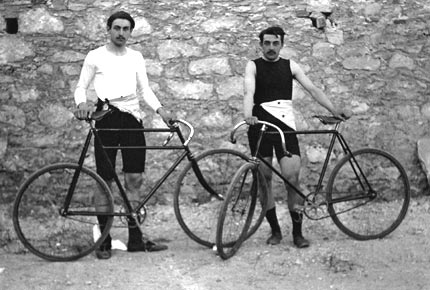
Paul Masson and Leon FlamengIn the entire history of the world, nothing defines the human spirit of recreation and conquest like a good competition. The creation of the first bicycle in the early 1800s is no exception to this notion, and was followed closely by the first competitive bicycle race in 1868. This race, which took place in the Parc de Saint-Cloud, Paris, consisted of a 1.2 km distance and was won by an Englishman who used a wooden bike with iron tires. Since this event, bicycle racing has cultivated in many parts of the world, including the United States and even Japan.

The Mechanics and Technology of Bicycle Racing

While safety equipment has made biking much less risky today, the earliest bicycle races were extremely dangerous and thought by many to be death traps. Bicycles from this period in time were not built from the same sturdy materials that they are in this day and age, and without protective headgear, a bicycle crash at high-speed was a disaster for the rider and anyone nearby. Today, the severity of racing accidents is cushioned by enhanced padding and head protection. As time passed and bicycle racing as a sport gained popularity, bike technology and new bicycle designs also made way for new styles of racing, among these, track racing, road racing, mountain biking, and the well-known time trial. These new race configurations, in turn, made the sport more intriguing for spectators.

Continue reading

Posted in Other | Tagged , , , , , , , , , , , , , , , , , , , , | Leave a comment

The Sports Archives – Surf Science: Learning The Theory Behind The Sport Of Surfing!

Surfing - 2010 Mavericks Competition

Sitting on your surfboard, you glance over your shoulder and see an oncoming wave. By now, your eyes and brain have learned to time this feat just right so that you can catch and ride the wave. You begin to paddle hard, feeling the acceleration as the water boosts you to match its speed. As you stand and balance on the board, you show off with some turns. Then, you decide to end your ride by stepping back on the board and drop the tail into the water, putting on the brakes. Ever wonder about the physics behind the sport of surfing and how everything comes into play just right so you can catch that perfect wave?

Gravity and Buoyancy

While you are lying on your board waiting to catch a wave, both gravity and buoyancy are at work. Gravity pulls on every inch of you and your board. Your centre of mass is typically located behind your navel in the middle of the body when you stand upright. It is this centre point that allows you to rest in balance. Buoyancy is an upward force that is created by resting waters pushing on the board. Also known as hydrostatic force, it is exerted by the water onto every inch of the board, particularly at the board’s centre of mass.

Continue reading

Posted in Other | Tagged , , , , , , , , , , , , , , , | 3 Comments

The Sports Archives – Will Jadeveon Clowney Be Drafted First Overall In The NFL Draft?

Jadeveon ClowneyIf he has his way he will. The standout defensive end from the University of South Carolina has stated publicly that he intends to be the #1 overall draft pick in the upcoming NFL draft. His combination of size and speed has many scouts in awe of his potential as a defensive player that may have game changing ability if he develops.

Impressive Measurables

Jadeveon Clowney seems to have most of the measurables that a team looking for a defensive end might be looking for. He stands an impressive 6’6” tall and weighs in at 266lbs which gives him the length and the bulk to deal with the massive NFL offensive lineman that he will be dealing with day in and day out.

At the combine, Clowney ran a blazing 4.47 in the 40 yard dash. To put that in perspective a 4.47 is a better time than the majority of the wide receivers who participated in this drill. This means that he will have the speed to chase down almost any player on any team in the NFL.

During the 2012 season Clowney recorded 13 sacks in the nation’s toughest conference and made a highlight reel tackle (see below) during the Outback bowl against Michigan. During his 2013 campaign he only produced 3 sacks and several questions regarding his character began to surface.

Flip Side

The flip side of the Clowney argument is that perhaps he lacks the work ethic to succeed in the NFL every week of the season. His 3 sacks have led analysts and broadcasts to wonder if he was working hard enough on and off the field. Early in the season he could be seen with his hands on hips after plays which is a clear indicator of fatigue, a tell sign that an athlete’s conditioning may be lacking.

During his bench press work out he put up 225lbs just 21 times, a punter was able to do this 23 times and many defensive lineman get closer to 25 or 30. While this was not a terrible showing it might give scouts the impression that if he is locked up with a blocker that he may lack strength to assert himself, especially during running plays where contact with a  blocker is almost inevitable.

Continue reading

Posted in College Football, Football | Tagged , , , , , , , , , , , , , , , , | Leave a comment

The Sports Archives – History of the Six Nations Championship!

The Six Nations championship represents the pinnacle of rugby in Europe and, though it only became the Six Nations in 2000 when Italy joined England, France, Ireland, Scotland and Wales in the tournament to decide Europe’s top international side, its roots go back over 100 years. This makes it the oldest international rugby championship in the world.

The Development of the Tournament

Six Nations Championship LogoWhat was then simply known as the International Championship developed from the occasional games played between England and Scotland which began in 1871. Wales and Ireland joined in and, in 1882, the tournament was born. In the early days England and Scotland dominated, although Ireland and Wales restored some parity towards the end of the century but not before the competition was wracked with disputes and had to be abandoned three times in the 1880s.

The early years of the 20th century were still problematic and saw matches in Wales suffer as Welsh crowds invaded the pitch and threatened referee. France occasionally played matches against the home countries and formally joined the competition, albeit with little initial success, in 1910 – just one win in the first four years, against Scotland.

After a hiatus due to World War I, the tournament resumed with all five nations and England and Scotland being the most successful sides. Controversy, however, saw the French excluded in 1932 following allegations that French players had received payment for playing at club level and that some had been found to be carrying stiletto knives in their socks.

Interrupted once more by war, the competition was suspended from 1940 to 1946, resuming in 1947 with France back in the fold, making it once more the Five Nations. For the next few years Wales and Ireland dominated but as the fifties wore on so England and France took the lead, with France winning four consecutive championships from 1959 to 1962 (shared with England in 1960). 1960 to 1979 were the years of France and Wales – France heading the championship table on eight occasions (three shared and one Grand Slam) and Wales winning 11 times (three shared and three Grand Slams).  Since then, England and France have mostly ruled the roost (although Wales won the 2012 and 2013 tournaments).

Continue reading

Posted in Rugby | Tagged , , , , , , , , , , , , , , , , , , , , , , , , , , , , , | Leave a comment

The Sports Archives – Pass The Torch!

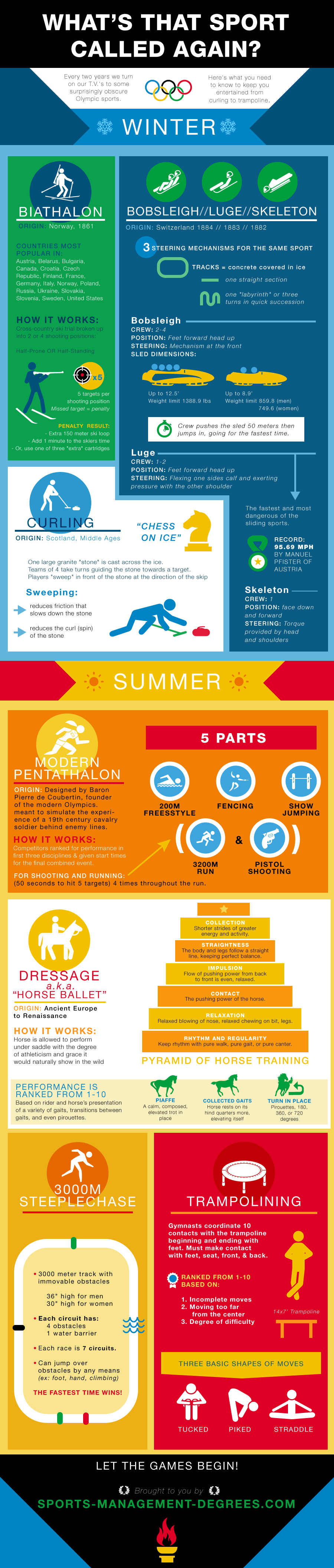
Increasing your enjoyment of the Winter and Summer Olympics is often as simple as familiarizing yourself with the rules of the events that are taking place. While many people enjoy the pure athletic finesse and competition that exists in the games, knowing the details that govern the games can make each event more exciting than ever. The Luge is a vastly popular event that is only second to the Bobsleigh. During the Luge, athletes take their positions with their feet forward and their heads up. They flex their calves and exert pressure with their shoulders from one side to the other in order to steer. This event can be extremely dangerous due to the fact that there is little protection as they zoom down the track. The record speed for the event is 95.6 miles per hour. The Bobsleigh uses a track that has three specific turns, and the crew can use two to four athletes. There is a weight limit of 1,388 pounds, and they have only 50 meters to get a running start before engaging in the sled.

When things heat up, the Summer events offer the Steeplechase. This event extends to 3,000 meters, challenging each athlete with immovable obstacles along the way. Each circuit contains 4 obstacles and 1 water barrier. For the men, the obstacles are 34 inches high and the women face 30-inch obstacles. There are seven circuits in each race, the fastest time wins, and each competitor can clear the obstacle using any means necessary.

Another unusual yet highly entertaining event that takes place during the summer games is Trampolining. During this competition, the athletes perform 10 different poses on the hardware that must begin and end with the feet. The moves are ranked on a scale of ten with the judges paying close attention to moves that are incomplete, movements that take them too far from the center of the trampoline, and the degree of difficulty associated with the move. The trampoline itself measure 14×7′. The moves are governed by three basic shapes that revolve around tucks, pikes, and straddles. With a better grasp on the events taking place, you can gather the snacks, and let the games begin.

Source: Sports Management Degrees Guide

Related Blogs:
4 Facts About The 2014 Winter Olympics!
Inspired by the Olympics – 5 Equine Sports to Get Involved in!
The Olympics: The Greatest Show on Earth?

olympics infograph

Posted in Olympics | Tagged , , , , , , , , , , , , , | Leave a comment

The Sports Archives – Five Celebrities Who Love Bowling!

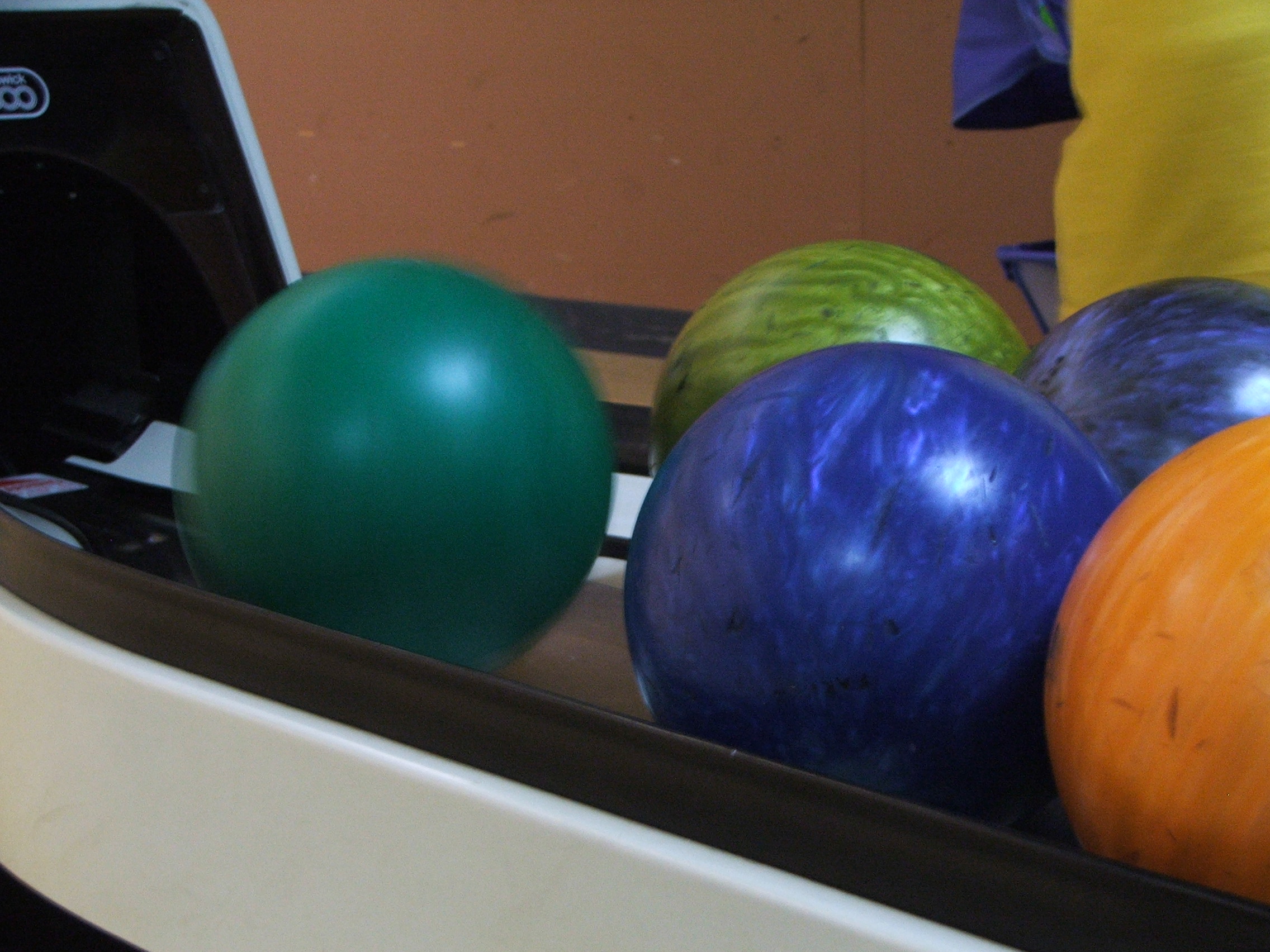
Bowlers Paradise Bowling Balls

Celebrities, especially some famous celebrity families, love to bowl. It is a great way for some of the large celebrity broods to do an activity together that is great for all ages. Here are five celebrity families who have been caught bowling recently.

The Jolie-Pitts

Towards the end of 2013, Angelina Jolie was photographed taking all six of her kids bowling in Australia while Brad Pitt was promoting 12 Years a Slave.

The Hardwicks

Chris Hardwick, comedian and host of @midnight is the son of the late pro bowler Billy Hardwick and is considered an expert bowler in his own right. He occasionally airs celebrity bowling tournaments on ESPN.

Continue reading

Posted in Other | Tagged , , , , , , , , , , , , , , , , , , , , , , | Leave a comment

The Sports Archives – Bozeman “Not Ready” For An Olympic Bid!

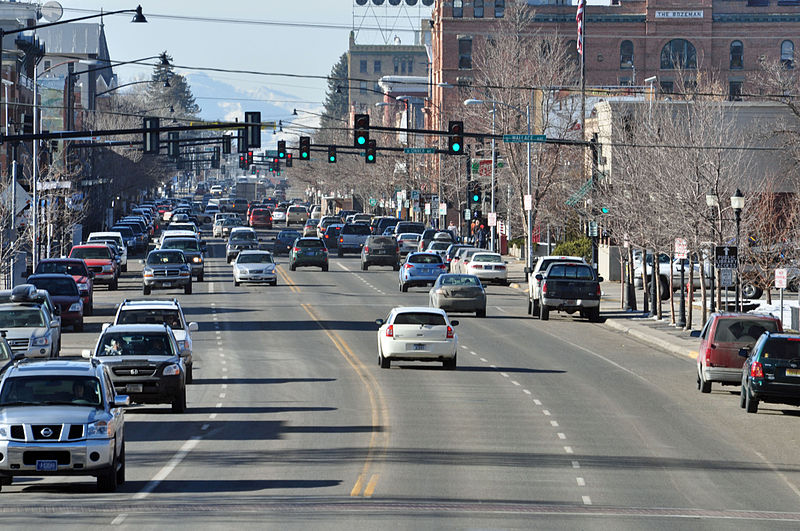
Bozeman, Montana

Bozeman, Montana

The Olympic Games – Why Bozeman’s Infrastructure Isn’t Ready

It’s common knowledge that Bozeman, Montana – the hipster fixture of Big Sky Country – is making a bid for the 2026 Olympic Games. Are they ready? Experts in infrastructure say no. But with drama (and tempers) running high in Sochi, it’s hard to imagine ignoring anyone who’s willing to talk Olympics right now.

Infrastructure and the Olympics

Let’s look at the facts – despite the Big Sky committee having ideas about venues, there are an unimaginable number of details that have to be in place before a worldwide event like the Olympics can take place. Let’s take a look at what has to be considered.

Continue reading

Posted in Olympics | Tagged , , , , , , , , , , , , , , , , , , , , , , , | Leave a comment

The Sports Archives – The History of Motocross Racing Infographic!

Racing motorcycles has been a popular obsession since the 1860s. Since then, it’s evolved into a billion dollar industry, famous for filling up arenas around the world. Today, the core of motocross is still all about the exhilaration and freedom that comes with racing a motorcycle.

Timeline of Motocross Racing

The following shows the history of motorcycle racing:

  • 1906 – First time trial held by the Auto-Cycle Club, a competition for the fastest man on the track
  • 1924 – First official scramble took place in Great Britain, becoming known as motocross
  • 1952 – European Championship Series was created using 500 cc engines
  • 1962 – 250 cc division established
  • 1972 – First stadium motocross took place at the Los Angeles Coliseum

Motorcycle Racing Today

Currently, motocross is one of America’s quickest growing sports, with four main competition types:

  1. Super Cross – Takes place in sports arenas, on tracks made of artificial dirt. Incorporates tighter turns, shorter straights and steep articles and jumps.
  2. Freestyle – Competition for longest air and best tricks, determined by panel of judges. Consists of two routines per rider, between 90 seconds to 15 minutes long.
  3. Big Air – Panel of judges evaluates two jumps for originality, difficulty and style. Competition takes place on a track covered with dirt, with jumps as high as 75-feet.
  4. Super Moto – Made popular by the World Wide of Sports (ABC), using dirtbikes with road tires. Often consists of whoops, berms and jumps.

Continue reading

Posted in Motorsports | Tagged , , , , , , , , , , , , , , , | Leave a comment