
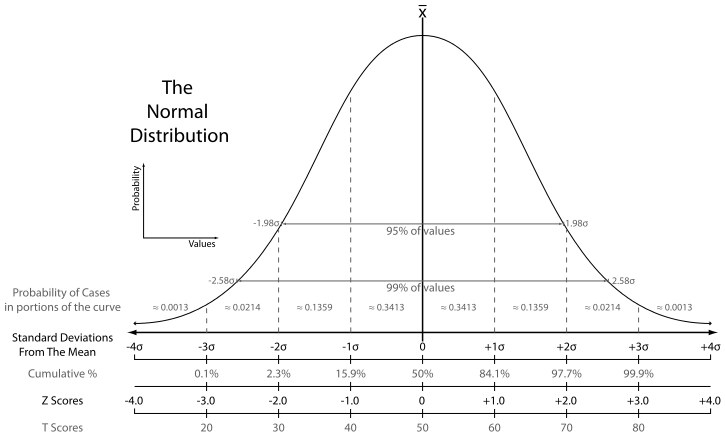
Data mining is used in most major sports these days to improve performance by using statistics and predictions to make the team stronger. A reverse data-mining technique can also be used to find out the weaknesses in an opposing team and plan play accordingly for the next time the teams meet. Using this kind of information used to be down to simple observation and acquired knowledge but now there are some very complicated computer programmes that take the guesswork out of the process. There are some that contend that there is nothing quite like the experienced eye of a coach to help build the perfect team but others point to the fact that if the only thing that data mining does is improve performance and help minimise injuries, it will have done its job. Why would any professionally minded sports team not want this, less injuries and higher performance sounds ideal.
It’s all in the mind
Data mining is not just applied to physical prowess. Many sports now also employ psychometric testing, particularly at the scouting level, to make sure that a player has the right mindset to make them an asset on the field or pitch. In many sports, different positions call for a different personality and these tests can be applied to good all-rounders to see where they would be best employed. To take rugby as an example, the fly half, as well as being generally lighter and faster on his feet than a hooker must also be quick thinking and able to predict several moves ahead. The hooker on the other hand has to be fairly headstrong and able to push forward against the other team but doesn’t necessarily have to think outside the box. If these attributes are not obvious when the players are younger and still developing their physique, a psychometric test will help.
Spotting the strengths and weaknesses
By using computer programs specific to a sport, a coach or manager can compile the perfect team based on prior performance and also fitness levels. By also using the same information about a competing team, the right people can be put against them. The problem is of course that with the opposing coach using the same techniques, any advantage may well be cancelled out, but there could still be an edge. Statisticians are in some cases taking the place of managers and coaches who used simple experience to choose their teams, but in most cases, gut reaction will still carry the day.



 Canine cross country running, also known as Canicross, combines cross country running and dogs to create one truly unique event. The sport originated in Europe where those in the sledding community used canicross as a way of training their


 The Sports Archives Blog