The Sports Archives – When Sports Stars Use Drugs

Sports stars are usually associated with peak physical fitness, and for that to happen, one usually has to steer clear of vices such as cigarettes, alcohol, and drugs. But not all sports stars follow these rules, or, indeed, are not capable of following them. Drug addiction can affect people from all backgrounds, from the everyday worker to even some of the world’s most famous sports superstars! Let’s take a look at some of the household names who battled their problems with drugs alongside their battles on the field or court – as well as a look at how this may be an even bigger problem in the future.

Young Sports Stars

Drug use in sports sometimes has a happy ending, and sometimes has a sad ending. In some cases, however, drugs mean the stories of promising sports stars never get to be told. Publications such as Sports Illustrated have noted how blossoming sports careers are being cut down, all because of one injury. Following minor surgeries, people are often given painkillers as they continue their recovery at home. The only problem is, they then get addicted to the opioid painkillers and, without any consensus on how to treat this problem in the medical community, turn to harder, illegal drugs to get their fix. Pretty soon, the career they once may have had is no more. This goes to show just how easy it is for people involved in sports to turn to drugs – no matter how old or talented they are.

Andre Agassi
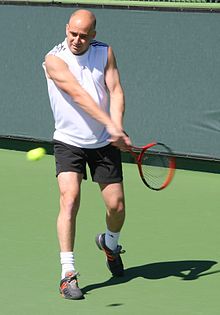
Andre Agassi Indian Wells 2006Perhaps the most famous revelation in recent years was Agassi admitting that he was using crystal meth while he was a tennis professional. When he failed a drug test in 1997, Agassi blamed it on a spiked drink – and got away with it. However, in his 2009 autobiography, Open, he came clean with the truth: he had, in fact, been smoking crystal meth at the time and just blamed a spiked drink for his failed drug test to see if it worked. 1997 wasn’t the best time for Agassi’s tennis career. Suffering with niggling injuries that kept his tennis matches to a minimum, he turned to the drug after being given it by a friend. Reaction was, as you might expect, pretty heated – while the public were stunned, fellow professionals such as Roger Federer expressed disappointment and Marat Safin even went as far to say Agassi should lose his prize money and titles.

Diego Maradona

Diego Maradona at 2012 GCC Champions League finalBeing one of, if not the greatest player of all time comes with plenty of benefits, but there’s also an immense pressure too. And if you have the personality of Diego Maradona, that pressure can sometimes take you down some dark paths. Maradona was addicted to cocaine from the early eighties until 2004, which covers a large part of his footballing career. He first used the drug when he was at Barcelona in 1983, just prior to his then world-record fee move to Napoli. In 1991, he was banned for 15 months after failing a drug test for cocaine. Then, after scoring a goal in the 1994 world cup, a hyperactive goal celebration suggested he was under the influence of things other than the euphoria of scoring a goal. He was found to have used illicit substances and banned from the tournament.

Dock Ellis
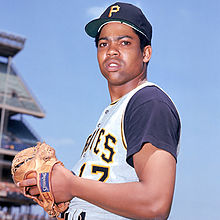
Dock EllisDrugs will normally make a sports professional play worse than normal, but that’s not always the case. On June 12, 1970, Pittsburgh Pirates pitcher Dock Ellis threw a no-hitter (for non baseball fans, think: had probably the best game of his career) while reportedly under the influence of psychedelic drug LSD. While the batters saw Ellis throwing strike after strike, Ellis claims he was having a pretty wild trip: he thought he was pitching to Jimi Hendrix, who was using a guitar as a bat. He says he never played a game of baseball without the use of drugs. Eventually, he did give up drugs after he finished playing, and even went on to become a drugs counsellor.

…and the rest

Many sports stars never reveal their drug use, fearing that they will be reproached in some way by the sport’s governing body. But there are plenty of tales out there. Which sports star surprised you with their drug use?

This is an article by Helen Cairns.
Posted in Baseball, Soccer, Tennis | Tagged , , , , , | 1 Comment

The Sports Archives – Chewing Tobacco: Has Been a Part of Baseball for a long Time, or Will It?

Baseball players have been chewing tobacco for such a long time that we are accustomed to seeing them dipping without giving it a second thought. However, the list of cities trying to ban the use of smokeless tobacco in baseball is rising, which means that Major League Baseball and the players union will have a discussion about banning the use during their next collective bargaining agreement. Boston, Los Angeles, and San Francisco have already banned the use of smokeless tobacco at stadiums, and online MLB sportsbook odds have Chicago as the next city to do so.

Chewing Tobacco

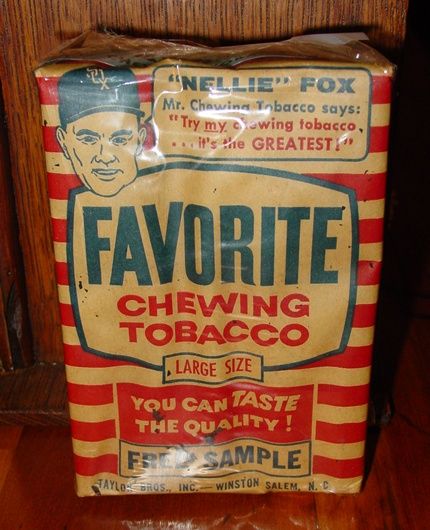
Despite Hall of Famer Tony Gwynn dying from cancer due to his use of smokeless tobacco, MLB has been reluctant to banning its use by players and team staff. Instead of waiting on the league and players union to work out a deal banning smokeless tobacco from clubhouses, the Chicago City Council is trying to get involved in the process.

On Wednesday, the Chicago City Council will vote on a proposal that would ban smokeless tobacco from baseball games as well as other events held at stadiums in the city. According to reports, City Council is doing it to prevent kids from picking up the habit because their favorite players dip.

U.S. Senator Dick Durbin sent out a tweet that said kids are more likely to start using smokeless tobacco when they see their baseball heroes using it while playing. Durbin used an analogy of a T-ball player that can’t hit a fastball wearing eye paint like professionals do because he sees them wearing the paint during games.

Despite the claims that children will start using smokeless tobacco because their baseball idols use it, research shows that isn’t the case.

According to the Centers for Disease Control and Prevention, 5.5 percent of high school students use smokeless tobacco, which is significantly lower than the 9.2 percent that smoke cigarettes, the 13.4 that use electronic cigarettes, and the 9.4 percent that use hookahs.

While those numbers are unacceptable, it shows that baseball players using smokeless tobacco doesn’t have as much of an effect as the Chicago City Council and Senator Durbin think they do. In fact, kids watching baseball games are more likely to try beer before they are 21 because it is heavily advertised during games and visible in the stands.

Federal law requires tobacco manufacturers to put one of four warnings on every pack of smokeless tobacco that they sell.

One of the signs warns that smokeless tobacco can lead to mouth cancer. Another warning says using smokeless tobacco can lead to gum disease and tooth loss. The third warning says smokeless tobacco is not a safe alternative to smoking cigarettes, and the fourth warns that smokeless tobacco is very addictive.

1280px-Skruf_snus_pris

The current laws in Boston, Los Angeles, and San Francisco ban the use of smokeless tobacco by players, team staff, umpires, and fans. The law being proposed in Chicago will be similar to the laws in the cities mentioned.

As a deterrent, first time violators of the proposed law will be fined $100-$250. The people who own or operate the sports venue could also receive fines if the law is violated. A third violation in a year can lead to a $2,500 fine and a 60-day suspension of their license or permit to hold sporting events.

Posted in Baseball | Tagged , , , , , , , | Leave a comment

The Sports Archives – College Sports: the 3 Largest U.S. Universities

There is truly no end to the coverage, action and excitement among professional sporting leagues across America, and college sports, arguably the secondary tier of sports entertainment, do not trail too far behind! Still, as much as enthusiastic spectators enjoy watching athletes compete at numerous competitive levels, significantly less is known about student athletes themselves. In college sports, it may surprise some to hear that different schools have their own private policies and benefits regarding sports programs and players. This article aims to explore some of these inquiries by examining the sports programs of the 3 largest collegiate universities in the United States: Arizona State University, the University of Central Florida, and Ohio State University.

  1. Arizona State University (est. 1885)
1125_arizona_state_sun_devils-secondary-2012

The Sun Devils consist of 22 varsity teams and have accumulated numerous achievements under the NCAA. Even ASU’s mascot, “Sparky,” is a source of pride, having been created in 1946 by Bert Anthony, a former Disney illustrator!

ASU is ranked in 1st place with the largest student body of any university in the U.S., boasting over 83,000 enrolled students in 2014! This university is a collective comprised of multiple campuses, none more important than the others. For athletics, ASU’s Division-I conference of teams (the National Collegiate Athletic Association’s most significant tier of college sports) is the Arizona State Sun Devils. Unlike in, for example, the NFL, where a single team features a unique name, college sport teams commonly encompass multiple different types of sporting activities. In the case of ASU, any athlete is known as an honorary “Sun Devil.” Among the sports featured prominently by ASU are baseball, football, archery, badminton, swimming, and a variety of others. Some sports are mixed, while others are broken up into men’s and women’s divisions, respectively. ASU’s athletic record with the NCAA is nothing short of respectable, boasting 23 national championships and 12 title wins specifically for Division-I.

  1. University of Central Florida (est. 1963)
UCF_Knights

Despite the school’s renowned legacy, the 2015 UCF football team actually suffered a devastating 0-12 season. Talk about bad luck!

UCF is the second-largest public college in the United States and 1st place in undergraduate enrollment. Its main campus is established east of Orlando and features a circular layout. For such a large school, UCF is relatively newer compared to most of its university competitors. UCF’s collegiate sports teams are all known as the “UCF Knights” and compete in a wide variety of sports, including baseball, basketball, soccer, football, and tennis. While UCF’s varsity athletics were “upgraded” to Division-I only just in 1984, the height of the university’s expansion into sports is 2007-2008 season, when the main campus received a number of major expansions and a new era began for the Knights. Among the newer additions to the school’s athletics department are the CFE Arena and the Bright House Networks Stadium, each with a maximum capacity that registers in the tens-of-thousands.

  1. Ohio State University (est. 1870)
ohiostate_logo1

Did you know that Ohio State has been responsible for over 200 Olympic athletes? What a legacy!

The oldest established university of these 3, OSU was established in the late-19th Century with a focus on agriculture and technical studies, but it quickly grew into a full-fledged university with the help of Rutherford B. Hayes (at the time, Governor of Ohio and future 19th president of the United States). OSU’s athletics program is the Ohio State Buckeyes – the term “buckeye” is a nickname for Ohioans – and boasts NCAA national championship wins for a multitude of sports. Perhaps one of OSU’s most renowned achievements in pro-sports is 7 national championship wins in college football. OSU has also made a big name for itself in various sports among the “Big Ten” conference – the oldest Division I college-tier conference in the United States.

Posted in College Basketball, College Football, Other | Tagged , , , , , , , , , , , | Leave a comment

The Sports Archives – Holding Court: ATP’s Top 5 Pros March 2016

Andy Murray - Under Pressure?

Andy Murray – Under Pressure?

Tennis has deep roots as a sport of elites, and today some of the world’s finest athletes make up the top competitors in the sport. Perennial winners are categorized on the game’s most esteemed list of players, the Association of Tennis Professionals rankings. These 5 players are recognized as the very best members of this prestigious club, making them safe choices for a wager, and you can learn if betting on tennis is legal here as the tournament season heats up.

Novak Djokovik

Novak_Djokovic_(19528970049)The number 1-ranked player in the world, the right-handed Serbian native has made an indelible impact on the sport during his highly successful 13 year professional career. In fact, the 28-year-old has already won over 700 games, and he appears to have put his single loss of 2015 behind him, advancing to the third round of the high-profile ATP & WTA BNP Paribas Open Tournament at Indian Wells.

Andy Murray

Representing the United Kingdom from his hometown in Glasgow, Scotland, Andy Murray is currently recognized as the number two tennis player on the planet by ATP rankings. After winning 4 singles titles in 2015, Murray was upset in the  at Indian Wells, suffering a surprising defeat at the hands of ATP Top 100 competitor Federico Delbonis.

Roger Federer

A true generational legend in the sport, Roger Federer took up residence in the upper tier of ATP rankings relatively early in his career and has typically retained his high-ranking ever since. The pride of Basel, Switzerland, Federer is currently inactive after being ousted in the semifinals of the Australian Open, but with 88 singles titles to his credit during his storied career, the 34-year-old has little left to prove.

Stan Wawrinka

A fellow native of Switzerland, Stan Wawrinka is another competitor consistently featured near the top of ATP rankings. After capturing 2 singles titles in the early part of 2016, he looks to continue his run of success at Indian Wells in his 3rd round match against #55 competitor Andrey Kuznetsov of Russia.


Rafael_Nadal_8,_Aegon_Championships,_London,_UK_-_Diliff

By DiliffOwn work, CC BY 3.0, https://commons.wikimedia.org/w/index.php?curid=41040792

Rafael Nadal

Representing another fixture near the top of ATP standings since his pro debut in 2001 is the #5 ranked Rafael Nadal, a Spanish-born player with nearly 70 major tournament victories in his career. Like many of the other top competitors, he looks to improve his position in the rankings with a strong showing at Indian Wells after making short work of Luxembourg’s Gilles Muller at Indian Wells.

The ATP rankings are the preeminent merit-based record used for determining entry and seeding in major tournaments, and so they can have a significant effect on a player’s prospects for winning as well as on their suitability for a wager. These rankings are calculated every week, and keeping a close eye on them is a reliable way of determining the best betting opportunities.

Posted in Tennis | Tagged , , , , , , , , , | 1 Comment

The Sports Archives – “How to Move”? All about Running

Before planes, trains, and automobiles, people had to rely on themselves to go places. Sure, other modes of transportation have existed throughout human history, but the most readily available method of getting around was (and still is) on foot – walking and running. You are probably reading this and thinking, “What about running could be so essential/difficult to understand? If anything, it’s as simple and as easy as instinct!” However, the reality is that, although running can be incredibly easy to learn and do, most people miss out on the benefits that come from knowing the finer details about it! Is there a consistently ‘better’ way to run? How is running represented throughout sports, and can it stand alone as a sport?

Mechanics of Running

o-BEST-RUNNING-BOOKS-facebook

Running is nothing, if not a diverse activity.

Running is unique for every individual, but recognizing common patterns and strategies helps in the process of improving. Perhaps the most critical component of running is the element of physical conditioning. Since running involves the whole body, no muscle can afford to be any weaker or work any less actively than the others. This is also the reason that running is among the most effective healthy exercise activities for anyone. Training a body to become more conditioned is a gradual process, and it is important not to push too hard, especially when starting out. Once patterns have been established and the body starts to become more accustomed to the physical demands of hyper-movement, new limits can be pushed. Running 2-3 times a week and pushing towards 30 straight minutes at a reasonable pace is an excellent starting goal for aspiring joggers!

Another element of running is function – if you plan on running to better your health and fitness, what kind of running is important to you? If the goal is general improvement of personal wellbeing, you’ll want to look at long-distance running. This particular style highlights good pacing, stamina, and steady performance across great distances. Long distance running can be a challenge for the less experienced athlete and requires a significant commitment for improvement. However, the benefits of LDR are fantastic; the heart becomes a more effective blood pump, the muscles of the body adapt to running on rationed oxygen, and the mental fortitude needed for such an intense type of running can even improve one’s psychological health!

160162a00e1759cc_sprint.xxxlarge_1

Different types of running have different motifs — sprinting is all about speed, long-distance focuses on endurance and stamina, etc…

Another common form of running is sprinting. In contrast to LDR, sprinting entails a brief, surging energy output to cross a short area as quickly and energetically as possible. While sprinting can be a form of physical conditioning, it is easy for inexperienced runners to overestimate their abilities and push themselves too hard. In addition, the health benefits of sprinting may not apply so generally in everyday living, as it is practiced in a way that the body functions better only in heavy-exercise situations.

There is a middle ground between the two types of functional running above. This is often referred to as middle-distance running, and strikes a distance medium between sprinting and long-distance running.


Running as a Sport

????????????????????????????????????

Running can be recreational…

Running is represented in a variety of mainstream sports, but it is featured directly in some of its own sports, as well. Running for sport is commonly organized into an event. While forms of running described above are classified via distance in the realms of training and competition, sporting events can also be specified by type. The most common of these types are cross-country running, track running, and road running.

While not entirely accurate by name, cross country typically involves running across open terrain. The environment of the run is often non-artificial and it is often participatory by its nature.

The main difference between cross country and road running is in the name; road running is a set distance placed on a road or artificial path of sorts. The range of distance can vary, and events types include participatory, recreational, and competitive race.

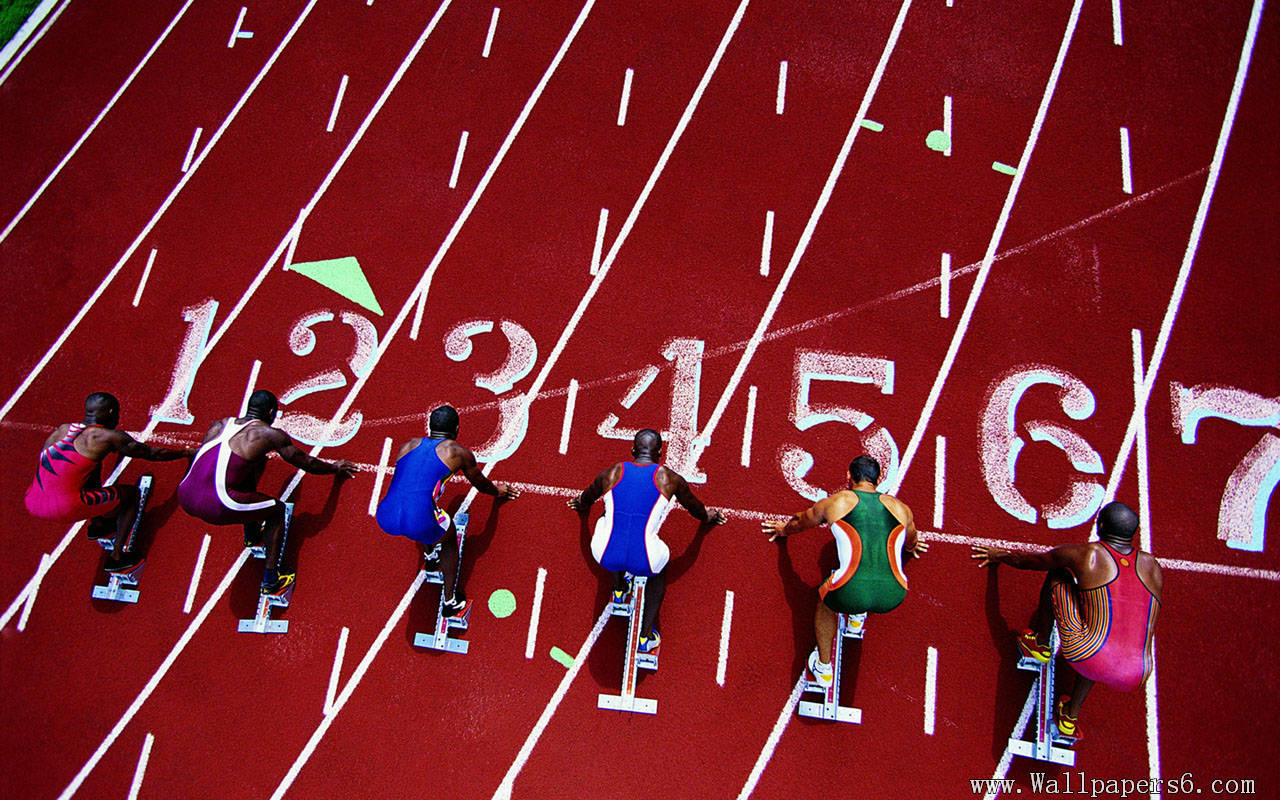
1427_1280x800

…or very competitive!

Track running is common in school and some gymnasium environments. It involves running along a lane-divided racetrack, usually accumulating multiple laps. Track running can be comprised of competitive racing events, but the track is also a great place to practice in the absence of other athletes!

Posted in Fitness/Wellness, Other, Racing | Tagged , , , , , , , , , , , , , | 1 Comment

The Sports Archives – Kansas is No. 1 for a Second Time this Season; the First School to Reach the Top for a Second Stint

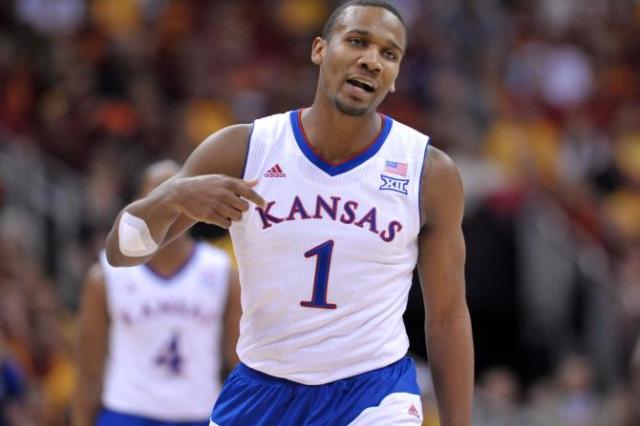
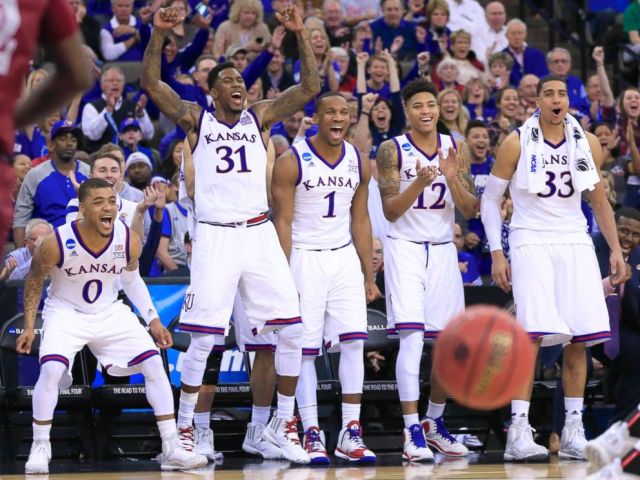
ncaa-basketball-big-12-kansas1When this week’s college basketball rankings were released, the Kansas Jayhawks were the top-ranked team in the country. By being ranked number one, the Jayhawks became the first team this season to achieve the top ranking in the polls twice. Their return to the top of the college rankings also improved their online March Madness sportsbook odds.

Despite the team’s return to the top of the rankings, they are still behind Michigan State in terms of how long they have been ranked at the top of the college basketball polls. The Spartans have held the top spot in the rankings for four weeks, which is one more week than Kansas has. Oklahoma and Villanova have also been the top-ranked team in the country for three weeks while North Carolina and Kentucky have held the position for two weeks.

With six teams holding the top spot this season, the record of seven teams being ranked number one in one season that was set during the 1982-1983 season could be broken if another team is ranked number one before the end of the season.

Kansas has been the top-ranked team in the polls 60 times, which moves them into fifth place in the all-time list behind North Carolina (113 weeks), Kentucky, (115 weeks), Duke (127 weeks), and UCLA (134 weeks).

While the Kansas Jayhawks were moving up the rankings, the rest of the top 10 teams struggled during the past week. The top 10 teams in the rankings lost 10 games during the week, while the remaining 15 teams in the top 25 rankings lost only six games.

ncaa-basketball-big-12-kansas2

Some of the teams that benefitted from teams in the top 25 losing games this week include the California Bears, who returned to the top 25 thanks to a seven-game win streak. The Bears were 14th in the preseason polls and were ranked during the first two weeks of the season before dropping out. They are currently ranked 25th.

Notre Dame was ranked for six weeks during the season, but it came to an end this week when they dropped out of the top 25. The Irish were 1-1 during the past week, but the loss was a 21 point blowout at the hands of the Florida State Seminoles, which is something the voters couldn’t overlook.

The biggest movers in the rankings this week were Utah and Indiana. The Utes defeated Arizona State and Arizona during the week, helping them jump from #22 to #13 in the rankings. Indiana defeated Illinois in its only game last week and moved from #18 to #12.

The biggest drops of the week belong to Arizona and Iowa. The Wildcats lost to Utah and Colorado last week and fell from #9 to #18 in the rankings. Iowa lost to Wisconsin and Ohio State during the week and fell from #8 to #16 in the rankings.

Based on the rankings, the Big 12 Conference is the best college basketball conference right now. The Big 12 has six teams in the top 25; they are followed by the ACC and the Big Ten, which have five teams each. The Pac-12 has four ranked teams, the SEC and Big East have two teams each, and the American Athletic Conference has one.

Posted in College Basketball | Tagged , , , , , , , , , , , | Leave a comment

The Sports Archives – “Eddie the Eagle” and Ski-jumping

takeoff

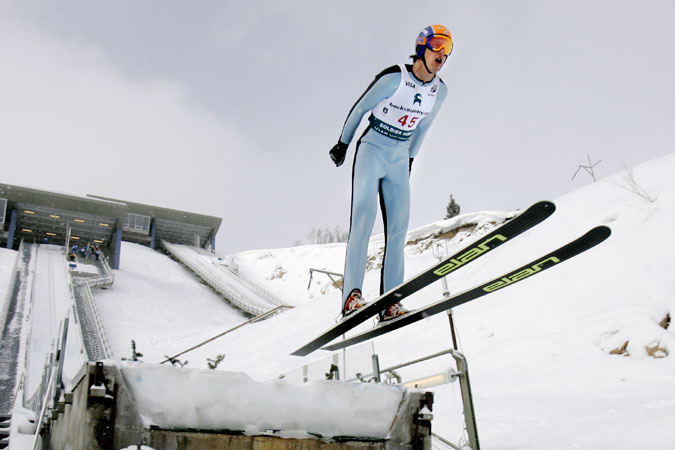
Dangerous, but exhilarating!

Most people have a good understanding of skiing, but if you don’t, it is a sport, often recreational, that involves sliding across snow over hills and slopes with the assistance of “skis” – derived from the Norse expression “split piece of wood.” While skiing is a popular practice in its own right, popular derivations of the sport exist across the globe. Among the more popular variations is “ski-jumping” which, as the name suggests, involves an extreme build-up of force to effect a long jump.

Mechanics

6c93a3a6-959d-4c8b-a19b-ace54a7d0caf

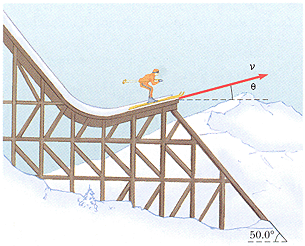
The slope of the artificial ramp is specifically designed to ‘launch’ jumpers!

Ski-jumping and skiing feature enough differences to be regarded as completely separate sports. Perhaps the most notable discernment between the two is the addition of a “launch ramp.” The launch ramp is a necessary element of ski-jumping, as it provides participants with the means to generate momentum for a jump. Another difference between skiing and ski-jumping is tied to the skis themselves – those used for jumping are specially constructed to be wider and longer than normal skis in the interest of safety. Due to its extreme nature, ski-jumping is almost always presented in a competitive environment.

History

In contrast to most other sports, the origin of ski-jumping can be traced with surprising accuracy. In the early 1800s, ski-jumping emerged as a demonstration of courage in Eidsberg, Norway. By the mid-1800s, it had been formalized into a modern, competitive sport. Naturally, any sport that involves launching one’s self a great distance and altitude with minimal protection is exhilarating, entertaining, and very dangerous, and safety continues to be a priority and a concern, particularly in the competitive environment.

The “Legend” of Eddie Edwards

eddie1-450630_v7ufoa

The story of “Eddie the Eagle” was scheduled to hit movie theaters in February of 2016!

Michael Edwards was born in December, 1963. With a natural talent for downhill skiing, Edwards went on to pursue competitive ski-jumping and eventually became the first person to represent Britain in Olympic ski jumping. What makes Edwards’ story so unique is the path he took to his dreams; he was unable to qualify for Britain’s Olympic skiing team, and as a result, decided to take his dream a step further. How? By pursuing jumping instead.

The qualification requirements for ski-jumping would seem to be easier for Edwards, as there was much less competition in his way. However, many other pitfalls would work against him – his poor vision, his weight, and his lack of sponsorship meant that he would literally have to reach for the stars to accomplish his goals.

“Eddie the Eagle’s dream” would be realized, however! In 1987, as the sole participant, he would represent Britain in the World Championships, and his performance there would carve him a path to the 1988 Winter Olympics. In his career, Edwards set records for ski jumping in the United Kingdom and, to this day, his legacy is a symbol of how many things may stand in the way of one’s dream, but with perseverance, nothing can truly stop them!

Posted in Olympics, Other | Tagged , , , , , , , , , , , | 2 Comments

The Sports Archives – Retirement in Professional Sports

bigpapi

David ‘Big Papi’ Ortiz will retire at the end of 2016 at the wholesome age of 40. While this would be quite low for any ordinary job, for athletes, it is actually in the higher margins!

In November of last year, David Ortiz of the Boston Red Sox publically announced his intention to retire at the end of the 2016 season. A renowned left-handed batter known infamously for his power-hitting abilities, Big Papi has indeed come a long way in his professional baseball career. In 2004, he played a major role in the Red Sox’s World Series victory (the first in nearly a century) and completed 2015 with a solid record of 37 home runs (among them, his career 500th) and over 100 runs-batted-in. Now, at 40 years of age, Ortiz has expressed his desire to conclude his career as an all-star athlete and begin a new chapter of his life.

In sports, player retirement is often a subject of much disappointment among fans and a necessary eventuality among players. Even the most gifted athletes will have to face it someday. Yet, as a marginalized component of professional sports with little bearing on the competition itself, retirement is not a commonly discussed topic amid sports enthusiasts. Are there rules? What happens to athletes afterwards? How does it work?

What Retirement Means

The first thing to be realized about retirement in professional sports is that no league is the same; salary plans differ in type and payout, and the requirements that must be fulfilled by each athlete in order to receive benefits are generally unique.

How the Big Leagues Do It

The NFL: The National Football League requires 3 credited seasons for an athlete to be eligible for full retirement benefits included in their pension plan. The minimum monthly payout for this pension is $200, but can potentially vary based on the number of years the athlete has been an active member of the league. Benefits will scale up to account for players in later years of the sport. The NFL also features a 401(k) program and an annuity plan as potential supplements.

1392832046000-2014-02-19-jeter-story

Derek Jeter, renowned baseball player for the New York Yankees, also retired recently in 2014. With such a career worthy of remembrance, even Red Sox fans cheered as he walked off the field from his last at-bat.

MLB: It is not uncommon for Major League Baseball athletes to retire in their 20s-30s. MLB’s retirement pensions are particularly generous. Players are only required to play for 43 days in the major leagues to be fully vested. With over 10 seasons, benefits rise to six-figures!

The NBA: The National Basketball Association provides retirement benefits to players that spend at least 3 years in service. The minimum age these pro-basketball players can begin collection their pension is at 50. However, the NBA extends benefits if a player does not collect until turning 62. Benefits grow per season active until capped at 11 seasons.

MLS: Perhaps the most dramatically different from most other major leagues, Major League Soccer’s pension plan is relatively new, only first being implemented in 2004, and permits its players to allocate an amount of their salary up to a cap set by the IRS. Some critics claim that the extent of MLS’s benefits fall short compared to other pro-sports.

The NHL: The National Hockey League requires players to play 160 games to be eligible for a pension of about $50,000 in 2012. However, as with many other professional sports organizations, this can scale based on service.

team-sports2

Retiring from professional sports is often difficult, especially for those with an enduring passion for the game.

Other professional sports leagues also have varying plans. One thing, however, is certain: a professional career in sports normally does an excellent job of seeing each of its players through financial stability later on in life.

Posted in Baseball, Basketball, Football, Hockey, Other, Soccer | Tagged , , , , , , , , , , , , , , , | 1 Comment

The Sports Archives – A Brief History of Peyton Manning

This past year, the Denver Broncos claimed the 2016 Super Bowl, tasting victory in the National Football League championships for a 3rd time, and this win certainly could not have been achieved without one of the most renowned quarterbacks in the history of American football leading the charge – Peyton Manning.

Early Life

ul_Manningfamily+Z

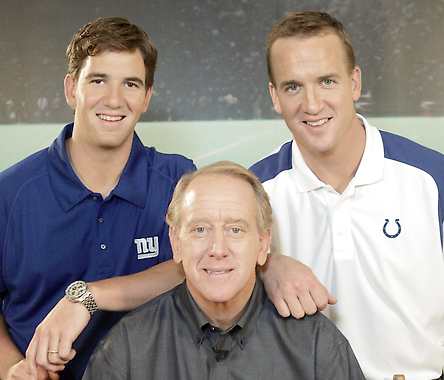
Peyton Manning (right) with his father, Archie (center) and brother, Eli Manning (left). The NFL runs in this family!

Manning was born in March, 1976 amidst a “football family” in New Orleans, Louisiana. The son of former NFL quarterback Archie Manning and middle child of 3 boys, Peyton was no stranger to a passion for competitive sports, even before his professional career. His path to fame and recognition could only be fate. In his adolescence, Manning began to make a name for himself during his time at Isidore Newman High School. His natural talent for football helped him guide his team to a 34-5 record and he was widely recognized as a top ranking recruit at the conclusion of his high school career.

In contrast to many high school football players, Manning did not end his involvement in competitive sports after graduating. Instead, he enrolled as a student at the University of Tennessee in the mid-1990s and continued to excel at football. His childhood experience, exceptional wit and ambitious drive allowed him to rapidly develop a reputation in his 4-year college career.

            Going Pro

Becoming a professional athlete is often romanticized as a straight-shot to fame and fortune. Sadly, as few as 1% of all college players will truly have a shot at a professional career. Courtesy of his record and superior skills, it should be no surprise that Peyton Manning made this cut. In 1998, fresh out of his college football career, Manning was drafted first overall pick by the Indianapolis Colts and had a rather rough, difficult first season. However, he wasted no time in establishing a “groove” and consistently kept the Colts in high ranking for several more years.

peyton-manning-colts-broncos

As of this year, Manning is the quarterback for the Denver Broncos, but his professional career began and ran with the Indianapolis Colts for several years.

Manning is certainly one of the more noteworthy pro-football players in history. In 2003, he won his first NFL “MVP” Award in 2003, and in less than 10 years, has managed to achieve it an additional 4 times, making him the first NFL player in history to do so. He has also claimed 2 Super Bowls, the most recent being that of the 2015 season. Along with these exceptional recognitions, Manning also boasts a cumulative 70,000+ passing yards and over 5,000 completions. His extraordinary record has left his name on the lips of millions as one of the greatest professional quarterbacks of all time!

            Manning Today

Peyton Manning’s most recent accomplishment is the success of the Denver Broncos at the NFL’s 50th Super Bowl. After claiming a decisive victory against Tom Brady and the New England Patriots in the AFC championship round, Manning carried his team into a final successful game in Levi’s Stadium against none other than the Carolina Panthers. The success of the Broncos in 2015 was the team’s first championship win in over 15 years.

Posted in Football, Other | Tagged , , , , , , , , , , , | Leave a comment

The Sports Archives – NASCAR: Anatomy of the Machine

Automotive racing can be a perplexing sport, as the competitive aspects of it do not appear to test human faculties compared to most other professional-tier sports. However, its tremendous popularity certainly verify that it is an international phenomenon in sport-related entertainment. The facets of auto-racing that make it unique revolve around how it pits competitors against each other. In a simplistic sense, auto-racing is surprisingly akin to chess; both activities center on the performance of the individual, and that performance is measured against another’s will and patience. It also requires focus, mental stamina, and strategy above sheer physical endurance. The “mechanical” aspect of auto-racing is left to the vehicle itself. Interestingly enough, a prominent side effect of dividing up the BuschSeriesFieldAtTexasApril2007psychological and the physical aspects of racing between man and machine is the impact it has on the rules of the sport. After all, if all of the “heavy-lifting” that accompanies a sport is to be handled by a machine, careful restrictions and regulations must be implemented to prevent significant advantages from being unfairly achieved and exploited, particularly in a professional environment. Thus, when it comes to stock car racing, it is not unexpected that the most critical rules often revolve around the vehicle, not the driver.

Fuel Tank Regulations

All stock cars are required to operate with a 22-gallon gasoline cell. Apart from the obvious reason of preventing any unfair advantage in size, this standard is strictly enforced to ensure strategic driving will contribute to a solid win. In day-to-day driving, optimum gas mileage is a nice thing, but most people don’t place much importance on it. When it comes to auto-racing, on the other hand, precise calculations on the weight and usage of gasoline are critical and often necessary for success. After all, fuel acts as more weight on a car chassis until it’s actually burned for energy, and the emptier a vehicle’s tank, the less power it requires for acceleration. The constant fluctuation between weight and thrust can be tricky to manage at breakneck speeds!

Engine Power and Attributes

v0wahsru9c2dexvhgqr7jwzrwbfaetgzAny engine used in NASCAR racing are equipped with (and required to boast) 8 cylinders and pose a considerably resilient frame; this is to ensure that it can respond to the strenuous demands not commonly found on civilian roadways. In recent years, the parameters of an acceptable racing engine have been seeing more restrictions. For example, the upper limit of engine capability, according to the official 2015 NASCAR news release, can no longer exceed 725 horsepower. Those in favor of this change hope that a reduction in engine power outputs will leave more up to the skills of those in the driver’s seat, and argue that as a professional sport, even racing should strive to put as much variability in the hands of the person competing.

The Safety Harness and “Roll Cage”

While the exterior of most NASCAR racing vehicles is adorned with the logos of sponsors, flashy accessories, and the racer’s signature number, the cockpit is a bit more neglected. Racing vehicles are not built to carry extra passengers and generally forgo the comforts and luxuries reserved for regular vehicles. However, one component of every NASCAR racer that is not found in any general-public models is a heavy-duty safety harness, which substitutes air bags and conventional seatbelts. The harness is designed to cradle the driver and, for obvious reasons, does not provide much wiggle-room. In addition to this fortified pilot seat, surrounding the main cabin of every racer is a “roll cage” – a skeletal frame, usually made of steel piping, which acts as a driver’s first line of defense in the event of a crash. The fast-paced, frantic nature of auto racing goes without saying, but all vehicles are designed as much for safety as they are for success.cot.384

Downforce

Aside from the fuel tank, engine, and the framework of the car’s chassis, pretty much every other piece of automotive hardware in a racing vehicle is designed for two basic purposes: maximum drivability and minimum drawbacks. The shape and design elements of a NASCAR racing machine are designed to channel downforce – a specific type of kinetic force that effectively weighs the car into the ground without actually making it heavier. Downforce is a critical part of what keeps the aerodynamic powerhouses from flying out of control on the track. When harnessed stably, downforce can improve the handling of vehicles at higher speeds.

Posted in Motorsports, Other, Racing | Tagged , , , , , , , , , , | Leave a comment