
Image Credit: Unsplash
Precision under pressure grows from repeatable habits: steady attention, controlled breathing, and deliberate practice. Athletes can train these skills just as they train speed or strength. The process works across sports, from returning a fast serve to sinking a free throw with seconds left. When focus becomes part of every practice, athletes respond to competition with a more consistent technique.
Mastering the Mental Game
Strong focus starts with a routine that tells your brain where to focus. Before a drill, choose one useful cue such as “watch the ball” or “finish the motion.” Keep the phrase short enough to recall when fatigue rises.
Distractions will still appear, so acknowledge the noise, then return to the cue without criticizing yourself. This simple reset is central to mental preparation for competition, which may also include goal setting, imagery, and positive self-talk.
Practice the reset during ordinary workouts. For example, a basketball player can pause after a missed free throw, take one breath, and repeat the same cue before the next attempt. That sequence builds a dependable response to mistakes.
The Power of Controlled Breathing
Breathing affects muscle tension, heart rate, and clear thinking. A slow exhale can help settle the body before a serve, kick, or other precision-based movement. It also gives you a brief mental checkpoint before acting.
Try inhaling through the nose for four counts and exhaling for six counts. Repeat the cycle three times while keeping your shoulders relaxed. Athletes can practice this breathwork between drills so it feels familiar during competition.
Controlled breathing also supports concentration in recreational activities that require patience and careful instruction. Whether you are practicing archery, testing your focus at a shooting range, working on your golf putting, or playing competitive darts, the same steady breathing habits can help. The goal is to maintain physical control while staying focused on the task and following established guidance.
Visualizing Success in Sports
Mental imagery gives athletes a chance to rehearse performance before moving. Effective visualization includes more than seeing a perfect result. Picture the full action, including your stance, timing, breathing, and response to pressure.
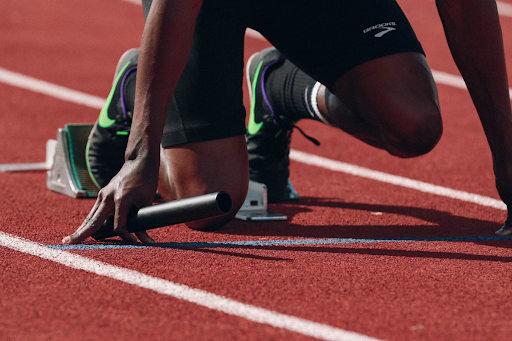
Keep each session brief. Spend two minutes imagining one specific sequence, such as leaving the starting blocks smoothly or receiving a pass under tight coverage. Use a first-person perspective and include sensory details like the feel of the surface under your feet.
Visualization works best when paired with physical practice. Rehearse the movement mentally, complete several real repetitions, and then review what matched your plan. Athletes who want a broader routine can also explore guidance on balancing training with tranquility to keep performance goals connected to mental wellness.
Honing Hand-Eye Coordination
Hand-eye coordination improves when drills challenge accuracy without sacrificing sound technique. Start at a manageable speed and increase the difficulty only after your movement stays consistent.
A tennis player might bounce a ball against a wall and alternate hands for 30 seconds. A soccer goalkeeper can have a partner send balls from different angles while calling out a color or number before each catch. Table tennis, juggling, and reaction-ball drills offer other accessible options.
Track quality instead of counting repetitions alone. Record how many clean catches or accurate contacts you make in a set of 20. If your form breaks down, shorten the set or slow the drill. Two focused rounds often teach more than ten rushed rounds because the brain receives clearer feedback from each attempt.
Transferable Skills for Peak Performance
Focus training carries into school, work, and daily decision-making. The same pause that helps an athlete recover after an error can prevent a rushed response during a difficult conversation. Visualization can prepare you for a presentation while breathing exercises can reduce tension before an exam.
Create a short pre-performance routine that fits many settings:
- Take one slow breath with a longer exhale
- Identify one controllable action
- Picture the opening movement or decision
- Use a brief cue to begin
Consistency gives this routine its value. Over time, the first controlled breath becomes a familiar signal to narrow your attention and execute the next movement with precision.


