The Sports Archives – Flaky Weather? A ‘Reliable’ Selection of Sports

This winter, weather for many regions of North America has been, mildly speaking, unpredictable. The erratic rise and fall of temperature and climate conditions has made every day a meticulous “gamble”; will it be warm and calm? Breezy and chilly? Is rain (or snow) to be expected soon? Unfortunately, due to the outdoor playing environment inherent to many sports, recreational participation in a wide selection of them has been impossible to maintain for many Americans this season. Fear not, however! For as many outdoor sports as are being disrupted, there remains many more unaffected by weather. Here are several indoor sports or sporting activities you can participate in if your faith in good weather has been temporarily shaken!

The rapid progression of the seasons can make it difficult to make time for one’s favorite sport. Some sports are utterly unplayable in the wrong climates! What alternative sporting activities exist, then, that can persist even in the face of changing weather and temperature?

Basketball – Perhaps the most globally-renowned indoor sport, basketball is played across the planet, both competitively and recreationally, and holds its reputation as a reliable sport in virtually any weathering environment or outdoor climate. The only true weakness (which is, arguably, also a strength) of basketball is its dependency on an indoor arena or gymnasium to play. Not only is the sport generally played in an enclosed environment, some of the game’s core mechanics cannot be accomplished outside!

Indoor Cycling – Mountain biking, cycling, and bicycle racing are all fast and fun sporting activities. But if the weather outside is harsh or unfavorable, is there no alternative? Think again! Static bicycle stations offer the full workout and motion of a bike without moving. This, coupled with their compact design, allows them to be placed indoors, sometimes in grouped clusters (as is the case with most gyms). While the scenery might not be as great, modern static cycles also track important information, like distance pedaled, time spent biking, and even the number of calories burned! What better way to keep the competition fresh and alive than with some artificial assistance?

table

Ping pong’s compact size is part of what makes it a manageable indoor sport.

Ping Pong/Table Tennis – The unbound nature of the outdoors sometimes makes tennis impossible to play, but ping pong, or table tennis as it is also known, can be played anytime and anywhere! Perhaps the name “table tennis” is a tad misleading, for although the rules and style of ping pong is comparable to real tennis, it is no substitute. Nevertheless, this indoor sport is still fun, fast-paced, and depending on the intensity of the competition, highly aerobic.
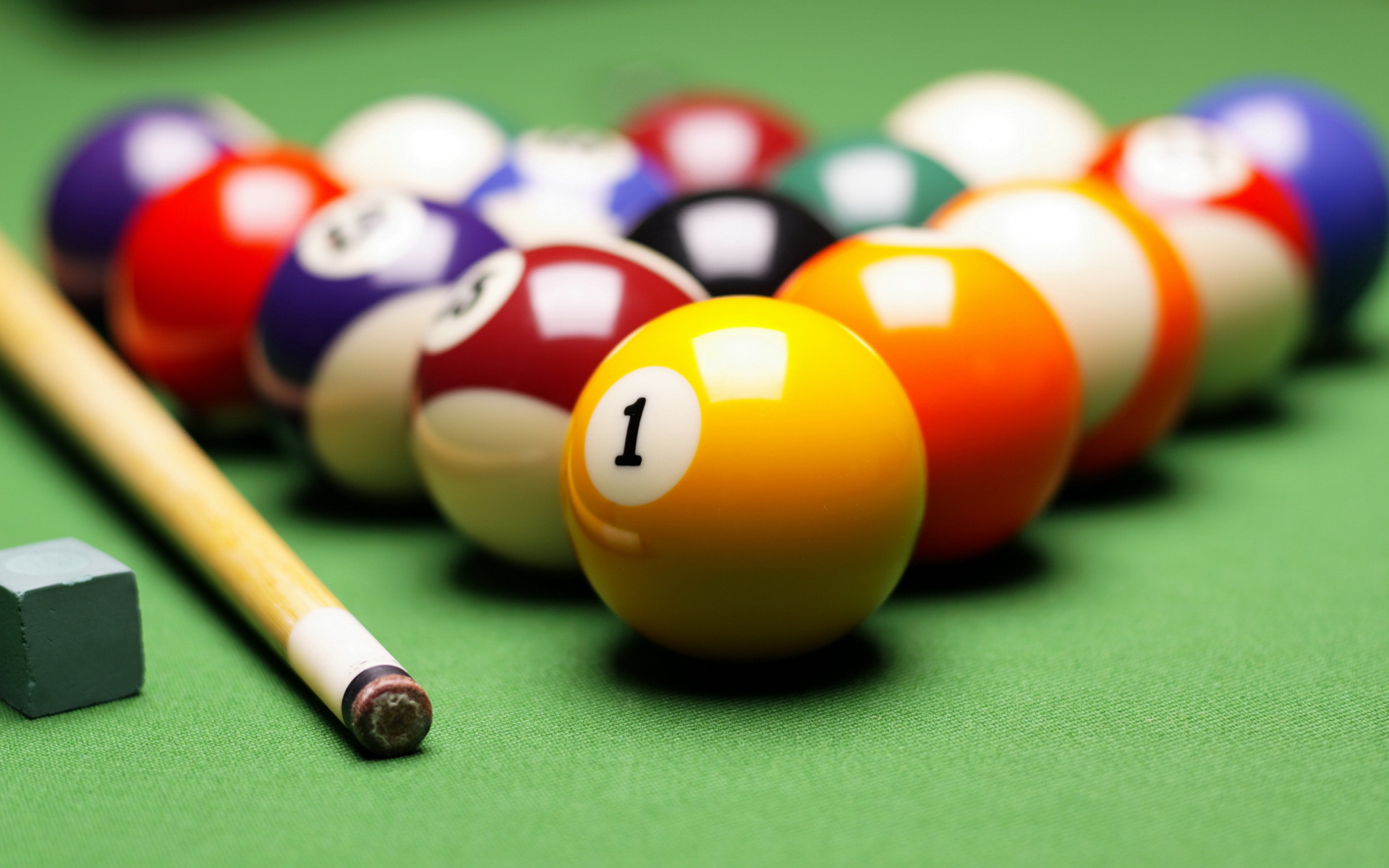
Billiards

Billiards and chess are more “skill-based” than many other sports. This can have the side-effect of being unsavory, or contrarily, more enjoyable for sports enthusiasts.

Chess – While not as taxing as other sports from an athletic perspective, chess is a high-stakes one-on-one strategy game that can be played between anyone, anywhere. This game’s recognition as a “sport” comes not from physical demand, but rather its massive cultural following and competitive nature.

Pool/Pocket Billiards – Another indoor sport common both as entertainment in local activity hotspots and also as a sporting activity in organized competitions. Like chess, billiards is a high skill sport with fairly low physical demands. In bad weather, it can be a “relaxing” alternative to a physical, outdoor sport like football or volleyball.

Racquetball – A frantic, boxed-in type of racquet sport (comparable to tennis), racquetball utilizes walls and floor markings as integral components to gameplay and rules. The necessitation of these artificial additions to the environment prompts most racquetball games are played in an indoor court; however, in as much as tennis is commonly played outdoors (but can be fielded in an indoor court) racquetball is its polar counterpart. While it can serve as an alternative to other racquet sports, players must be prepared for more focused, erratic, and overall faster-paced game.


E-Sports – E-sports are gaining rapid popularity with the evolution of mankind’s technology faculties, as are the competitive organization techniques that host and promote such activities. While no substitute for “the classics”, e-sports replicate the competitive and entertaining qualities of most sports while conceding physical requirements and large-scale team-coordinated strategy. While a vastly different ‘flavor’ of sport than most are used to, however, e-sports also remain uninhibited by seasonal and weather changes; in fact, the competitive formatting of most e-sports is scheduled more on a basis of familiar annual timing rather than that of necessary environmental conditions.
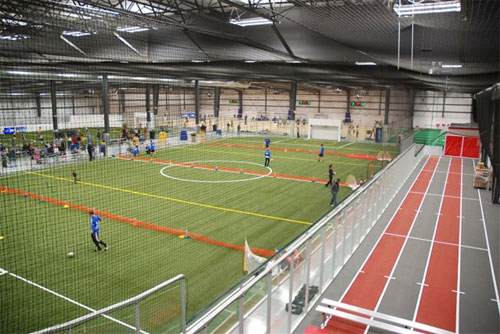
bucksMont1

While these are among the more renowned sports “unbound by climate,” with the proper measures taken, virtually any sport can be played in an indoor/artificial environment.

Posted in Indoor Sports, Other | Tagged , , , , , , , , , | Leave a comment

The Sports Archives – Taking the Insult out of Injury: Sports Medicine

In the professional world, most sports are highly competitive, physically-tasking, and especially dangerous; some which are fast-paced and/or particularly dependent on player-to-player contact (such as American football or basketball) can, at times, bring the risk of player injury on the field to extreme heights. While injury is neither uncommon nor unexpected, it can pose a serious threat to the sporting careers of even the fiercest competitors. Injuries play a hefty role in professional sports leagues; if a valuable player is unable to play (or worse, forced to play while recovering) then the integrity of the whole team is weakened. More importantly, despite how tough or skillful a player may be, he/she is still a human being, and may suffer serious bodily harm and damage over a competitive game. To combat the dangers of the field, advances in healing and treatment techniques pertaining specifically to the realm of sports have been in development over the past several decades. Here are a few:

Magnetic Resonance Imaging – The “MRI”

mri-magnetom-skyra-mediaviewer_02-00066569-10In medicine, an MRI utilizes magnetic fields to conduct high-powered, relatively harmless scans at a subatomic level. It does this through effectively mapping the human body based on radio signals emitted by atoms. Because these scans are performed at such a small scale, their definition is quite high, and can be increased further still by increasing the strength of the magnetic field the MRI produces, making the MRI one of the most effective, state-of-the-art diagnostic utilities in modern medicine.

While not so useful in direct treatment of injuries, the significance of such a device in sports is still tantamount in sports. Why? Well, the gritty nature of sports makes it difficult to identify the specifics of an injury without detailed scanning technology. Through the power of an MRI, a player’s injury can be precisely declared and examined, making a course of action regarding treatment much more approachable. Not only that, but by refining the technology of and employing the MRI over time, patterns begin to develop between what injury exhibits which symptoms, and how the MRI depicts them both.

Preventative Education and Research

h9991457_002

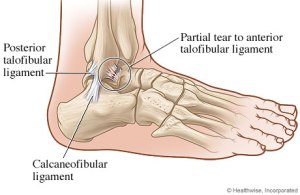
Understanding what is damaged in an ankle and where it is located when an injury is received can be helpful in treating it simply and without extensive medical attention.

In sports, reducing the risk of injuries is just as crucial as treating them! Naturally, knowledge of a subject increases as it is studied, and experienced, and the same is true for sports. The most common form of injury across all sports is that of the ankle. Additionally, ankle injuries are primarily caused by taking a misstep, running improperly, or placing weight in a bad position – all mistakes related to self-error. By educating sports players in common causes and practices that lead to common, preventable injuries, the overarching influence of these injuries on sports is expected to go down. Among educational programs and studies, a popular technique utilized to reduce bodily strain and risk of damage during game time is a “warm-up.”

Cultivating an Awareness of Emotional Stress

bcb0434e310ee1a2da358ed2d9535408

Emotional stress is dangerous; it can potentially express no symptoms and become severe at a rapid pace.

Emotional damage is not necessarily as tangible as a physical ailment, but it can still cause serious harm to a player if untreated. Sports are competitive, and that is one of the reasons they are so enjoyable, but if the outcome of a game is riding heavily on your   performance, the pressure to win can build up and cause psychological damage in players. Thus, coaches and team leaders, particularly in younger or recreational regimes, are increasing usage of positive reinforcement in motivating players to perform well and improve, as opposed to punishment or negativity. It is important to remember that, as intense as sports can get at times, the players are just human, too.

Posted in Fitness/Wellness, Other | Tagged , , , , , , , , , , , | Leave a comment

The Sports Archives – New Year “Resolution”: Improving Your Game!

activitypyramid-500r

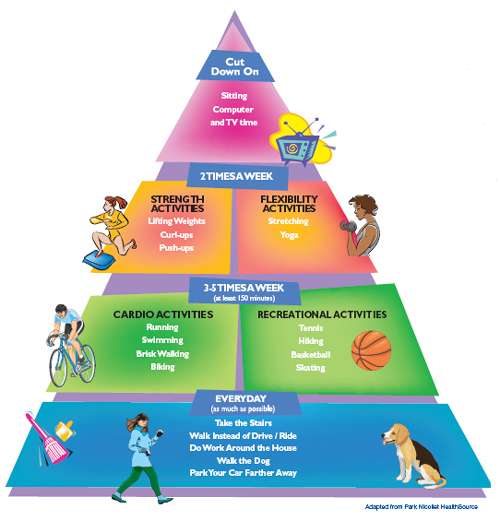
Knowledge is power! Organized plans and actions lead to success.

2016 is an entirely new year for the whole planet, and there is no better time for self-
improvement than the start of it! Many such “new year’s resolutions” revolve around having more patience for others and improving one’s own mental wellbeing, but there’s no reason a new year’s resolution cannot involve sports! Like virtually any other facet of daily life, an individual’s sporting knowledge and prowess can always be improved. The goal of resolving to either start taking sports seriously (or, for current sports savants, get better at sports) is to enhance one’s mental state – his/her overall knowledge and passion for competitive sporting activities. This can be done through a combination of the following
ways:

  1. Develop Physical and Mental Exercise as a Priority

Success at any sport can be narrowed down to 2 things: physical fitness and mental vigor. After all, a sport is a competitive activity, and such activities can only test the body or mind of any competitor. The stronger, faster, and more resilient a person’s body is, the better it will statistically perform in game time. The healthier, clearer, and better-focused a person’s mind is, the higher the chance of them out-strategizing and subverting their opponents. Most importantly, while results like these can be achieved for any specific sport simply by drilling that particular sport, focusing broadly on fitness and mental health creates versatility and prepares an individual for a wide variety of activities, rather than just one or two. Furthermore, a body and a mind that has been conditioned into health will make for a better lifestyle overall, both during and outside of sports!

  1. Specialize!
sports-e1438250839525

Just like there’s much more to business than management, there’s much more to sports than playing! Find other ways to help out and contribute to your favorite sport!

Beyond the above, becoming better at individual forms of sport all depend on the time one is willing to invest in learning that sport; their success is also highly dependent on how genetically gifted he/she is for said sport. For example, in the realm of fencing, long limbs and a slim torso frame are genetic advantages for competitors, as they will be able to tag opponents from a greater distance and be harder to legitimately strike themselves. In basketball, it is no question that height and agility rule the field. Thus, in a high-stakes competitive state of mind, someone would benefit from specializing in a sport and playstyle that empowers his/her strengths and limits weaknesses. Note, however, that specialization is not nearly as pressing in a recreational environment, where individuals should be encouraged to pursue a sport that they find enjoyable above all else.

  1. Find Other Outlets of Involvement!


So, you like American football, do you? You’re physically and mentally complete, are you? And you play it every chance you get? Do not let your involvement in football stop there! If a sport truly becomes one’s passion, there are other opportunities to become immersed in that activity. Most people who play a sport, competitively or recreationally, are already aware of and participate regularly in these opportunities. Returning to the case of the football enthusiast, he/she may not only play football, but also study football rules and regulations, watch the NFL, and seek out opportunities to get involved in football among the local community. Cultivating this degree of commitment will not only complete one’s passion, but also enhance their appreciation, understanding, and enjoyment of the sport.

  1. Just Play!
weight-training-machines

Need help getting motivated for change? YOU ARE NOT ALONE! Gym membership adds a social aspect to fitness that brings the necessary component of motivation to many people.

After setting up a plan to get one’s body and mind into shape, deciding on a sport and playstyle in which to specialize, and seeking other opportunities of involvement in that sport, all that remains is to just play! Enjoy partaking in that sport, sharing it with others, and bettering yourself competitively, recreationally, and idealistically. The road to reach such a point may be long and rough, but the year is fresh, and dedication leads to success!

Posted in Baseball, Basketball, Football, Other | Tagged , , , , , , , , , , , | Leave a comment

The Sports Archives – The 2015 NFL Playoffs (as of 12/26)!

1280px-NFL_playoffs_logo_new.svg

We’re all about some American football, right? But the playoffs…that’s where the competition gets fierce!

The 2015 regular season for the National Football League is rapidly coming to a close, and it will not be long before a handful of the teams with the best records are selected to compete in the 2015 playoffs. While some teams still have a chance to mount a comeback and ensure their place in the approaching crux, by now, it is certainly possible to look ahead and make some predictions as to how the NFL playoff season will “kick off.”

The Big Twelve

As mentioned in a previous article, which explored ranking and the major facets of the regular NFL game season, there are 2 “conferences” in the National Football League – the AFC, or American Football Conference, and the NFC, or National Football Conference. Each conference is made up of North, South, East, and West Divisions, and each of these divisions encompasses 4 playing teams. The playoffs feature an overarching total of 16 NFL teams – the team with the best regular season record (calculated by percentage of wins vs. losses, or a fraction of all games played) from each division in a conference is appointed as a competitor in the playoffs. Additionally, 2 “wild card” teams – of all remaining teams in a conference, the 2 best records – are also selected to compete, thus resulting in a total of 6 teams from each of the 2 conferences. As of today (December 26th) the 2015 playoff teams are slated to be the New England Patriots, Cincinnati Bengals, Denver Broncos, Houston Texans, Kansas City Chiefs, Pittsburgh Steelers, Carolina Panthers, Arizona Cardinals, Green Bay Packers, Washington Redskins, Seattle Seahawks, and Minnesota Vikings.

            First Round: “Wild Card Playoffs”

The first round of the postseason playoffs, aptly-titled as the “Wild-card Playoffs”, will feature the 2 last-place division winners from each conference facing off against the wild card teams of that conference; this will be the last opportunity “2nd place” teams from each conference will have for a shot at the Super Bowl. Since there are only 2 wild card teams from each conference, but 4 division leaders from each conference, the 2 best division leaders are exempt from playing in this round of the playoffs (they are automatically advanced into round 2). This will apply to the Patriots, Bengals, Panthers, and Cardinals.

Why Understanding Playoff Selection is Important

Screen-Shot-2014-08-28-at-6.23.26-PM

Behold, the issue of opinion! Until it happens, we won’t know for sure how this year’s playoffs will unfold. Everyone is free to make their predictions, however. Whether by gut-instinct or pure statistics, or a combination of the two…predictions can differ in a variety of ways!

19766-2014-nfl-playoffs-nfl-playoffs-2014-2014-nfl-playoff-bracket

How many differences between this bracket prediction and the one above it can YOU spot?

Knowing exactly how teams are selected to play in the NFL playoffs makes predictions much easier and more accurate. It also allows fans of football to estimate how their team must play in relation to other teams if they are to be guaranteed a shot at the Super Bowl (this involves also factoring in wins and losses of the season up until a certain point in time, as well). For example, by now, it is perfectly safe to say that the New England Patriots have clenched their division – with a seasonal record of 12-2 wins v. losses, they are guaranteed to finish first in their division and will play in the playoff season. The New York Jets, in the same division as the Patriots, have a record of 9-5 this season, but will still play again before the season ends. As a result, they do have a chance over against the Pittsburgh Steelers and Kansas City Chiefs at one of the wild card placements for the American Football Conference (however, because of the Jets’ game schedule, they will actually be playing against the Patriots to gain another win, or possibly suffer another loss).

Indeed, grasping how and why teams are selected for the playoff season is nearly as important to predicting the course of the entire NFL year as the overall performance of the teams themselves!

Posted in Football, Other | Tagged , , , , , , , , , , , , , , , | Leave a comment

The Sports Archives – How To Overcome Your Fear Of Diving In 5 Simple Steps


Diving ArchivesIt is perhaps not difficult to understand how some might be afraid of diving. The dark depths of the ocean, concerns about breathing and even a fear of sharks can all be daunting prospects for the novice diver. However, it is entirely possible to overcome these fears and join the ranks of over one million divers who enjoy this pastime across the globe. Here are our top five tips for tackling your fear of diving in the deep:

Confront your fear

The first step to overcoming a fear is to confront it head on. Take some time to ask yourself what exactly it is that you are afraid of. Is it being able to breathe? Or perhaps you are afraid of the darkness? By isolating the root of your phobia you can focus your efforts on combating this.

Research

The next step is research. By reading about diving and learning more about the science behind it, you can rationalise your fears and reassure yourself that it is actually incredibly safe. In addition, it might be that certain types of diving are more appealing to you. For example, if you do not like the thought of darkness, perhaps diving in the shallow and clear oceans of the Caribbean might be preferable? It is even possible to dive in some aquariums, allowing you to experience life under the water without worrying about getting lost.

Talk to others

Talking to other divers is one of the fastest ways to tackle your fears and concerns. Those with experience can reassure you and offer advice. Why not stop by a local diving shop, where there are sure to be staff who are happy to talk to you? Divers are a friendly bunch who are eager to share their passion, so there is no need to feel shy. Many friendships have been formed by diving over the years – you never know who you might meet!

Take a course

There are a huge range of diving courses available around the world. A properly accredited course will teach you to dive in safety and an instructor can deal with any specific fears or concerns.  The most popular and widely-recognised courses are those administered by the Professional Association of Diving Instructors (PADI). Courses are available at various levels, from beginner right through to more advanced technical diving and free-diving. A friendly and tranquil environment is the best place to learn – PADI courses Thailand are one option, offering quality expertise in the diving haven of Koh Tao in Thailand.

Confront your fear!

Once you have completed a professional qualification, you will be prepared to face your fear head on, and experience life under the sea! Diving is a brilliant pastime that becomes a lifestyle for many, allowing you to be one of the lucky few who are able to experience the wonders of life beneath the surface. Diving can be a great way of seeing the world and making new friends, too. Once you are initiated, you will wonder why it took you so long to face your fears!

Featured images:
  •  License: Image author owned

Jeff Glenn is the Founder of Go Pro Asia, one of Thailand’s most popular professional dive training resorts. Jeff is a PADI course director and technical diving instructor trainer and has over 20 years’ experience in the dive industry.

Posted in Other | Tagged , , , , , , , , , , , , , , | Leave a comment

The Sports Archives – MMA: The “All of the Above” of Martial Sports


how-mma-fighter-ronda-rousey-gets-down-to-her-fighting-weight

Ronda Rousey, highly-acclaimed American mixed martial artist, is widely recognized as the #1 women’s bantamweight fighter in the world!

MMA, or Mixed Martial Arts, is a skirmish-focused sport, the primary characteristic of which is the incorporation of multiple, various fighting and melee combat-oriented techniques. It stands out from other modern combative sports due to its focus on removing limitations on the specifics of engagement; while Mixed Martial Arts does feature organized rules, athletes are ideally given more flexibility in how they approach their opponents, and are generally permitted to use a wider array of strategies and actions without penalty. The openness and variety of MMA was born out of the goal of finding the most efficient, unarmed fighting methods for use in real-world situations. Over time, the sport experienced more organization and the acquisition of stricter rules, primarily in the interest of fair play and competitor safety.

What exactly is MMA?

Defining MMA is difficult at times because, as mentioned before, the primary idea behind it was to lift the restrictions that accompany similar, more categorized martial sports. MMA is a mixture of melee combat, and though it may seem brutal at times from a spectator’s point of view, the ultimate goal of this particular sport is not necessarily good form.

BradPickettthrowsM_2529511b

In many ways, MMA is rougher, tougher, and all-around more frantic than other martial sports.

MMA is practiced under careful regulation and competitive events usually take place in an enclosed ring, similar to boxing. However, rings used for MMA are usually larger, and typically hexagonal or octagonal in shape, as opposed to square. They also feature reinforced walls to keep all of the action contained.

The rules regarding Mixed Martial Arts try to stay as overarching as possible. United Rules of MMA, the world’s most utilized set of rules, features 9 weight classes (in the interest of balanced, safe events). Fighters wrap their hands and wear fingerless athletic gloves to protect against scrapes and cuts (and to reinforce strikes). Each MMA match usually consists of either 3 (non-title) or 5 (title) rounds and each round is 5 minutes in duration. Each round has a 1-minute recuperation period between it and the next.

As far as what types of fighting are “permitted” in Mixed Martial Arts, the URMMA prohibits any head-butts or attacks directed at the spine, eyes, and groin, and restricts certain other attacks exclusively to either ground fighting (unlike boxing, opponents in MMA are permitted to continue a fight should one of them take to the floor) or to when opponents are both on their feet.

Difference-in-Cage-Sizes

Common MMA event ring dimensions, according to Ultimate Fighting Championship (UFC).

Victory in an MMA match can occur in one of several different ways. If the maximum number of rounds in an event have been played, the match ends and the selection of the victor falls to 3 judges. This is called decision. A match can, alternatively, conclude when one of the opponents is rendered unconscious by the other (i.e., a knockout, or KO). Among the less exciting endings an MMA match can experience are disqualification (DQ) which can occur if a fighter receives more than 3 warnings for illegal play, or the forfeit of one of the players before the fighting begins.


What is the Origin of Mixed Martial Arts?

MMA is technically the legacy of any practice of mixed melee combat for sport, which has roots dating all the way back to Ancient Greece. Through other types of gladiatorial games in history, like Pankration, or through the combination of actual fighting styles and martial arts (Bartitsu), mixed martial arts has had no shortage of inspiration to draw from in the past. The modern sport itself evolved primarily through the 20th Century, when various forms of MMA began to really gain traction as sporting events. The first documented usage of the name “Mixed Martial Arts” took place around 1993, making the sport something of an age-old relic and a revolutionary new sport at the same time.


Posted in Fitness/Wellness, Other | Tagged , , , , , , , , , , , | 1 Comment

The Sports Archives – Top Three Baits For River Fishing

Fish Bob

Fishing is a talent that requires a multitude of skills and attributes, high on that list is the need for patience, persistence and most of all, knowledge. As you’ll likely know by now, sticking just any old bait on the end of a line and casting into a river isn’t going to get you anywhere fast, so what are the best baits for river fishing? Well, we did some research and asked around, and whilst fishing is generally quite a personal thing, it seems that there were at least three top baits that kept coming back to us, and we want to share them with you.

To start with, we’re talking about river fishing, so in general we’re not going to talk about float fishing and we advise against it unless you’ve located yourself a particularly peaceful river. Most rivers will be free-flowing and will require the use of a bait dropper and your own choice of bait. Here are the three that we’d recommend.

Groundbait Mixes

Groundbait obviously covers quite a large range of bait options, but with every fisher having their preferred mix, we decided that it was the method rather than the ingredients that made this a must for the seasoned fisherman.

The versatility of groundbait is what makes it an exceptional choice – depending on how you prepare your own bait, you can make the most of various river conditions, from fast-flowing to flooded and still, there are a number of different choices to make.

Hempseed

Go on as many fishing blogs and magazines as you’d like and I assure you that the vast majority of them will suggest fishing with hempseed. The seed is small and quite fine but should still be pretty effective even in faster flowing rivers. The best thing about it? Hempseed often attracts smaller fish, which doesn’t sound immediately great, but where there are small fish, big fish often follow.

As with most baits you’ll find that it is often most effective when combined with another type of bait. In this case we’d go for something like halibut pellets or, in a particularly strong current, something heavier like boilies, this will add some weight to your bait and help your bait settle.

With hempseed you have the option of buying it pre-made, which is handy because it often comes with all its oil intact, or you can buy the raw ingredients and do it your own way.

Bottom-bounce Live-bait

Despite its simplicity, live bait is still a favourite. It works pretty well and it is a great place for beginners to start with. Of course there is a significant amount of controversy surrounding live-bait in general, so if you are going to use live-bait at a certain fishing hole, we always advise that you catch your live bait from the local fishery to prevent any disagreements or future problems.

Live-bait seems to be the go-to option for catching larger fish, especially pike, and although many different options for live-bait are available we’ve ascertained that it really depends on the size of fish you’re fishing for. If you’re going for a standard-sized pike, you’d use a minnow, but if you’re hunting down something bigger, you might want to upgrade to a perch or something similar – the taste doesn’t seem to be important, but the size does.

Featured images:
  •  License: Image author owned

John Penn runs JP Tackle, an online fishing tackle supplier based in Essex. John prides himself on his fast and excellent customer service, which makes JP Tackle one of most popular online fishing tackle shops around.

Posted in Other | Tagged , , , , , , , , , | 1 Comment

The Sports Archives – The NFL’s Seasonal Structure & Overview

The National Football League is gearing up for its 50th Super Bowl at the end of the 2015 season and the stakes are, as usual, lofty! Competition is fierce throughout the league and adversarial relationships are forming between opposing team fans, those both casual and hardcore. As anyone that pays even the slightest attention to American Football (and as those who do not could probably guess), the team that brings its A-game is sure to have a straight shot at playing in the seasonal closer and seizing the crown, but is it true that the best team always wins? How is the standard NFL season organized, and how is it decided which teams face off against each other in the tournament fight-to-the-finish? Despite how simple the process of play and elimination might seem, the structure of the National Football League’s annual competition is quite broad and difficult to fully understand for many people. Naturally, the best way to comprehend what has happened thus far and, by extension, anticipate what will happen as a football season unfolds is by breaking it down into its fundamental components…

Preseason

The NFL’s 17-week regular season is preceded by the aptly-named preseason – a 4-week period during which each NFL team is required to schedule 4 “preseason games” (half of these must be played on said team’s home field), and teams involved in American Bowl games or the “Pro Football Hall of Fame Game” must play another preseason game on top of that. Games played in the preseason are counted separately from the regular season.

Regular Season

844px-US_National_Football_League_Teams_Location-en.svg

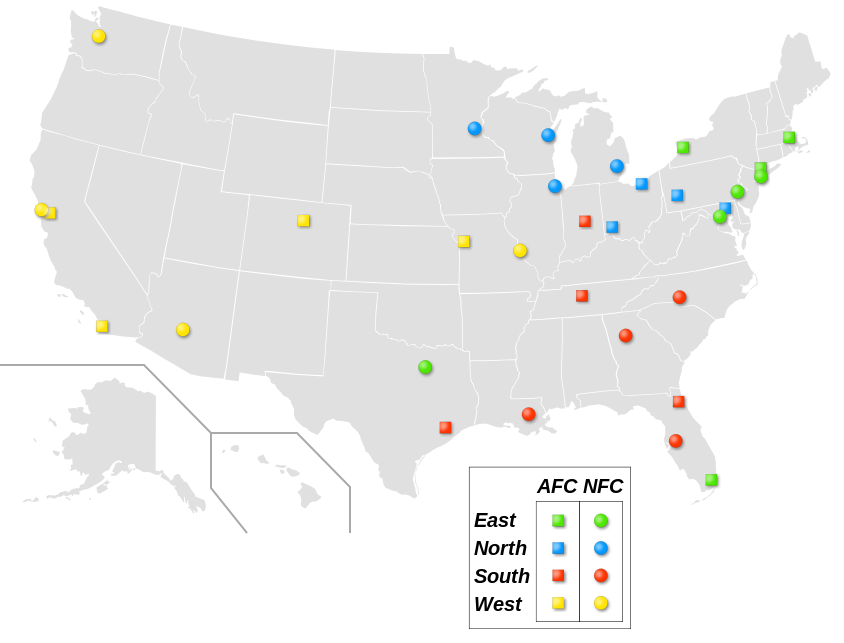
The spread of the NFL’s conferences and sub-divisions across the United States.

The regular season of the NFL consists of 256 games and is split across 2 divisions (much as is the case with baseball) – The American Football Conference (AFC) and the National Football Conference (NFC). Each division features 4 “quadrants” (North, East, West, and South) and each quadrant contains 4 teams. Each NFL team is required to play 16 games.

The algorithm that determines which team plays who in the NFL is rather complex.

  • Each team must play 2 games – one on home field, and one away – against the other 3 teamsin their “quadrant” (In the case of the AFC East, for example, the Patriots must play 2 games each against the Dolphins, the Bills, and the Jets).


  • Then, 1 game must be played against each team in another quadrant of the same division (In the previous case, a team from AFC East would play either West, North, or South) and this rotates every 3 years.


  • 1 game must also be played against each team in a completely different division as well (AFC NFC) which rotates every 4 years.


  • Finally, the last 2 mandatory games in the regular season must be played against teams of the same placement in different quadrants of the division. In the case of 2014, the New England Patriots finished 1st in their “quadrant”, mandating that they play the Denver Broncos and the Pittsburgh Steelers (finished 1st in AFC North and West, respectively).

Post-season

NFL_playoff_tree

The NFL’s post-season is where the true competition manifests itself. The elimination tournament is set up in a fairly standard, straightforward way, and the pressure is high for each team. A single mistake could prove very costly.

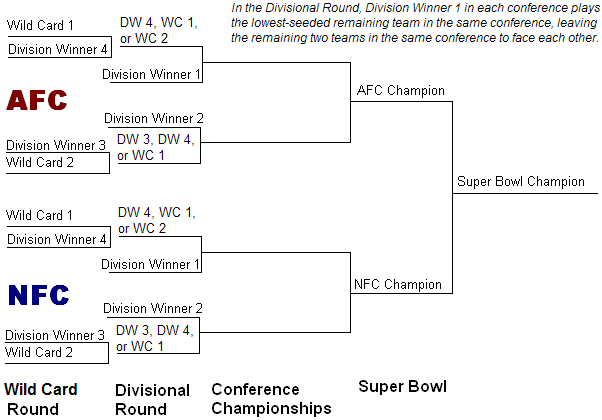
After the conclusion of the regular NFL season, the playoffs are held. The playoffs consist of a classic elimination tournament featuring 12 teams from the NFL. The AFC and the NFC each comprise half of the teams in the playoffs, and the teams themselves are selected on a simple basis:

  • The “main 4” teams for each division are those who placed 1st in each subdivision (“quadrant”).
  • The other 2 teams are denoted as “Wild Cards” and advance with the highest overall records in their conference.

The process of elimination advances winning teams through the Wild Card Round, the Divisional Round, the Conference Championships, and the surviving 2 teams – one from each conference, face off in the Super Bowl.


nflregularseasonschedulegrid

A spreadsheet grid of the 2015 NFL season’s team match-ups.

As can clearly be seen, the entirety of the NFL season is not a continuous process of elimination; rather, it is methodical, and more closely emphasizes quality teamwork and overall play. The teams that perform well in the pre- and regular seasons will be rewarded with a chance to go-for-the-gold, and the true competition is only fierce and focused during the playoffs.

**photo credits:

wikipedia.org

printableteamschedules.com

Posted in Football, Other | Tagged , , , , , , , , , , , , | Leave a comment

The Sports Archives – The Relationship of Sports and Composition

Go out there and show everyone what you’re made of!” This “battle-cry” can sometimes be heard spouting from the lips of a sports team’s resident coach. The implication of such a statement is that, by making known the contents and attributes that define a person, his or her worth on the playing field is established. Most sports enthusiasts know that how well an athlete plays and performs in a game is predicated heavily on how experienced they are and “what they are made of”, but another aspect of the sport that contributes heavily to the success and thrill of the game is the composition of the equipment. Indeed, due to the uniqueness of every sport’s environment, each’s playstyle makes different demands on players and equipment alike, emphasizing the importance of having adequate gear (made by proper materials) for each scenario. How does the composition of each sport’s players and instruments affect competitive play, and what is the significance of it?

Football

Believe it or not, the origin of the football’s shape as a “prolate spheroid” is due to the first being made of pig’s bladders. Over time, the materials used in construction of footballs have changed, but the shape has remained very similar. One may argue that the shape was kept for aerodynamic and carrying benefits.

The Right Tool for the Job

As mentioned previously, each sport is different in a variety of ways. As a result, an athlete that specializes in one sport must possess and cultivate the right attributes to be successful in that field (and, likewise, the equipment must be molded and built for a specific purpose). Depending on the environment of the sports industry, athletes may be more or less desirable based on a variety of reasons. In Major-League or Professional sport environments, a player is desirable for specializing in one playstyle, and performing exceptionally in that line of work.

For example, Tom Brady, a professional football player for the New England Patriots, fills the role of quarterback on his team; he is thusly expected to fulfill the obligations of the position he specializes in. However, from a lighter, more casual perspective, Brady is an experienced, well-rounded sports player whose flexibility makes him a handy asset in any position across more than one sport (In high school he accumulated experience in baseball and basketball in addition to football, strengthening his athletic background). Because no human can be perfect at every aspect of a sport, attributes like height, weight, physical build, genetic predisposition, and stamina are all weighable parameters that define what an athlete will excel in. Likewise, specializations impact a player’s strengths and weaknesses in a real game, and that is where strategy comes into play!

Equipment Composition – What is important?

Sports_Equipment

Every sport is different. Every sport’s goal is different. Every sport’s rules are different. Every sport’s equipment is different. Every player is different. Understanding the significance of each of them is paramount to personal and professional improvement.

Knowledge of the mechanics behind what equipment is used for a sport (and why it is designed in such a way) is essential to developing as an athletic savant. This type of understanding encompasses such topics as why different woods are used in the construction of baseball bats, or what significance an American football’s unique shape has on gameplay. Like a great scientist, an athlete, either casual or professional, who understands the “why” behind the sport he or she plays has a marked advantage during play.

Posted in Other | Tagged , , , , , , , | Leave a comment

The Sports Archives – Know the Difference: Baseball and Softball

Some sports stand entirely alone, while others exist as deviations on other popular competitive activities; a few alterations to how a game is played, if made in the right place, can make an entirely different sport! Perhaps one of the greatest examples of a sport that resembles another, but is independent and popular in its own right, is softball. Softball is officially described as a “variant” of baseball, and was invented under a different name in the late-1800s, established as an indoor-playable game. Since its beginnings, Softball managed to accumulate popularity over time, allowing it to compete for the spotlight of sporting entertainment in the modern world. Though it may not necessarily be considered as classic or traditional as baseball, softball is still a popular batting-and-baserunning sport and, to the untrained eye, nearly indistinguishable from its “bigshot cousin.” Here are 5 of the biggest differences between modern softball and modern baseball…


  1. The ball is bigger. Softballs and baseballs alike can vary in size and mass, depending on each’s unique structure. In comparing the two, however, a softball is usually bigger and heavier than a baseball. Most softballs weigh slightly less than 7 ounces (~198 grams) and have a circumference of about 12 inches (~30 cm). In slow-pitch softball, the circumference can even be as great as 14-15 inches (~35 cm)! Additionally, the name of the sport is misleading, as softballs are just as rough and rigid as baseballs (a softball could likely cause more damage than a baseball, given its larger size.)

    Softball_Baseball

    A side by side comparison showcasing size differences between a baseball and softball.


  1. There are 2 major game types of softball, but in both, pitching is underhanded. In most baseball, pitches are thrown from the mound in an overhanded, straight arc towards home plate. Speed, power, and precision are the priorities behind every strong pitch, and a good pitcher endeavors to throw the ball with as much accuracy as possible. In slow-pitch softball, on the other hand, the ball is required to arc mid-pitch on its way to the batter, and as the name implies, speed is not high on the priority list. Fast-pitch softball is more like baseball in that pitches are rapidly executed.


  1. A softball pitcher tosses on level ground. In baseball, the pitcher’s mound (which lies near the center of the infield) is an elevated surface of dirt from which the pitcher delivers throws to home plate. In softball, however, no such mound is used (or even exists as part of most dedicated softball fields). Pitches are delivered at the same ground level as that of the batter. Furthermore, the distance a softball pitcher must throw to reach home plate is usually shorter than that of baseball.


  1. The overall size of the field is smaller. Everything about a softball field, sans the players and bases themselves, is slightly more condensed than that of a baseball field. This makes for a smaller infield as well as a closer outfield. While the field may be a different size, however, the number of defensive players on the field at a time is usually the same as baseball – 9 (In the case of slow-pitch softball, there is a 10th member added). As a result, the dynamics and play strategies of the defensive team members also deviate from that of baseball.
sbfield

In a traditional softball field, the outfield is not as expansive, the infield is pressed closer together, and home plate is slightly pushed forward.


  1. Games are ‘shorter’. The longest of softball games typically run through the 7th inning, but in less-competitive environments, a softball game can also run for 5 (or even as little as 3) innings. By contrast, baseball games are almost always 9 innings long.

    BB EJ FV

    Softball has been instrumental in promoting women’s roles in sports.

Posted in Baseball, Other | Tagged , , , , , , , , , | 1 Comment