The Sports Archives – The Lamborghini MIURA Super Sports Car

The Lamborghini MIURA.  If ever a famed Lamborghini luxury super sports car could be called or referred to as “subdued” then the Lamborghini MIURA might of well have that mark of distinction.   Overall Italian sports-car styling of the early 1970’s automobile industry era  was not noted for its restraint, yet the MIURA was relatively understated, certainly by comparison to some of the more outlandish and some say even grotesque Countach variants.

The gearbox was under and behind the engine, and the differential was directly driven from the gearbox.  This meant the whole installation, located behind the driver’s shoulder could be hidden behind the flying buttresses that topped the “curvy” rear wing, and yet the proportions of the automobile remains both beautifully balanced and intact.  It also  meant that the noises and sound levels from the full galley of 12 air intakes , 4 cam chains, 24 proudly thrashing valves as well as the symphony emanating from the ends of the complicated labyrinth and tangle of exhaust pipes and piping were all unusually close to your ears.  This despite the provisions and planning for a full aluminum bulkhead and a glass window. No doubt about it – sitting or even nearby an authentic Lamborghini MIURA is not a quiet or ultimately serene place to be. Still not only it exciting and even admirable if you did not appreciate this type of automotive raw power and luxury premium super sports cars – what would you doing in this nook of the woods or nearby such a monstrosity anyways?  Nor would you ever own or be driving such a vehicle to put it simply.

With an undisputed bhp ( boiler horse power) figure of a remarkable 385 in “Super Veloce” form and ideal weight distribution matched by exceptionally well laid and thought out body suspension design, this relatively small car – the Miura extremely fast and rapid cross-country travels , velocity and progress.

Lastly it can be said laughingly that this was neither creature comfort nor “family car”.  Luggage capacity was virtually non-existent and even laughable, the pop up headlights and headlamps were not much use at high speeds. (It was best not to try to race at high speeds at night – that was of course unless you had already outrun the local police at their speed trap).  Yet Ferruccui Lamborghini shrugged his shoulders and would suggest that evenings and night times could be more enjoyably spent than in the confines of a sports motor car.

Robert B. Horseman

For those Manitoba & Winnipeg drivers with a lead foot and involved with negotiations with the Manitoban courts , MPI autopac over province of Manitoba licence surcharges  Traffic Ticket Winnipeg offers professional advice and advisements

Fort Garry Highway 59 Traffic Tickets Specialists wpg canada
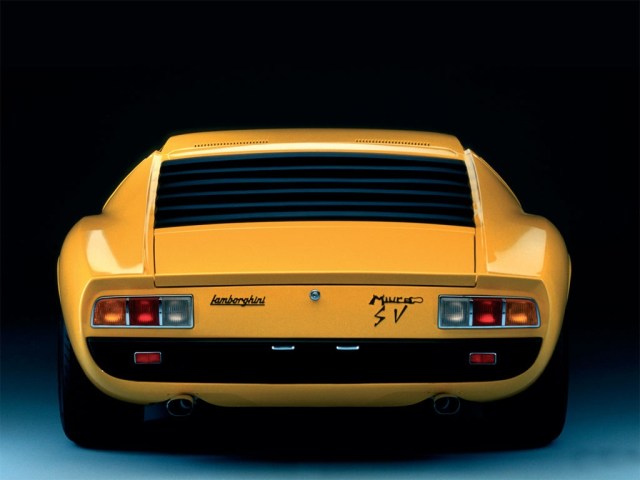
Lamborghini MIURA
Lamborghini MIURA

Posted in Motorsports, Other | Tagged , , , , , , , , , , , , , | Leave a comment

The Sports Archives – Funny Sports Pictures – Series 9

More funny sports pictures from The Sports Archives!

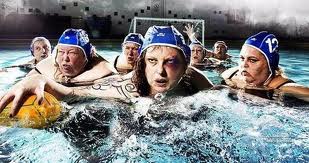
Hells Water Polo Team

"Hell as put quite a Water Polo team together this year, Jim"


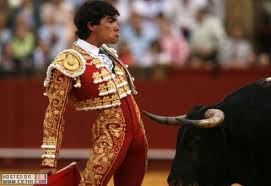
I would gore this guy

"I would gore this guy if he didn't have such a pathetic dinky!"


Build it yourself kit

"Damn Build-It-Yourself Kit!"


View all of our Funny Sports Pictures!

Series 1 | Series 2 | Series 3 | Series 4 | Series 5 | Series 6 | Series 7 | Series 8

Posted: 09/06/2011

Posted in Motorsports, Olympics, Other | Tagged , , , , , , | 1 Comment

The Sports Archives – The Bristol 400 – British Remake of Popular Pre-War BMWs

Bristol automobiles and especially the Bristol 400 model were interesting amalgams and what some might say even mongrels of cars.  Bristol being a British name – yet the cars themselves to be modeled and patterned after successful pre Second World War era BMW models. Post war high-end British cars that were stylish yet mechanically complex and to maintain, set and keep in tune yet with the outstanding looks and styling of highly popular and desirable BMW pre-war models.

The Bristol Aeroplane Company, aided and abetted by the Aldington family (who actually had the U.K. license and franchise to import BMW automobiles in the late 1930’s) took over the obsolete designs of the BMW concern after war ended and had won by the allies, amalgamated the basis of the 326 chassis frames, the high performance 328 engine and lastly the styling of the BMW 327 body set. Both amazingly and inexpertly, almost by serendipity, they came up with an amazing integration of parts, components and styling to produce the unique Bristol 400 design.

Yet from that day onwards, Bristol continued producing these cars at the same plant, be it in small quantities. In total somewhat in the area of just under 700 units were produced.  They were both well crafted, high desirable and very costly and expensive to purchase as well as to maintain and keep in good tune.

The BMW-inspired engine was not superseded until 1961, when the 407 model adopted an American origin Chrysler V8 power plant, and the chassis, or rather repeated modifications of it, were produced for a long time after that.  The 400 itself, of which about 700 were made during a 3 year production period was an attractive if none-too-rapid Grand Touring car in it and was only ever available in two door coupe/ saloon guise. Later the 401 saloon, the 402 convertible, the 403 which evolved the 404/405 and 406 replacements all followed on logically in numerical sequence onwards from the original 400 setup model of the line and range.  In sequence and numbering they were upgrades on an original yet they all retained the basic traditions and underpinnings of the line – yet each also pushed up performance model number by model number.  The engine was also used by AC, and by the highly respected and classic British sports car maker Frazer Nash, and proved to be surprisingly tunable overall for both sports car racing and Formula Two.

A last case in point- the early Bristol autos as would be expected from an aircraft company which had produced such speedy classics as the Bristol Beaufort and eventually much of the design work that led to the supersonic Concorde that their automobile products would be aerodynamically highly efficient if not “slippery”.  Alas though towards the end of the line when the company closed down its automobile production around 1960 they had become less slippery and more like high-priced flagships.

Jerry B. Tibor

Over 50 years experience helping people in the auto industry in the Winnipeg Manitoba regions

Wpg Auto

Winnipeg Canada Used Cars for Sale

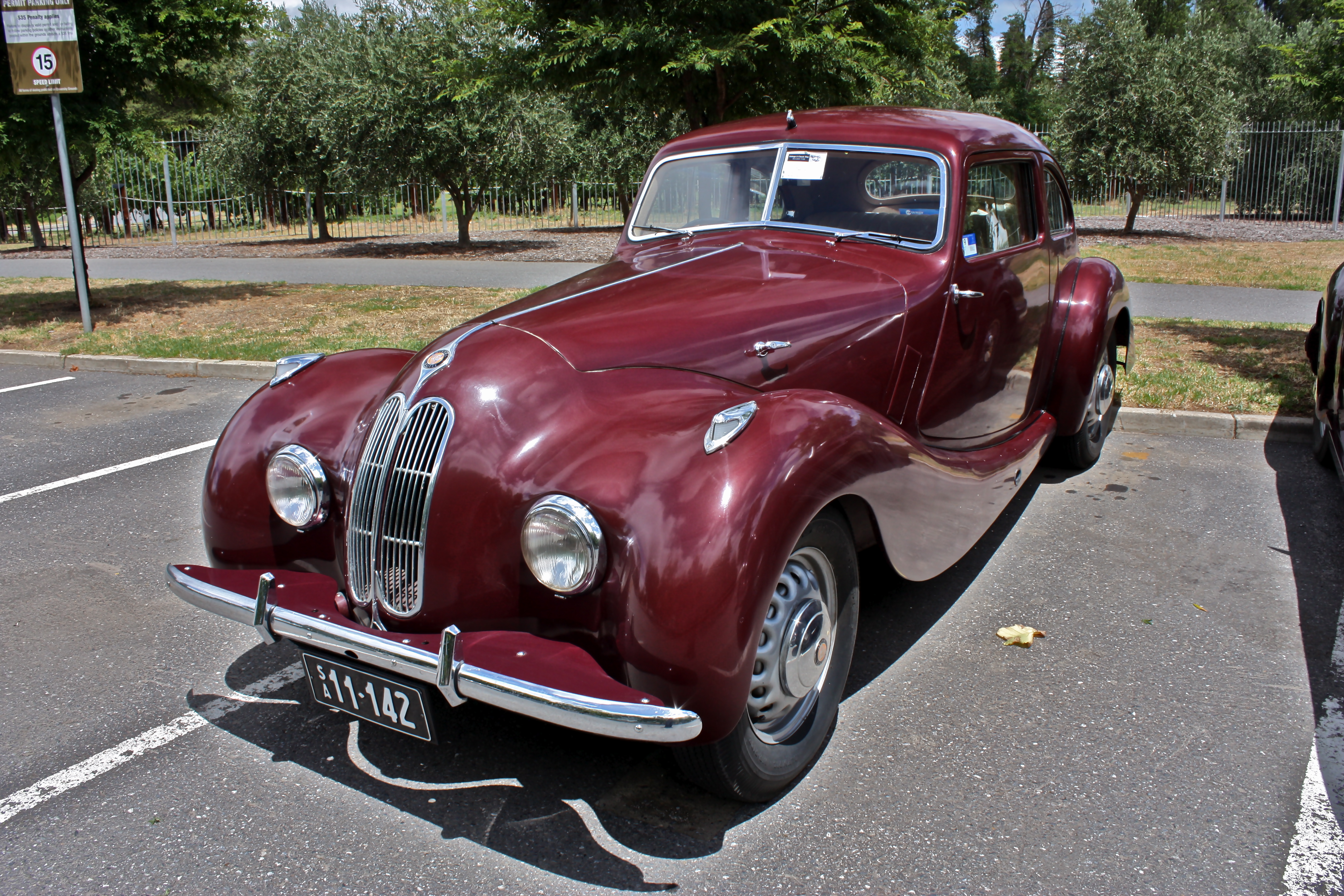
The Bristol 400 British Motorcar

The Bristol 400 British Motorcar

Posted in Motorsports, Other | Tagged , , , , , , , , , | Leave a comment

The Sports Archives – How to Play Fantasy Football

Each NFL season, millions of people want to learn how to play fantasy football. If you’re not a hardcore fan of America‘s most popular sport, the task can seem daunting at first, but anyone can get started on their journey to fantasy football dominance by following the steps listed below. And remember, you can’t win if you don’t play.

How Scoring Works in Fantasy Football

Each fantasy football team is comprised of real-life NFL players, and a traditional fantasy roster is made up of the following positions: quarterback, running back, wide receiver, tight end, kicker, and team defense. Only one quarterback, defense, and kicker are started each week, while two or more runners and receivers help round out your team. Each time a starting player gains a predetermined amount of yardage or scores during an NFL game, you receive points for your team. If your final score is greater than your opponent for the week, you’ll wind up with a mark in the win column.

The most common scoring system awards one point for every 10 yards gained by a runner or receiver, while a quarterback gets a single point for every 25 yards of passing. Touchdowns usually count as six points, although quarterbacks are sometimes limited to four points for passing the ball into the end zone. Scoring for kickers and team defenses is often more complex, so be sure to pay close attention to your league rules.

Drafting a Fantasy Football Team

In order to build your fantasy football team, you’ll need to join a league and participate in a draft. Most leagues are made up of 10 or 12 teams, while fantasy football drafts average between 15 and 20 rounds. Each round, you’ll select one NFL player to add to your roster, and a large segment of fantasy players find the fun and camaraderie of draft day to be the best part of the season.

Starting Your Fantasy Football Line-up

Each week, you will need to examine your roster and select the group of players you feel will score the most points. This might be based on NFL match-ups, or you may prefer to start the same productive players each week. In either case, starting a full fantasy football line-up is a key ingredient for success.

Working the Waiver Wire

During the fantasy football season, you can pick up new players by making trades with other owners or picking up available options off the waiver wire. If you have players who aren’t performing up to expectations, this is the best way to upgrade your team.

As you can see, learning how to play fantasy football isn’t as difficult as you might first imagine. Even if you can’t name all the starting players in the NFL, you can still manage a successful team by utilizing online resources and starting a complete line-up each week. And as your level of experience grows, so will your fantasy football success.

John Clifton writes articles about how to play fantasy football at Fantasy Football Tips. He lives in Texas, where he plays in entirely too many fantasy football leagues every year.

Posted in Football | Tagged , , , | Leave a comment

The Sports Archives – The Ferrari 250 Supersports Car Series

To many sports car buffs and aficionados who take serious “Supersports Cars” and sport scars of merit seriously; the early Ferrari models – especially the 250 series involve among some of the greatest, fast, sleek and nimble fine motor cars and certainly among the highest levels and greatest of Ferraris altogether.

Early Ferraris were all identified by a number which represents and represented the capacity of a single engine cylinder.  Accordingly a Ferrari 250 was thus identified as a V12 engine with a capacity of 3 liters in its engine – by simple multiplication of its numbers – that is 12 x 250 cc.  Basically put until the development and introduction of what became to be known as the Ferrari “V6 Dino engine types”, all other produced cars from this Italian auto maker all used the balanced V12 engine.  That is except for the Grand Prix racers which used a simpler, less complex and technical layout of what were described and termed in the auto racing circuits as “In line racing 4’s”- that is four-cylinder engine types.

What made and still makes the Ferrari 250 among the most desirable and collectible of the run of the stable was that it was first to employ the new 3 Liter V12 engine.  Yet it was not a straight Italian line of the development of the 3 Liter V12 from its original base and source – the 1.5 liter power plant that powered up the original Tipo 125 sports car of 1947.  There was also a much bigger engine – referred to as the “long engine” among the Ferrari factory (or better described craftsmen as the production rate was not mass production but rather one hand-made unit at a time).  This “long engine” was essentially a 4.5 liter Grand Prix unit.  Yet it required a much heavier and sturdier chassis to carry, support and restrain it.

In the end for various reasons – including those above what was finally decided on for the landmark Ferrari 250 was the short engine – bored out and expanded to reach the 3 Liter size designation.  That is not to say that any a number of different sizes and varieties of the 2 engine types – including the more massive and heavier 4.5 Grand Prix “long” engine type were slotted in and tried for tests and more testing of the upcoming 250 model series.

Yet it was this lighter and smaller engine series that allowed for the significantly better handling that resulted in the trophy winning of a number of landmark auto races against such formidable competitors as the Mercedes 350 SL.

Thus started the ongoing march of Ferrari fine sports automobiles and the legend of the Ferrari 250 itself.

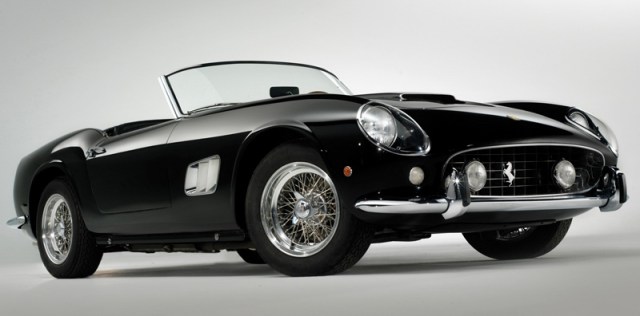
Black Ferrari 250

The Ferrari 250


Robert B. Horseman

Winnipeg Traffic Tickets

Manitoba Licence Surcharges

Posted in Motorsports, Other | Tagged , , , , , , , , | 1 Comment

The Sports Archives – Funny Sports Pictures – Series 8

More funny sports pictures from The Sports Archives!

Olympic Running

This shot is taken from the new Olympic "Limbo" Event!


"Damn it,  Ronaldo!... Not Again!"

"Damn it, Ronaldo!... not again!"


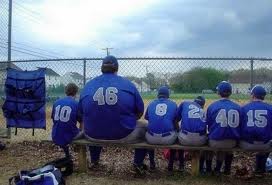
Baseball Bench

"Alright, which one of you guys ate the last piece of pizza?!"

View all of our Funny Sports Pictures!

Series 1 | Series 2 | Series 3 | Series 4 | Series 5| Series 6| Series 7

Posted: 08/06/2011

Posted in Baseball, Olympics, Soccer | Tagged , , , | 1 Comment

The Sports Archives – The Secretariat of Jewelry

The Rolex watch is the thorough-bred, the Triple Crown, the Secretariat of equestrian riding.  As far back as 1957, Rolex has played a major role in Equestrian sports.  An inevitable combination, it was only a matter of time for the two worlds to come together as the precision and elegance of the world’s top riders and the most beautiful, talented horses is reflected by the flawless timing, precision and accuracy of Rolex watches.

Read on to learn more about two of the most prestigious Equestrian events that are sponsored by Rolex.

World Equestrian Games – Known as the Olympic Games of the Equine sports world, this 15 day tournament is held every four years (two years prior to the Olympic Games).  In the same manner as the Olympics, the WEG location rotates throughout different parts of the world as competitors around the world compete in these games as individuals and teams.  This prestigious event includes eight different disciplines that range from jumping to dressage to endurance riding to paraequestrianism.  The next World Equestrian Games will take place in the year 2014 in Normandy, France.

Rolex FEI World Cup Final – This is one of the most popular Equestrian events in the world.  A series of leagues and competitions leads to this final event of the year where the season’s premier rider is chosen.  During the five-day experience, the very best horse and rider pairs perform in various physically challenging events including jumping, dressage and driving.

Known for their superior precision in a quest to perform as exceptional levels, Rolex is also a proud sponsor of:

  • Yachting – Maxi Yacht Rolex Cup, Rolex Farr® 40 World Championship, Rolex Fastnet Race, Rolex Swan Cup, Rolex Sydney Hobart Yacht Race

Rolex additionally offers awards that support individuals who are actively contributing to the advancement of mankind.  Established in 1976, this international philanthropy program offers Rolex Awards which recognizes projects that not only demonstrate innovation, but also contribute to make the world a better place. Over 3,500 individuals have proposed projects this year alone, representing the highest number of projects that have been submitted since its launch.

Regardless of what aspect or sport you are comparing to Rolex, it is no doubt that this is one Secretariat of a brand.

Alex is a marketing consultant for companies dealing with the Rolex watch. She also loves horses and following the latest fashion trends.

Posted in Golf, Horse Racing, Other, Tennis | Tagged , , , , , , , , | Leave a comment

The Sports Archives – Funny Sports Pictures – Series 7

More funny sports pictures from The Sports Archives!

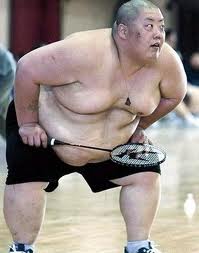
Sumo Badminton

"I hate these new training programs!"

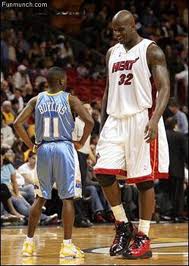
Dunk Challenge

"I'm here for the Dunk Challenge"

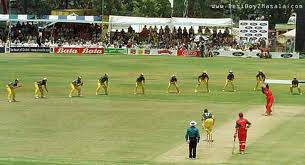
Infield is In

"And the Infield is In!"

View all our Funny Sports Pictures!

Series 1 | Series 2 | Series 3 | Series 4 | Series 5| Series 6

Posted: 07/30/2011

Posted in Basketball, Cricket, Other | Tagged , , , , , | 2 Comments

The Sports Archives – Lotus Elite Classic British Sports Cars 1974 to 1982

Decades after the first generation of the Lotus Elite sports car  known as the “1950’s Type”  were produced and delivered between the years 1959 to 1963 Lotus introduced another winner in the form of the 4-seat “Lotus Elite”  between the years of 1974 to 1984.  These larger 4-seat Lotus Elites were designated Type 75, with later models being labeled “Lotus Type 83 Elite”.

As Lotus entered the 1970s their founder Colin Chapman decided to move the product up the social and price scales as well as to gradually phase out the “kit-built cars”.  When the Elan Plus Two became obsolete, Mr. Chapman decided to replace it with something altogether much more grand and bearing.  Yet the new Elite , given the exact same name and name-plate badge as the Coupe of the late 1950’s early 1960’s leading to new end of confusion among sports car enthusiasts and even Lotus aficionados.  Coded the M50 at Lotus, it was the start and birth of a whole new family grouping of Lotus cars.  Alongside it was the Eclat (mechanically like the new Elite, but with fastback instead of square-back styling) and the mid-engined Espirit, which effectively replaced the Europa at greatly increased cost and pricing.

All shared the completely Lotus-manufactured Type 907 2 liter 16-valve twin-cam engine (which was also sold to Jensen for their Jensen-Healeys until Jenson itself closed shop in 1976). The Elite was designed to meet all existing and even projected future safety regulations, and in spite of being made with a glass-fibre body was both very strong and rigid.

Lotus in their Norfolk factory made the greatest majority of the automobile, instead of merely assembling proprietary parts. The Elite’s “backbone steel chassis frame” carried on with the Lotus tradition established with the 1962 Elan sports car and the all-independent suspension followed racing car lines of wheel location and control.

The five-speed gearbox actually used British Leyland internals.  Performance, as expected, was high – maximum speeds being over 120 mph (200 km/h) – as a direct result of the light weight and highly efficient aerodynamic shape. Yet again fuel consumption could be counted to be low, and even economical, as a direct result of the car’s light weight.  It is well-known that a larger V8 engine could easily be fitted and accommodated into the Elite’s power plant bay; performance was nothing less than phenomenal.

Lastly at the end of the day it can be stated that styling was mainly the work of Lotus staff, with suggestions from the Ital Design offices.  The cheaper and inherently simpler Eclat used an Elite chassis together with nose and centre sections from that car. The clear distinction between the two models being that with the Eclat the tail styling was no doubt distinct.

Maxwell B. Labby

Abbotsford Used Car Dealers

Chilliwack Auto Dealers

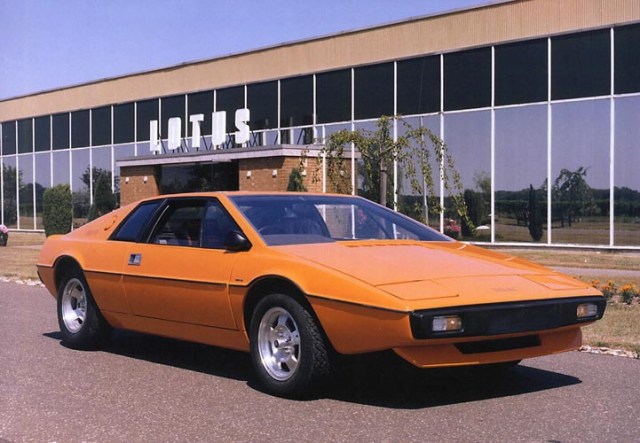
Lotus Elite Type 2

1970's Lotus Elite Type 2

Posted: 07/27/2011

Posted in Motorsports | Tagged , , , , , , , , | 1 Comment

The Sports Archives – Funny Sports Pictures – Series 6

More funny sports pictures from The Sports Archives!

Early John McEnroe

This may be John McEnroe's First Encounter with a Line Judge!

Skinny Diving

"Woo-hoo... we're skinny-diving... wait... is that San Quentin down there?!"

Referee in Minor League Hockey

"I hate working these Minor League games!"

View all our Funny Sports Pictures!

Series 1 | Series 2 | Series 3 | Series 4 | Series 5

Posted: 07/22/2011

Posted in Hockey, Tennis | Tagged , , , , , , | 2 Comments