
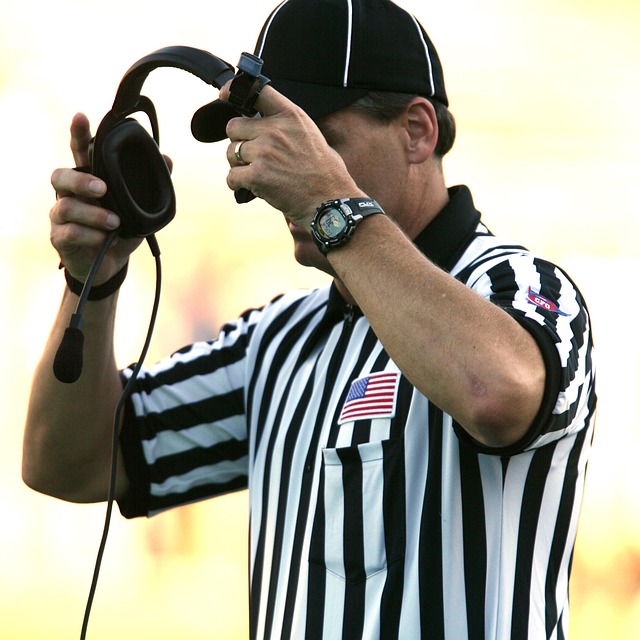
Image by Keith Johnston from Pixabay
For most of sports history, the outcome of a game depended entirely on what officials saw in real time. A referee’s whistle or an umpire’s call was final, even when thousands of fans believed the decision was wrong. In recent decades, however, technology has changed the way sports are officiated. Instant replay now allows officials to revisit controversial plays, slowing them down frame by frame in pursuit of accuracy. Yet while replay has improved fairness in many cases, it has also sparked an ongoing debate among athletes, coaches, and fans about whether the benefits outweigh the drawbacks.
Supporters of replay argue that its greatest value is simple: getting the call right. Professional sports generate enormous financial stakes and emotional investment, and a single incorrect ruling can alter the outcome of a championship. By allowing officials to review key moments—whether a touchdown catch in football, a goal in hockey, or a boundary call in tennis—replay reduces the likelihood that human error will determine the result. In this sense, replay functions as a safeguard for the integrity of competition.
Replay technology has also improved transparency. When fans see officials review a play on a stadium screen or broadcast monitor, they gain a clearer understanding of why a decision was made. In many leagues, the replay process includes explanations from referees or analysts, providing insight into the rules and reinforcing the perception that the game is being judged fairly. For sports organizations concerned with credibility, replay offers a way to demonstrate accountability.
Yet critics contend that replay has introduced new problems of its own. One of the most frequent complaints is that replay slows the pace of the game. Long reviews interrupt the natural rhythm of competition and can diminish the excitement that comes from continuous action. What once took seconds to decide may now take several minutes, leaving players and fans waiting while officials examine multiple camera angles.
Another concern is that replay may create the illusion of perfection without truly eliminating controversy. Even with advanced technology, not every play produces a clear answer. A camera angle might be obstructed, or the footage may still be too close to call. In those situations, replay sometimes replaces one disputed judgment with another, extending debates rather than resolving them.
There is also a philosophical question about how much technology should influence sport. Traditionalists often argue that part of the drama of athletics lies in its imperfections. Human officials, like the athletes themselves, are capable of mistakes, and those mistakes have historically been woven into the narrative of sports. Famous missed calls and disputed plays have become part of sporting lore, fueling debates for generations.
On the other hand, modern audiences increasingly expect precision. As broadcasting technology improves and viewers watch games in high definition from multiple angles, mistakes that once went unnoticed are now instantly visible to millions of fans. In this environment, leagues face growing pressure to use every available tool to ensure accuracy, even if that means sacrificing some of the spontaneity that once defined live competition.
The debate over replay in sports ultimately reflects a broader tension between tradition and technology. Replay systems offer the promise of fairness and accountability, but they also challenge the pace and human element that have long characterized athletic competition. As technology continues to evolve, sports organizations will likely keep refining how replay is used, searching for a balance that preserves both the integrity of the game and the excitement that draws fans to it in the first place.
More relevant reading: The Sports Archives Goal Line Technology.


 The Sports Archives Blog