The Sports Archives – How To Save Air When Scuba Diving

Every scuba diver needs to do everything they can to conserve air. Here are some ways to do it:

At The Start Of A Trip

  1. Stop leaks! Every stream of bubbles, no matter how minor, adds up over the period of your dive leading to a substantial, and unnecessary, loss. It can also be a sign of trouble later, so fix it as soon as possible. A worn or dried out O-ring, for instance, should be replaced immediately.
  2. A poorly fitting mask is particularly wasteful; besides the leak itself you have to continually blow the water out from your mask as well. And it raises your stress level, which in turn increases your breathing rate, leading to further unnecessary loss of air. A 3 in 1 loss.
  3. Don’t over-weigh yourself. Too much lead requires more air in your buoyancy compensator to neutralise your weight. This makes it larger, thus requiring more effort to push it through the water, and also results in you constantly finning yourself up to counteract the extra weight. Distribute the lead to give you a naturally horizontal position while swimming. This keeps your body following the “hole” made by your front half, rather than pushing aside more water.
  4. And for the same reason, avoid carrying too much gear.
  5. Wear enough insulation to keep warm. When you are cold, you use up energy just keeping warm, which increases your oxygen intake.

In the water

  1. Once in the water, swim more slowly and evenly to extend your dive time. Jerky movements both cause more rapid breathing, and results in more resistance from the water, necessitating greater effort (and therefore breathing) on your part. Swimming twice as energetically uses up air at far more than twice the rate.
  2. Stay shallow where possible, for instance while just getting to the location where you actually want to go deep. A single breath at two atmospheres uses up twice as much air from your tank as the same breath at the surface.
  3. Practice slower, more even, breathing – maybe six seconds to inhale, and six or seven more on the exhale. And pausing just before exhaling keeps the air in your lungs a fraction longer, allowing your lungs to extract a little more oxygen. It isn’t the point we naturally pause at on dry land, but it is good practice in the water. This is something you can practice in the swimming pool at any time.
  4. Use short fin kicks; they are more efficient.
  5. Keep out of strong head currents that require more effort to swim against.

To judge how well you are doing, compare your air usage with others on the same dive. Many of these techniques can be practiced before leaving home. If you need training it will usually be cheaper to obtain that at home as well.

Finally, the more you dive on a regular basis, the more experienced you will become, and that will make you relax more and breathe less. Enjoying your sport more actually helps you alleviate the problem of air loss.

Featured images:

Jeffrey Glenn is the founder of Go Pro Asia, one of Thailand’s most sort after professional dive training resorts. Jeffrey is a PADI Course Director and Technical Diving Instructor Trainer and has over 20 years’ experience in the dive industry


Posted in Other | Tagged , , , , , , , , , , , , | Leave a comment

The Sports Archives – The Road from College-Athlete to Professional

The relationship between an athletic celebrity and sport enthusiasts is practically identical to that of a movie star and his/her fans. Playing in a competitive field of sport or as a player on a major-league team uplifts a professional athlete in the eyes of the public – some are even so renowned as to receive “godlike”–quality status and praise from their followers. Yet, no matter how talented celebrity athletes or even actors may be—no matter how elevated of a status they may achieve—they are all still human. As such, there was a time (typically in the earlier years of life and education) that every famous individual was fresh to their field, reaching for their dreams, and quite unaware as to just how renowned they would go on to become. The subtle transition from avid aficionado to elite competitor in the realm of sports prompts the enduring question: “How exactly do rising athletes become professionals?” And, by extension, “What path does a high school or college athlete take to achieve fame?”

tom_brady_expos_02_01_12

Is it hard to believe that, in an alternate universe, Tom Brady could be a catcher for Major-League Baseball?

The quest to become a professional athlete begins at an early age for most people. Lebron James, one of the most renowned NBA celebrity athletes of the day, was first introduced to basketball at 9 years of age, and has not stopped playing since. Coupled with his natural talent for the sport, James’s commitment to basketball has allowed him to become one of the most skilled professional basketball players in the United States, but anything less than that likely would have seen his career halted before it even began. For some individuals, the dedication to becoming a professional athlete begins even earlier; this was the case with NFL All-Star quarterback Tom Brady, who’s first encounter with the realm of sports came via football at the astonishing age of 4. Brady played both baseball and football actively through his childhood and high school years, and even came close to MLB via the 1995 draft. Football had decidedly taken precedent in his life, however. Brady had a college football career during his time with the University of Michigan before being drafted by the New England Patriots. 33 years after he first picked up football, he still hasn’t put it down or even set it aside for a moment. As anyone can see, for a professional athlete to be good or even great at the sport they play, it is not enough to simply be talented or opportunistic; their lives must be centered around a career in sports for decades — supposing that they first make it to the top, that is.

YoungLeBron_crop_north

Lebron James as a child. Little did anyone suspect that his career as a professional athlete would begin right here…

What if someone truly does have what it takes to become a superstar athlete? What should he/she do to improve the chances of hitting the big leagues? The answer is simple – long hours of vigorous training and stern, unwavering commitment. A blazing passion burns in everyone over something…but only those whose fire is fueled by a career in sports will make it. Beyond college sports, the method by which an individual player is selected for “the Majors” varies by career. Generally, however, the selection process consists of a draft in which teams select new players to fill empty spots on a roster. This can be difficult and quite unforgiving, considering that the stakes for getting selected to play professionally are extremely high. As is the case on Broadway in New York City, there are plenty of willing actors and performers that are desperate for a job, but only a select number of jobs to be filled, and those responsible for filling them only take the best. “You have to have what it takes,” as they say, and this statement holds true for professional sports as well. Fortunately, unions like the National Collegiate Athletic Association (the NCAA) are run by members dedicated to helping rising athletes get where they need to be. For college sports, players trying to get selected to play on major-league teams in the future will have to focus on getting attention in addition to playing superbly, lest they “blend in with the crowd.”

athletic-recruiting-stats-percentage-of-athletes-from-high-school-to-pro-1-638

The road from rising High School athlete all the way up to Professional is a decisive path, but unfortunately, the odds are not promising at all.

The commitment to becoming a superstar athlete is not more forgiving than the promise many children made to become astronauts when they grow up. Training to become a professional alone absolutely must begin at a very early age. Genetic predisposition – a person’s unique anatomy and biological history – will, sadly, keep the dream forever out of reach for some people. Likewise, talented individuals might find the path to becoming a professional athlete slightly easier – but only slightly. Only about 5.6% of baseball players and 5.8% of football players in high school will go on to play football at the college level. Then, from the college level, football athletes only have about a 2% chance of becoming professionals, and all other major sports follow this depressingly low trend; the singular exception to this is college baseball athletes, 10.5% of which have a promising chance of joining a Major-League Baseball team in the future. This is likely due to the impressively-organized MLB draft that goes out annually to recruit college talent around the United States.

Posted in Basketball, College Basketball, College Football, Football, Other | Tagged , , , , , , , | Leave a comment

The Sports Archives – World Records in Sport Fishing


Fishing

An integral part for many living in coastal areas or nearby lakes and major rivers, recreational fishing is a special kind of hobby which helps you connect with nature while being a fantastic way to relax. Recent estimates put recreational fishing, or sport fishing, right on the top of the list for tens of millions of Americans.

Whether it’s done with reel, rod, hook or line, there’s something for anyone looking for a relaxing time, surrounded by nature. What’s more, there is a huge community of sports fishermen available where you can get guidance, tools and other information regarding this wonderful hobby. You’ll just have to make sure you bring all your lures, baits and flies.

The fishing stories…

Sport fishing was practiced by humans since Antiquity and there have been many stories about the adventures of these early fishermen. Many of them have remained ingrained in local folklore and act as foundation tales for many archaic concepts and beliefs. The world of sport fishing attracts the extreme and eccentric, and there are thousands of stories to be retold.

Here is a list of some of the most interesting world records in sport fishing:

World’s largest ice fishing competition

What do Minnesotans do in the middle of winter? You got it! They ice fish, and they’re definitely not alone. This yearly competition, started in the early 1980s, has grown exponentially and is hosted on Gull Lake. It attracts more than 8,000 fishermen and, in the middle of January, that’s something to talk about. More than 30,000 holes were drilled over a two-week period and the contest has some really attractive prizes, including a top-of-the-range snowmobile — the ideal vehicle for any ice fisherman out there.

Largest catfish ever caught

Some of the most ridiculous fishing stories have become famous and there are numerous jokes based on them. Everyone knows a few, but this one is no brag-story from a drunkard on a lazy Saturday afternoon. Firstly, let’s get into some details: catfish are a special breed of fish, according to many fishermen. They grow big and fight hard, so catching one is no easy task. In North America, the blue catfish (Ictalurus furcatus) reigns supreme as the largest of the entire genus.

Many fishermen try to beat their personal records year after year, but Greg Bernal, a 47-year-old Missouri resident made the news when he caught a 130-pound beast in the Missouri River. Standing at 57 inches long and 45 inches in girth, the fish was caught with a rod and reel set, on July 21, 2010. The previous record, which weighed in at 124 pounds, was unbeaten for five years, making this feat even more impressive.

Beating the largemouth bass record

Simply put, the largemouth bass record is the holy grail of the whole sport fishing world. Almost every fisherman believes that, one day, he will be the one to break the record which still stands for an incredible 83 years. Simply braking this longstanding record will make you the king of the multi-billion dollar bass fishing industry. The initial record was set by George Perry from Jacksonville, Georgia on June 2, 1932. Even though this 8 decade record has not been beaten by anyone, it has been tied by Manabu Kurita, a Japanese resident from Aichi prefecture, who managed to catch a 22 lb. 4 oz. bass near Kyoto. The record was confirmed by the International Game Fish Association after a round of tests (including a polygraph test) to ensure that the claim was indeed true. This only confirms how important this record is in the sport fishing community.

If you feel like you’re the next record-setter, or if you want a few “big fish” stories of your very own, explore the hobby and see what the fuss is about! Don’t forget to bring a dry bag — you can check out adventurelion.com for their line of tough waterproof bags so you can keep the stories to the fishing and not how you soaked all of your valuables.

Flaviu Mircea is a freelance writer and professional student who understands the value of a deep connection with nature — working in the Summers to set his own records.

Posted in Other | Tagged , , , , , , , , , , , , , , , , , | Leave a comment

The Sports Archives – 3 Sports That Nobody Seems to Talk About

Most sport fans have a plethora of favorite sporting activities – baseball, football, soccer, hockey, basketball, and even professional auto racing are among the most popular in the United States. On the other end of the spectrum, some sports are fairly underappreciated in the public eye, getting markedly less recognition and/or support from the community. The negligence that seems to follow these activities (especially in national sporting powerhouses like America) is often untraceable; as is the relationship between American Football and many European nations, it may simply be that people would rather watch – and play – something else. Sadly, public preference has crippled the popularity and coverage that many sports used to get. This newfound apathy could have surfaced for multiple reasons – perhaps the opinion of previous target audiences has changed, or influential media has declared the sport too unsafe. In any case, the only way the public is going to start talking about these washed-out sports is if they are motivated to do so. Here are 3 sports that no one seems to talk about today, even though there is a pretty good argument that they should be…


  1. Bowling — Today, bowling is a casual, recreational activity that is almost universally unrecognized as a real sporting event. Despite this modern status, however, bowling used to be highly popular to both spectators and professionals in the field of competitive sports. The history of bowling is fairly obscure – activities similar to it date back as far as 3000 B.C., into the time of the Ancient Egyptians. The core ruleset of it has since grown, developing and refining over time. Fast-forwarding into the 20th Century, competitive bowling hit its peak popularity in the 1960s, following the invention of the “automatic pin-setter,” but it has never reached such a tremendous
    approach1

    Bowling is popular because it remains accessible to the average individual. The intricacies of planning an effective approach and throwing the ball cleanly are the facets of this sport which make it competitive. Unfortunately, the rift between the professionals and those that bowl purely for fun is a leading cause to the decline in competitive interest.

    following since this period. Modern bowling is enjoyed as a physically-active form of social entertainment, and, though upwards of 50% of the people who play it would claim “they aren’t good at it,” it is quite well-known in the global community. It is fairly unlikely, however, that it will reacquire the recognition as a “real sport” that it had 60 years ago.


  1. Handball — In countries that are not the United States, “football” refers to the game played using a spherical ball and one’s feet. Football is an amazingly popular sport with a following of billions – a number that is still growing rapidly. But the sport known as team handball was formally developed around the turn of the 19th Century in the territories of Northern Europe, and shares many significant rules and regulations with football as well as basketball. 2 teams of 7 players each (including one goalie) must dribble the ball across the field of play and move it to the opponent’s score area.
    handball

    As a hybridization of football and basketball, handball is often overshadowed by the two more popular “root sports.” Between the indoor arena, properties of the ball, and even the fundamental rules of the game, it is easy to see why handball might amount to nothing more than a “clone” in the eyes of the public.

    Like football, the goalie has the sole duty of protecting the netted goal, and the rest of the team must work together to move the ball across the court to score. Handball is similar to basketball, however, in that it is usually played indoors, and features using one’s hands to pass, block and score. The spherical ball utilized in this game is smaller than both a basketball and a traditional football, but is larger than a softball.


  1. Curling — Many people may have seen a professional game of curling and not even known about it. The name of this obscure sport is a particularly misleading factor of this, and can easily conjure up the image of two bodybuilders professionally competing to see who can “curl” the most weight. Originating as a sport in post-Medieval Scotland, Curling involves 2 teams of 4 players each. One player slides a specially-designed stone across a plain of ice (similar in size and texture to that of a hockey rink), throwing it with the force and accuracy needed for it to halt in a 4-layered score circle;
    curling3

    Curling truly is a testimony to the enduring spirit of human ingenuity. Its rules and mechanics are so abstract compared to many other competitive sports, it is a wonder that someone even had the vision to invent such an original idea.

    the role of the other player on a team is to shape the ice in front of the stone as it slides, using a special sweeper/broom to manipulate its path towards the center of the score ring, all without touching the stone itself. Curling is an intricate sport that requires much skill and strategy, similar to chess or archery. However, the player-pairing element of curling also hybridizes it with other team based sports like hockey, making it truly unique.

Whether they’ve long since past their days as a popular competitive sport, or simply never picked up traction with the masses to begin with, these 3 sports are currently experiencing a period of modest negligence – their communities are recessive and small, and the professionals that participate in each are gaining less recognition as the sport’s following diminishes. Bowling, handball, and curling, along with sports suffering a similar fate, are sadly analogous to an outmoded online video game that has lost the ability to generate player interest. There is still, however, the possibility of a public resurrection for some of these unique, esoteric sports. The community’s power in reviving competitive discussion of these activities is not to be underestimated.

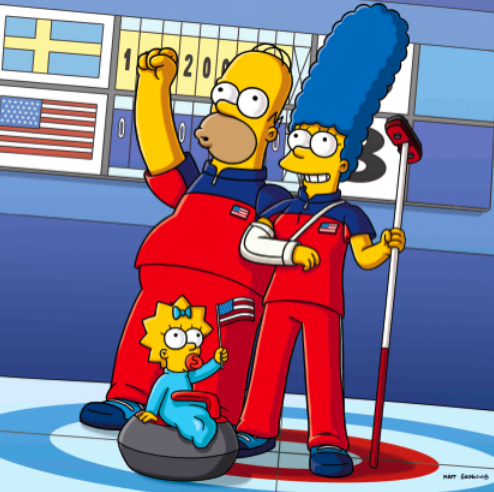
Simpsons Boy Meets Curl

One thing is certain; pop culture always has, and shall continue to have, a persevering influence on public attention. A portion of curling’s popularity, however negligible, can be attributed to renowned comedy TV shows like The Simpsons.

Posted in Other | Tagged , , , , , , | 1 Comment

The Sports Archives – The Most Inspirational Wheelchair Athletes Of All Time!

David Weir

With 22 Summer and 4 Winter Paralympic sports, and opportunities to compete from grass-roots, right up to international Olympic competition, para-sports are firm fixtures in every event calendar. Some sports are quite similar to those available for able-bodied athletes, others are modified to suit a whole range of disabilities. Every disabled athlete achieves and inspires in their own way, but here is a look at some of the wheelchair athletes that have made a big impact on Paralympic sport.

Great Britain Athletes

In the 2012 London Paralympics archives Team GB athletes achieved 3rd place on the medal table with 34 Gold, 43 Silver, and 43 Bronze. This was an outstanding performance, and with the continued personal bests, more medals, and world records that followed, Team GB disabled athletics is in a very good place today. Here are some of the best in the UK.

David Weir

Born without the use of his legs, Weir showed talent from an early age, and despite the lack of wheelchair sports available at the time, went on to win the junior wheelchair event at the London Marathon seven times.

Persistence, spirit, and determination, has seen him develop an outstanding career as an elite athlete, and he’s often labelled one of the greatest British paralympians of all time. His success lies in his intensive training and determination to succeed.

Weir competes in road and track events, and his growing list of accolades includes 6 Paralympic Medals, London Marathon medals of all colours, and countless appearances and achievements at IPC Grand Prix events, European and International competitions, and London Marathon gold medals.

His influence and inspiration has extended through Team GB, the international athletics community, and the Wier Archer Academy which he co-founded to help increase participation in disabled sport.

Continue reading

Posted in Olympics, Other, Rugby | Tagged , , , , , , , , , , , , , , , , | 1 Comment

The Sports Archives – Planning The Hickstead Derby Meeting

show jumping

Hickstead is an event that takes a lot of planning – from selecting staff to ensuring that there’s enough power to keep things running smoothly.

The Hickstead Derby Meeting is regularly cited as one of the most important show jumping events on the equestrian calendar. Riders from all over the world come to compete on its famous course, which features the Hickstead Bank, one of the most difficult jumps they can expect to face. It also draws huge spectator crowds too.

Last year around 35,000 people attended the show over the course of four days; a phenomenal success for the organisers of the event. Of course, with such large attendance figures comes a need for meticulous planning – so how much preparation is required for an event like this?

Staff and officials

Stewards, programme sellers and admissions staff are all firm fixtures at big events, but Hickstead needs more specialist staff too. At a show-jumping event archives such as this, there need to be a certain number of officials present. These include a Course Builder, a judge and writer, Tack Inspector, commentators and a time judge, among others.

The health and safety of spectators, competitors and everyone else involved in a show of this scale is incredibly important too. A Safety Officer will therefore be placed in charge of these proceedings. They should have the appropriate knowledge and experience, and consider health and safety at every stage of the event.

Facilities

The facilities on offer at the event take a lot of organising too. First of all, there’s seating for the spectators. Then there are hospitality areas – some of which may feature temporary structures, such as marquees.

Food and drink help to make a great good day, so caterers need to be selected too. Food needs to be prepared in areas that comply with the all the current hygiene regulations, and a licence is needed to sell alcohol. An event of this scale needs to have an adequate amount of medical supplies available, and fully trained First Aid personnel to provide treatment to anyone who needs it.

Last but not least are the toilets. Not particularly glamorous, we know – but an essential facility to have! Modern portable toilets are of such a high standard that they are on par with toilets in the finest hotels. Many have music, an array of soaps and moisturizers, hot air hand driers and they never run out of toilet paper!

All the hard work is worth it in the end

Once everything is up and running, it’s easy to forget just how much work can go into putting on a large event like this. Whether you watch it on TV or attend in person, your attention is probably going to be on the riders and their horses – not the work of the organisers!

Without all of this planning and hard graft, Hickstead would not be able to go ahead. When the winners are announced and everyone leaves after having a fantastic time though, it’s all worth it. Now, is it too early to start planning next year?

Featured images:

Power

An event like this needs a lot of power, which is where Templant come in. We’re providing the power generators for this year’s Hickstead Derby Meeting, so that both the competitors and attendees can enjoy the event as much as possible. Our services include complete event power design, support throughout the event and of course, fully qualified electricians carrying out the work. For such a prestigious event, a constant power supply from start to finish is essential.

Posted in Horse Racing | Tagged , , , , , , , , , | Leave a comment

The Sports Archives – The Rise of Electronic Sports

“Sport” has existed nearly as long as there have been people on this planet. This should be no surprise – competitive interaction, cooperation, and the opportunity to achieve greatness are all thematic characteristics of any sport, and many would argue that rivalry and sportsmanship is instinctive in all of humanity. The sociocultural and economic development of competitive activities has seen the emergence of new sports that entirely redefine the parameters of competition. This is achieved by taking a prominent facet of everyday human life and transforming it into an instrument of competition through innovation. Perhaps the greatest example of this “competitive revolution” is the dominance of technology in the 21st Century, and the subsequent rise of electronically-based competitive sports, or E-Sports.

MLG

Major-League Gaming is the official competitive e-sports organization in the United States. It was founded in 2002 and has continually grown in following and influence since then. Its rise to prominence mirrors the development of technology and video gaming itself.

Beginning as early as the 1970’s, e-sports introduce a fresh field of competition to the world through technology. Though programming, mechanical engineering and various other computer-based team competitions do exist, “E-Sports” is a term primarily used encompass the realm of competitive video-gaming. Videogames by themselves are easily a source of competitive interaction between people, and early releases have even mirrored traits belonging to real world sports, whilst simultaneously embodying an original idea (this had held true since the introduction of Atari’s Pong in 1972). By 2015, videogames have come a long way since 2 white paddles and a dot bouncing around the screen. Some game systems like the Nintendo Wii and the Xbox Kinect have pioneered interactive motion technology, making videogame sports like bowling, golf, and even the Olympic Games more than just buttons on a controller. Users are expected to move and mimic, if only with a fraction of real-world accuracy, the actions that are depicted virtually onscreen. Endeavors from these consoles’ developers have been to enhance the experience of playing a virtual reality game and, for the most part, they have been successful. Virtual sports like Wiisports and Kinect Sports are not the core of E-Sports, however.

Super_Smash_Bros._Melee - NA_Boxart

Super Smash Bros. Melee would revolutionize competitive gaming and remain a worldwide favorite for over a decade after its initial release. Though later releases in the “Smash!” franchise feature improved graphics and a much broader selection of characters, the gameplay mechanics of Melee keep it a competitive favorite in tournaments.

So how can one distinguish, then, what is an E-Sport in the video gaming world? The answer lies in the following or reputation of a certain game, and how it alone has revolutionized sport-related competition in gaming culture. In 2001, a game was released for the Nintendo GameCube (1999) that bounded E-Sports into the eyes of the public. That game was Super Smash Brothers Melee, a Nintendo All-Stars fighting game that pitted revitalized renditions of people’s favorite characters of the 1980’s and 90’s against each other. For the first 4 years of its existence, Melee did not get a lot of major coverage – instead, it thrived within an enclosed, competitive player community. The competitive rules to SSBM would be slowly discovered in this time period, but its public popularity would spike early on, courtesy of Major-League Gaming (something of an E-Sport equivalent of MLB or the NFL) which was founded in 2002. By 2015, Super Smash Bros. Melee has a massive community following and all the momentum it needs to stay dominant in the world of competitive gaming – a revolutionary feat almost unheard of, considering the game itself is approaching its 14-year old anniversary. With a following of thousands and many more flocking in to acquire new interest in the game’s legacy, SSBM is the paragon of all that an E-Sport should be.

Mew2King/Smashcomp

Typically, Super Smash Bros. Melee tournaments take place in a multipurpose convention hall, but they have also been featured anywhere from a host’s basement to a community warehouse. The two competitive players holding controllers are Jason Zimmerman (Left) and Aziz Al-Yami (Right), known more popularly by their online aliases “Mew2King” and “Hax”, respectively.

Since Super Smash Bros. Melee, Major-League Gaming has been an umbrella organization dedicated to promoting competitive online sports. Many modern games, including StarCraft II, DOTA, and even large-scale bestsellers like Call of Duty have formulated their own competitive niches and become major sources of E-Sports coverage. With the direction the future is headed, Sports and E-Sports will soon rival each other as technology continues to accumulate global dominance, and fans of traditional sports cling to their legacy. It is sometimes difficult to imagine that a trend that did not exist competitively over 2 decades ago could rise so dramatically as to threaten a tradition that has existed for over a century. It certainly says something about what everyone thought of computers when they were first discovered.

Posted in E-Sports, Other | Tagged , , , , , , | Leave a comment

The Sports Archives – Be Your Own Captain – Tips for the Aspiring Boating Enthusiast


Boating

Having and sailing your own boat can be fun, relaxing and thrilling depending on why you’re doing it. Some folks just love the feeling of being on their boat somewhere out in the water, away from all the stress and demands of daily life. 

Others use their boat for business meetings – this can be important when you have very sensitive business deals to discuss. There are also those people who just love the thrill, the sounds of waters lapping against their boats, and the freedom that boating gives them and the idea of just them against the waters. 

Whichever category or class you fall into, there are boating tips that you ought to implement in order to stay safe and enjoy your boating adventures. 

Safety Should be a Priority

The first thing you need to do is make sure that safety is paramount. Acquire all the necessary safety kits as mandated by the US Coast Guard and relevant boating safety agencies. If you feel you have all these, but are still unsure, you could get a free boat check by the US Coast Guard. Safety also means wearing your life jacket at all times. 

These seemingly inconsequential items can often be the difference between life and death. Most drowning incidents are usually a result of victims not wearing their life jackets. So, as soon as you set foot in the boat, grab a life jacket and make sure there’s enough for everyone on board. 

Of equal importance is paying attention to the weather forecast. Unless you want to face stormy waters, beware venturing out into the water until the weather forecast is favorable. So, always check for weather conditions before taking your boat out and stay alert in case of sudden weather changes

Always Carry the Necessary Gear

Depending on your type of boat, you may need anything from anchors, to wet and dry suits, basic toolkits, ropes, vests, a tube inflator or a first aid kit to name a few. However, a key boating accessory that you should have is waterproof and dry bags like those provided by Adventure Lion

These bags are excellent for keeping your essentials dry. Adventure and extreme sports lovers who prefer kayaking, sailing, and whitewater rafting, will find this extremely useful for keeping their things away from moisture and water. 

So, whether you want to store your dry clothes so you can change after a day on the water or keep your cameras, phones, wristwatches and gadgets dry in your boat, these waterproof bags are crucial to your boating adventure. 

Be Cautious and Aware of Your Immediate Environs

Quite a few boating accidents have resulted from inattention. Once you’re on the water, you need to be extra vigilant. Watch out for abnormal objects in your immediate surroundings. Be careful about berthing your boat, tying the docking ropes properly, and the weather. 

Don’t Sail When Drunk

If you’re not supposed to drive when drunk or under the influence of narcotics or alcohol, it goes to reason that you shouldn’t do the same while sailing. Quite a few accidents, injuries or deaths are caused by the victims being under the influence. 

Luckily, there are laws against this. So, if you’re caught boating under the influence without causing anyone harm, you will either pay heavy fines or spend a few months in jail. However, if people were to become injured directly or indirectly because you were under the influence, you will go to prison.

Oscar is a reputable and experienced author with a unique and skillful approach to writing and blogging.

Posted in Other | Tagged , , , , , , , , | Leave a comment

The Sports Archives – Sports and Weather

peanutsrain

Charlie Brown is not amused.

The globe is an ever-changing place. Season-to-season, week-to-week, even day-to-day, its weather conditions are unpredictable, erratic, and, in many cases, adverse to sporting activities. The significance of weather (and, by extension, its “cooperation”) in the realm of sports and recreation is often overlooked by spectators and viewers. To the typical American family sitting down to the NFL’s Monday Night Football, the weather that evening only grabs anyone’s attention if it is undesirable – mainly to the point where the game is postponed or even cancelled. The presence of good weather is, likewise, neglected because it is just “what is supposed to happen.” After all, why even notice the weather if it isn’t going to affect the playability of a sport? Undoubtedly, weather holds more sway over where and when sporting activities may take place than most people would care to admit. However, because every sport is different in its rules and setting, some sports are more heavily affected by weather than others. This also means that there are quite a few sports that are not affected by the weather at all. What sports are the most influenced (or, more specifically, “burdened”) by weather conditions, and how precisely does the weather impact them?

The simplest answer to “what sports are really affected by weather?” is, obviously, “outdoor-related sporting activities.” Rain, snow, hail, and even winds on a clear day that are just too blustery are all primary influences on playing conditions for outdoor sports. After all, indoor sports unfold in an artificially-created environment – usually an enclosed building. As a result, people, not nature, have control over “whether the weather” is unsuitable for indoor sporting activities. Indoor sports, both casual, like table-tennis, and professional, like basketball, have never been cancelled due to bad weather happening outside of the structure in which they take place. The only situations where indoor sports are truly threatened by adverse weather is in extremely strong tropical storms, hurricanes, or thunderstorms that cause power outages. Otherwise, the indoor stadium/arena keeps the environment within it safe and separated from whatever is happening outside.

Full_field_w_soccer

The Indoor Sports Complex at Fort Collins, CO comes equipped with an indoor soccer field, protecting this sport (typically played outdoors) and its players from bad weather conditions.

When it comes to the outdoors, the specific rules and decisions involving the weather become blurred across different types of sport. The phrase “the show must go on” is a working guideline for sports in this sense, because the ultimate goal is for the game to play out as scheduled, provided that the safety of the players can be upheld and fair play ensured. Depending on the circumstances and setting of the sport, some are more ‘resilient’ in certain weather conditions than others. Thus, football games hosted by the NFL can generally persist through light-moderate rainfall and even snow. The popularity of football in the United States, as well as the rules and play format of the sport, are both contributing factors to ensure that the game endures. If severe thunderstorms and strong winds threaten play, football stands a much greater chance of cancellation. Outdoor sports that are more dependent on precision and technique are, consequently, more fragile in the face of bad weather; professional baseball, cricket, and tennis are all susceptible sports that are practically guaranteed to be cancelled due to rainfall. In rare cases, even temperature can have a serious influence on the playability of a sport. Extreme temperatures, both high and low, can prove hazardous to the health of athletes, resulting in the possibility of heatstroke or hypothermia. Though it is fairly uncommon, some sporting events have been cancelled due to the threat of it being too hot or too cold to play.

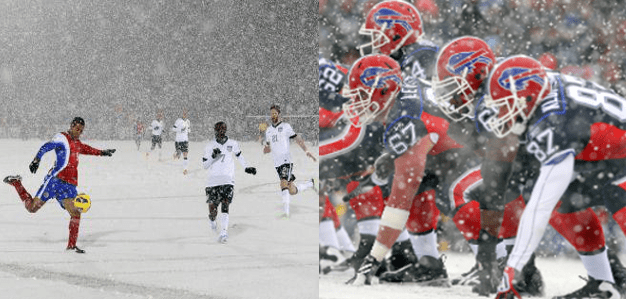
snowsport

Both soccer and American football are resilient sports, and can usually permit a game in light snow. Players will need to stay on their toes, however, because visibility is reduced, and they have an entirely new type of ground to deal with!

For the most part, strong weather conditions are regarded negatively among fans and players alike, but this is not always the nature of the relationship between weather and sports. In fact, many sports are dependent on some aspects of the weather to behave in a certain way. One prominent example of this is the connection between strong winds and water sports. Windsurfing and kitesurfing are heavily dependent on wind, requiring strong air flow to operate, even while other sports would prefer as little wind as possible. Additionally, a lightly-overcast playing field is often preferable to clear sky for outdoor sports. With a non-threatening blanket of clouds to obscure the area of play from the sun, visibility is improved across the board without the threat of rain.

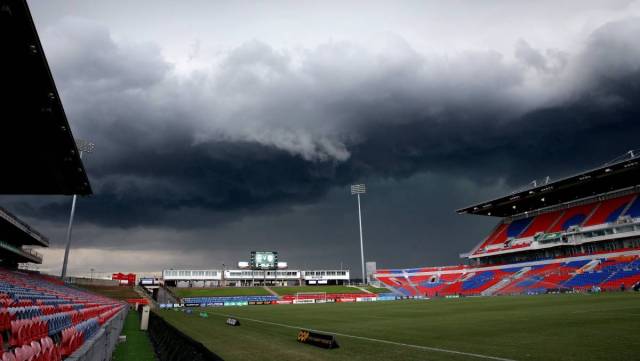
r0_415_5184_3341_w1200_h678_fmax

Altered conditions of play aside, can you blame even a professional athlete for turning tail at merely the sight of this approaching the stadium?

Weather can affect sports, both outdoor and indoor, in a variety of ways. Each sport is influenced differently by adverse weather conditions, and gameplay for some is even improved, provided the weather is merciful and nonviolent. Unless outdoor sports are moved indoors in the future (a significant investment which, in the grand scheme of things, would probably be more trouble than its worth) nature will continue to influence the “how” and “where” sports are played.

Posted in Baseball, Basketball, Cricket, Football, Other, Soccer | Tagged , , , , , , , , | Leave a comment

The Sports Archives – Preparing For Your First Scuba Diving Holiday!

Scuba Diving

If you want to embark on an overseas scuba diving archives holiday, perhaps your first scuba trip, there are two ways to do it. You can stay at a seaside resort where there is a base of scuba operations, or you can take a “liveaboard” vacation, staying on board a ship devoted to the purpose.

Staying Ashore…

For the more usual land-based holiday, most countries will have diving centres in a range of locations, some close to larger towns and cities where you can also take time off from your diving to enjoy the local tourist attractions or nightlife. Others are much more remote, where you can concentrate on your pastime without distraction. A land based scuba holiday may be most suitable for beginners to the sport.

…Or On Ship

A liveaboard holiday, on the other hand, is the most intensive way to go about it. You are permanently on site for diving, and can take your dives throughout the day, with the first one as early in the morning as you like, taking full advantage of the opportunities before he tropical day heats up, in unspoilt peace far from holidaymakers. A ship can take you much further away from civilization than you would otherwise be able to go, showing you places most ordinary scuba divers would not be able to reach.

There are many such scuba diving cruises available, providing a combination of first class diving, along with superb accommodation and luxurious comfort – and all meals and drinks – all within yards of the dive site. The ships will carry experienced instructors and guides, and will be able to provide PADI and other courses. Ships run by one of the larger diving companies will probably have some of the latest diving equipment available.

Requirements

Whichever method you choose, the basic preparations are the same. Above all you must ensure you have all the required certificates and documents that will be required before you pay for a diving holiday.

  • Qualified divers must bring proof of their qualifications and their log book.
  • All divers must be medically fit to take part in the sport, and some countries require a medical certificate before you will be allowed to take training or professional assistance. Even if that is not the case where you are going, check out the health requirements and seek medical advice if in doubt.
  • Remember also to take out travel insurance that specifically covers scuba diving. Even so, the standard travel policy may only cover you to a certain depth so check that will be enough; if not, a specialist insurance may be necessary.

Learners should undertake some pool training at home before flying off to increase your experience at your holiday location. Arrange your further training or guidance before you go, especially during your destination’s peak times, to be sure of obtaining a place and not being disappointed.

You must also choose the diving company with care, making sure to select one with a good reputation both within the industry and among past users.

Enjoy Your Holiday

A scuba diving holiday provides a world of excitement in underwater caves, discovering sunken ships, treasures and the ever beautiful coral reefs that abound in so many different parts of the world. Prepare well, and enjoy a holiday you will remember for the rest of your life!

Featured images:

Jeffrey Glenn is the founder Go Pro Asia, of one of Thailand’s most sort after professional dive training resorts. Jeffrey is a PADI Course Director and Technical Diving Instructor Trainer with over 20 years’ experience in the dive industry.

Posted in Other | Tagged , , , , , , , , , , , , , , | Leave a comment