
Nationaal Archief, No restrictions, via Wikimedia Commons
The Winter Olympics did not begin with the same certainty or grandeur as their summer counterpart. In fact, the first Winter Games were not even officially called the “Winter Olympics” when they took place. What began as an experiment in cold-weather sport would eventually become one of the most enduring and globally celebrated athletic traditions of the modern era.
The origins of the Winter Olympics are closely tied to the growth of organized winter sports in Europe during the late nineteenth and early twentieth centuries. Events such as figure skating, ice hockey, skiing, and speed skating had long histories in northern climates, but they struggled to find a consistent place within the Summer Olympic Games. Figure skating had appeared as early as 1908, and ice hockey debuted in 1920, but both felt out of place alongside track, field, and swimming.
To address this, the International Olympic Committee approved a separate winter competition to be held in conjunction with the 1924 Summer Olympics in Paris. Officially titled the “International Winter Sports Week,” the event was awarded to Chamonix, France, a resort town nestled in the Alps and already known for its winter tourism. The competition ran from January 25 to February 5, 1924, drawing athletes and spectators to a landscape far removed from traditional Olympic stadiums.
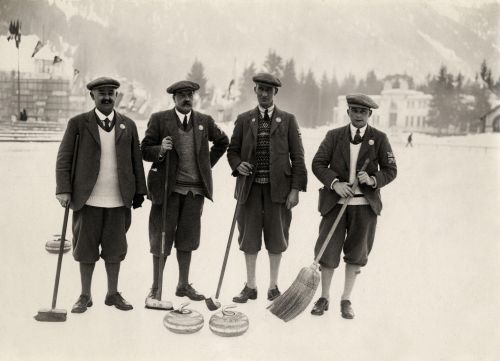
Sixteen nations participated, sending a total of 258 athletes, the vast majority of them men. The program featured nine sports across 16 events, including bobsleigh, curling, ice hockey, Nordic skiing disciplines, speed skating, and figure skating. While modest by modern standards, the range of competitions reflected a deliberate effort to showcase winter athletics as a serious and organized international endeavor.
Norway emerged as the dominant force of the Games, particularly in skiing and speed skating, disciplines deeply embedded in its national sporting culture. Norwegian athletes claimed the most medals overall, setting an early benchmark for excellence in winter competition. The success of countries with strong winter traditions reinforced the idea that cold-weather sports deserved their own global stage.
One of the most significant outcomes of the Chamonix Games occurred after the final medals were awarded. In 1925, the International Olympic Committee voted to retroactively designate the International Winter Sports Week as the first official Olympic Winter Games. With that decision, Chamonix was permanently written into Olympic history, and the Winter Olympics became a distinct and recurring event.
The early Winter Games differed sharply from the spectacle audiences recognize today. Venues were largely natural settings rather than purpose-built arenas. Weather conditions played a major role in scheduling and performance. Media coverage was limited, with newspapers and newsreels serving as the primary means of sharing results beyond the host nation. Yet these limitations gave the event an authenticity that resonated with athletes and spectators alike.
From that modest beginning in 1924, the Winter Olympics steadily expanded in size, scope, and popularity. New sports were added, technology transformed competition, and global participation grew well beyond Europe and North America. Still, the spirit of Chamonix remains central to the Winter Games’ identity, a celebration of athleticism shaped by ice, snow, and endurance rather than stadium lights.
The first Winter Olympics were not merely a companion to the Summer Games. They were a declaration that winter sport mattered on its own terms, and that declaration continues to echo every time the Olympic flame is lit against a backdrop of snow-covered mountains.


 The Sports Archives Blog
Pingback: The Sports Archives – Pros and Amateurs on Ice: NHL Players vs. Collegiate Hockey in Olympic History | The Sports Archives Blog
Pingback: The Sports Archives – Four of the Greatest Moments in Winter Olympics History | The Sports Archives Blog