
The “hit and run” play originated in major league baseball back in the late 19th century. It is officially credited to a couple of players who played for the Boston Beaneaters in the 1890s.
Tommy McCarthy and Hugh Duffy also known as the ‘Heavenly Twins” were most impressive in their day. They helped Boston become a major contender during that time.
These two ballplayers introduced many new and different strategies that coaches still leverage today. Batter to base-runner signals and other forms of silent communication between players took shape from this era.
Notably, the “hit and run” play which is usually executed with a runner on first. The runner breaks as the pitch is thrown with the hope that the batter hits the ball to the spot left vacant by the fielder looking to cover second to tag the runner. What normally would have been an easy put-out becomes a single and even if the ball is fielded, chances are the double-play is prevented. Of course, the strategy backfires if the ball cannot be hit and the runner ends up tagged out at second. Still, it’s harder for a catcher to throw out a runner from a ball pitched out of the strike zone.
McCarthy and Duffy were pioneers of this play which is now a widely used strategy by coaches at all levels.
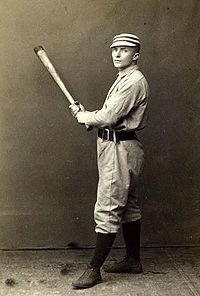
Tommy McCarthy

Hugh Duffy


 The Sports Archives Blog